Clear Sky Science · en
Risk of mortality from diseases of the circulatory system due to occupational chronic radiation exposure, considering the radiation dose rate
Why this study matters for everyday health
People who work around radiation, such as staff at nuclear plants, often receive small doses spread out over many years. We know that very high doses can harm the heart and blood vessels, but it is less clear whether long term low doses, and how quickly they are received, change the risk of deadly circulatory diseases. This study looks at thousands of Russian nuclear workers to see whether the pace of exposure, not just the total amount, affects their chances of dying from heart and brain vessel problems.
A large group watched over a lifetime
The research follows more than 22,000 employees of the Mayak nuclear complex in the Southern Urals, hired between 1948 and 1982. These workers were among the first industrial nuclear staff in the former USSR and were monitored closely with personal radiation badges and medical records. Scientists tracked them from the time they were hired until death or the end of the follow up, covering over 70 years. This rich record allowed the team to link detailed yearly radiation doses with causes of death, paying special attention to diseases of the circulatory system, strokes, and a subset called ischemic strokes, which occur when blood flow to the brain is blocked. 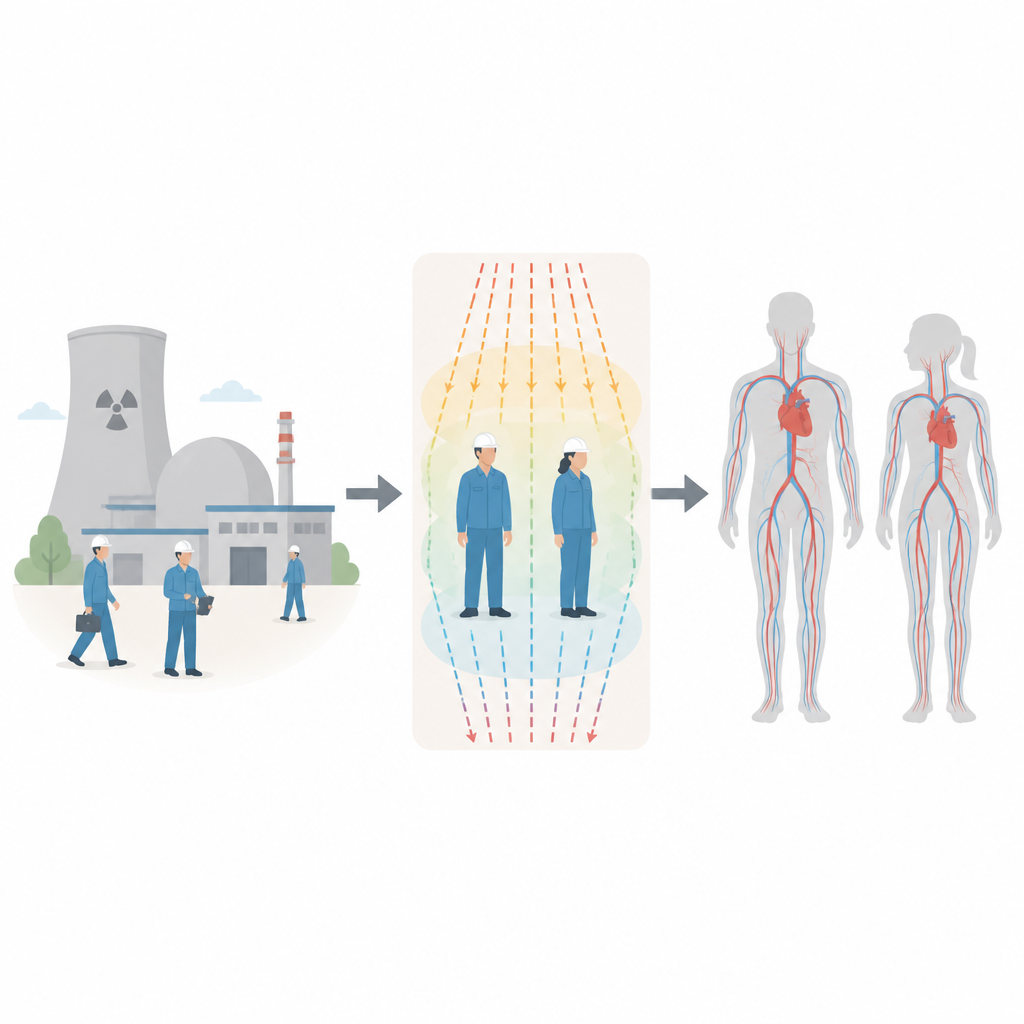
Looking at how fast the dose builds up
Instead of only adding up each worker’s lifetime dose, the researchers also looked at dose rate, meaning how much radiation a person received per year. They divided exposure into two parts: doses received below a chosen yearly level and doses received above it. By sliding this cut off across a range of dose rates, they could compare risk linked to slower versus faster accumulation of the same total dose. They also allowed for a delay of several years between exposure and possible illness and took into account other influences such as age, smoking, alcohol use, and additional internal exposure from inhaled radioactive particles.
Higher yearly doses, higher risk
The key finding is that when the same total radiation dose was accumulated at higher yearly rates, the risk of death from circulatory diseases increased more strongly than when that dose was spread out at lower rates. For heart and vessel diseases as a whole, as well as for cerebrovascular diseases and especially ischemic stroke, the excess risk per unit dose was consistently greater for the higher dose rate part of exposure. In many of these comparisons, the increases were statistically significant, meaning they were unlikely to be due to chance alone. The effect remained when the analysts tested different assumptions about delay times and when they combined gamma and neutron doses into a single measure.
Longer periods of steady exposure raise concern
The team also examined what happens if a worker experiences at least five continuous years at higher yearly doses, rather than just one year above the cut off. Under these conditions, the extra risk per unit dose rose sharply for all the outcomes studied. This suggests that not only the level of the yearly dose, but also how long that level is maintained, matters for the health of the heart and brain vessels. Adjusting for internal alpha radiation from plutonium turned out to be important: when this was ignored, the estimated risks from external radiation at high dose rates fell, showing that all sources of exposure need to be considered together. 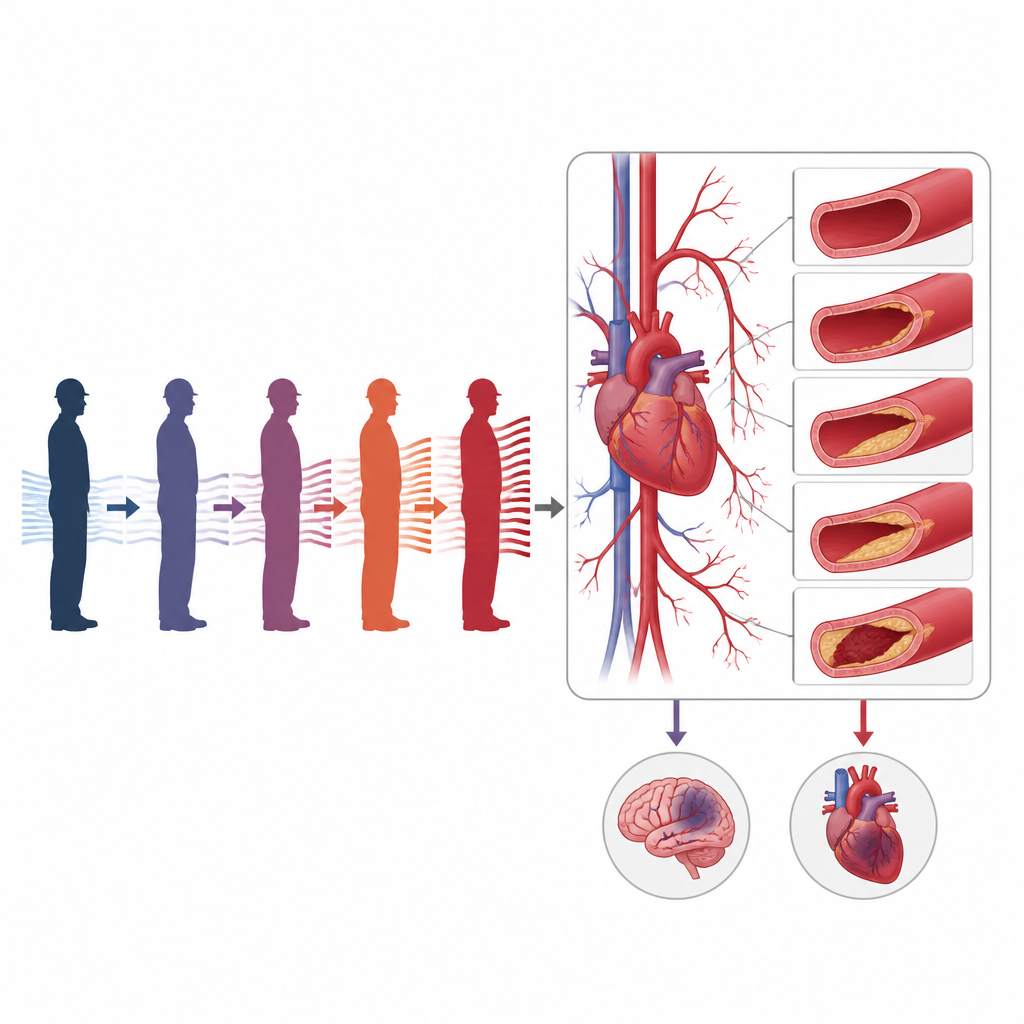
What this means for radiation safety
For a lay reader, the takeaway is that among workers who receive long term, job related radiation, getting the same total dose in short, more intense yearly amounts appears more harmful to the heart and brain vessels than receiving it more slowly. Longer stretches of such higher yearly exposure further increase the danger. These results, together with other studies, support the idea that radiation protection rules should pay attention not only to lifetime dose limits but also to how quickly doses are delivered and for how long, in order to better protect the circulatory health of people who work with radiation.
Citation: Azizova, T., Grigoryeva, E. & Hamada, N. Risk of mortality from diseases of the circulatory system due to occupational chronic radiation exposure, considering the radiation dose rate. Sci Rep 16, 14797 (2026). https://doi.org/10.1038/s41598-026-43943-5
Keywords: chronic radiation exposure, nuclear workers, circulatory disease, dose rate, ischemic stroke