Clear Sky Science · en
Geological and climatic influences on natural radioactivity in drinking water and their health impacts: a study of Dessie and Kombolcha towns, Ethiopia
Why the water beneath our feet matters
For many communities, the safety of a glass of tap water depends on forces deep underground and high in the sky. This study looks at two fast-growing towns in northern Ethiopia—Dessie and Kombolcha—to understand how local rocks and changing weather patterns together raise natural radioactivity in drinking water. By tracing where tiny radioactive elements come from, how rain and soil move them, and what this means for long-term health, the research offers lessons for other highland regions around the world that rely on springs, wells, and rivers.
Rocks that quietly feed the water
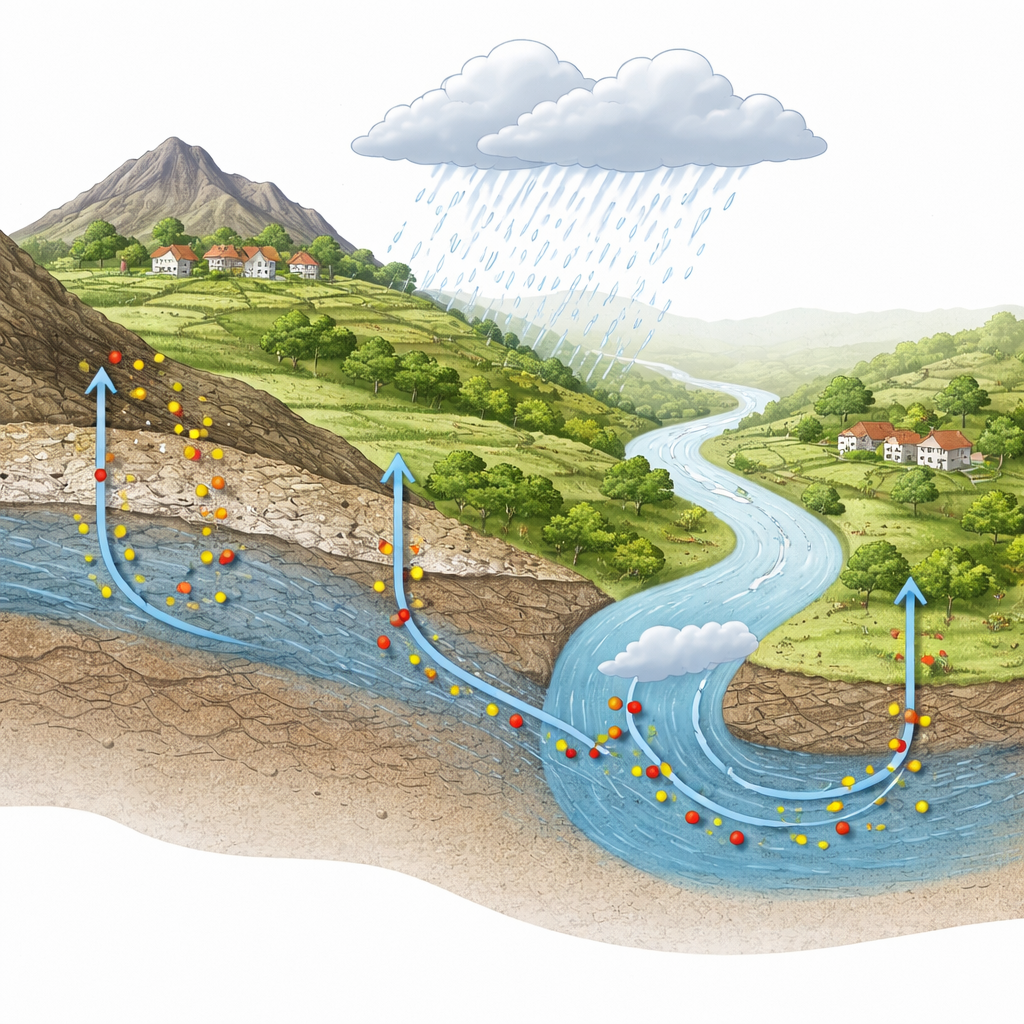
Beneath Dessie and Kombolcha lie thick layers of old lava flows and fine-grained mudrock. These rocks naturally contain uranium, thorium, and radioactive potassium-40. Over time, water moving through cracks and pores slowly dissolves and carries these elements into underground aquifers, hillside springs, and nearby rivers. The team found that the local geology acts as a steady source of natural radioactivity, especially where sedimentary mudrocks and certain volcanic layers are exposed near water sources.
Rain, soil, and river flow as hidden movers
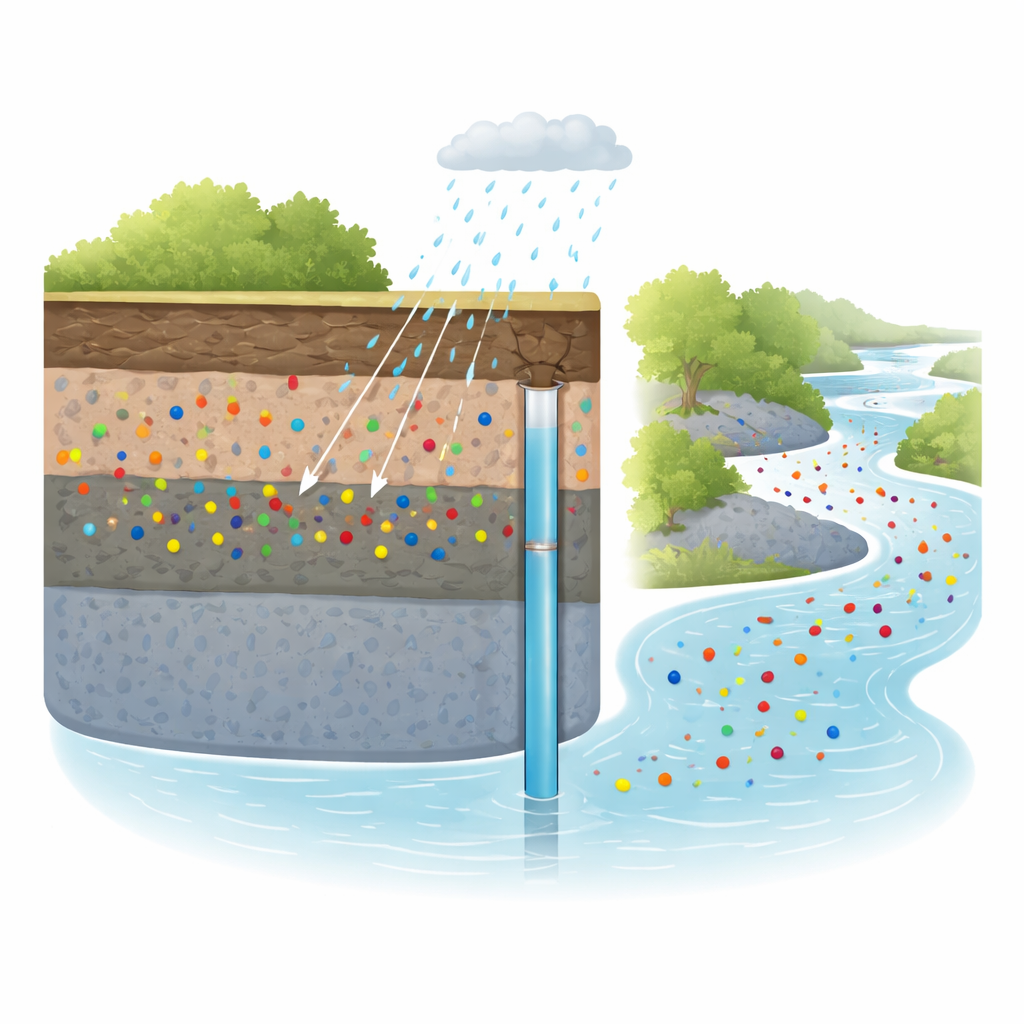
Geology alone does not explain the pattern of contamination. The towns sit along a downhill path: high-altitude Dessie drains into lower Kombolcha through the Borkena River. Using climate data from NASA, the researchers showed that high rainfall, humid air, and persistently moist soils make it easier for radioactive atoms to move. Rainwater seeps through soil, picks up uranium and thorium from rock, and joins springs and streams. As water flows downhill, these dissolved elements and tiny mineral grains are gradually swept toward lower areas. Measurements along the river and in wells confirm that this downslope transport concentrates more radioactivity in Kombolcha than in Dessie.
Measuring invisible rays in everyday water
To turn this picture into numbers, the scientists collected water from underground wells, hillside springs, and rivers in both towns over a full year. They used a sensitive gamma-ray detector—similar in spirit to medical imaging devices—to count the faint radiation emitted by uranium-238, thorium-232, and potassium-40 in each liter of water. Most samples showed uranium levels above the international guideline for drinking water, while thorium hovered around or just above its recommended limit. Potassium-40 was also present at high levels, especially in underground and spring water, but is less worrisome because potassium is tightly regulated by the body.
Where the risk is highest
The team then converted these radioactivity measurements into estimated annual radiation doses for people who drink the local water every day. In many wells and springs, the calculated doses exceeded the commonly used safety benchmark of 1 millisievert per year. Some spring sites in Dessie and one station in Kombolcha delivered several times that amount, mainly because of elevated uranium. Running river water tended to have higher concentrations than underground sources, and samples from the shared Borkena River consistently showed greater radioactivity in Kombolcha than upstream in Dessie, matching the downhill flow of water and dissolved minerals.
What this means for communities
The study concludes that the safety of drinking water in these Ethiopian plateau towns is shaped by a partnership between rocks and climate. Uranium-rich and thorium-rich formations provide the source, while rain, wet soils, and river flow do the moving and concentrating, especially toward lower-lying communities. Because the resulting radiation doses in several locations exceed global recommendations, the authors warn of possible long-term health impacts, such as kidney damage and increased cancer risk. They recommend ongoing monitoring, improved water treatment, and planning that accounts not just for where radioactive rocks are found, but also for how storms, runoff, and rivers redistribute their contents over time.
Citation: Geremew, H., Mekonnen, Y. & Admasu, A. Geological and climatic influences on natural radioactivity in drinking water and their health impacts: a study of Dessie and Kombolcha towns, Ethiopia. Sci Rep 16, 13737 (2026). https://doi.org/10.1038/s41598-026-43834-9
Keywords: drinking water safety, natural radioactivity, uranium in groundwater, Ethiopian highlands, environmental health