Clear Sky Science · en
Polyphasic identification (MALDI-TOF + ITS) of mucosal yeasts in hybrid marmosets from Rio de Janeiro
Why tiny monkeys and hidden microbes matter
In many Brazilian cities, small, wide‑eyed monkeys called marmosets are a familiar sight on power lines, in backyards, and at the edges of parks. What most people never see are the microscopic passengers these animals carry in their mouths and guts—some of which can cause serious disease in humans. This study looks closely at the yeasts living on hybrid marmosets in Rio de Janeiro, revealing potentially risky fungi that thrive where city and forest meet, and showing why monitoring wildlife microbes is part of protecting public health.
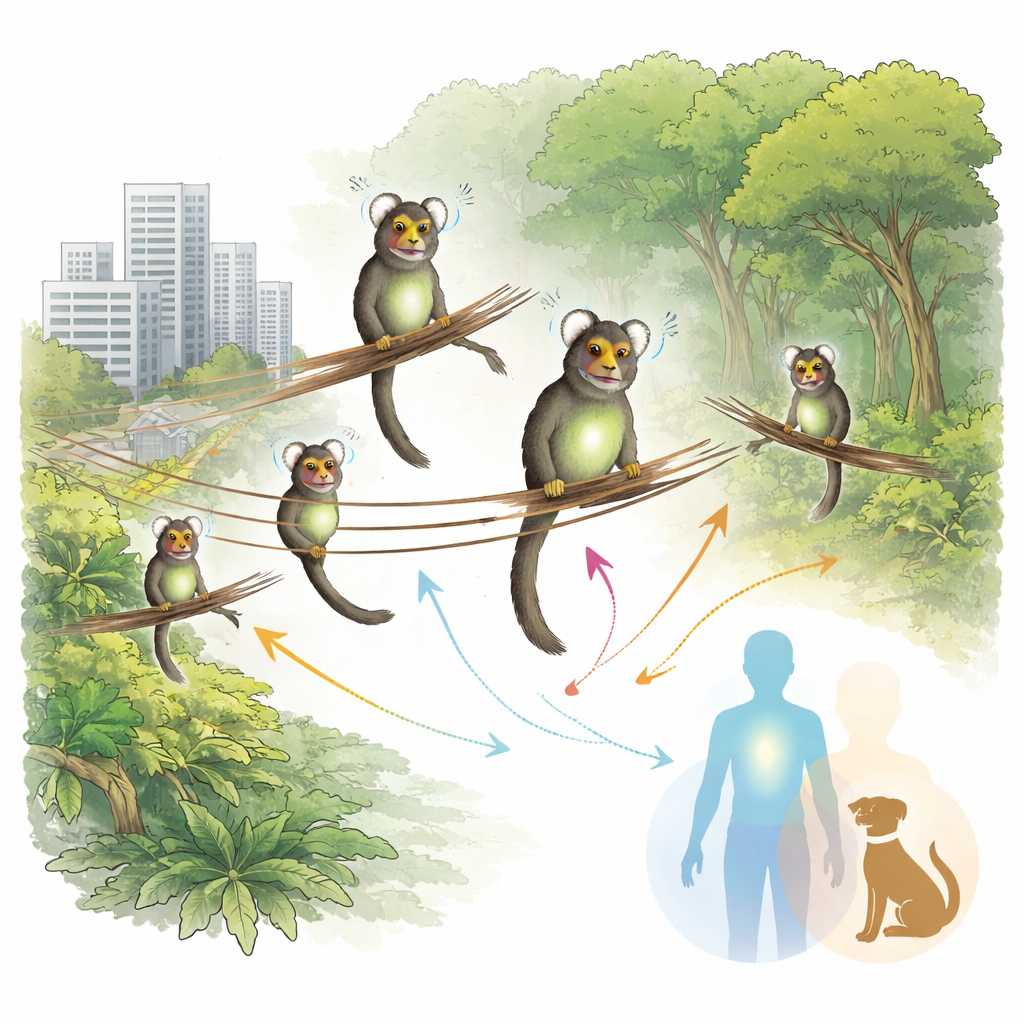
City–forest life of the marmosets
The marmosets in this study are hybrids of two species that were originally from northeastern Brazil but are now invasive in Rio de Janeiro. Released or abandoned near cities, they have adapted to an “urban‑forest” lifestyle, moving easily between tree canopies and human structures such as fences and power lines. Because they live so close to people, they can act as bridges between wild ecosystems, pets, and humans. The researchers focused on yeasts living on the moist linings of the mouth, rectum, and vagina—places where fungi can quietly persist without causing illness, but also where disease‑causing species may be hiding.
How scientists sampled and tracked the yeasts
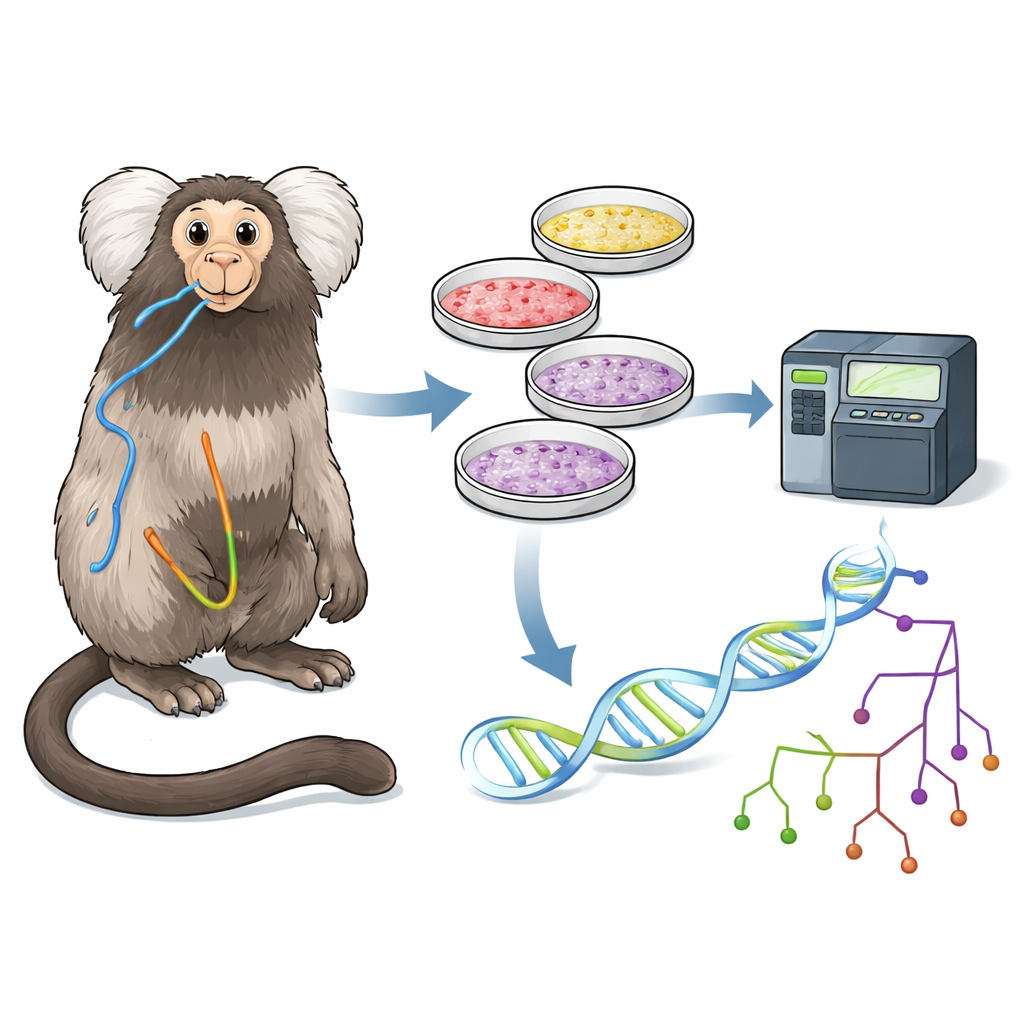
During two winter field campaigns in 2022 and 2023, scientists humanely captured 12 apparently healthy hybrid marmosets at a biological station in the Atlantic Forest of Rio. While the animals were under anesthesia, the team collected swabs from the oral, rectal, and vaginal areas and then, following local wildlife‑control rules, euthanized the animals under strict ethical oversight. In the lab, the swabs were streaked onto nutrient‑rich plates to grow any fungi present. The team carefully counted the resulting colonies and examined their colors and textures to get a first idea of which yeasts were there.
High‑tech fingerprints for fungi
To identify the yeasts precisely, the researchers combined two modern tools. First, they used MALDI‑TOF mass spectrometry, which creates a protein “fingerprint” for each colony and compares it with a reference library, giving a rapid, automated guess at the species. Second, they sequenced a standard stretch of fungal DNA known as the ITS region, considered the gold standard for distinguishing closely related yeasts. By using both approaches together, they could confirm identities, refine doubtful cases, and build family trees showing how the marmoset yeasts relate to known strains from hospitals, the environment, and food.
What was living on the marmosets
From the 12 marmosets, the team recovered 26 yeast isolates. The overwhelming majority—21 strains—belonged to Candida parapsilosis, a species already recognized as an emerging threat in hospitals because it can contaminate catheters, form hardy biofilms, and resist several common antifungal drugs. This yeast appeared in all three body regions: mouth, rectum, and vagina. The scientists also detected one strain of Trichosporon asahii, another opportunistic fungus linked to severe infections in people with weakened immune systems. In addition, they found three “environmental” yeasts—Pichia myanmarensis, Pichia manshurica, and Torulaspora pretoriensis—species typically associated with soil and fermenting foods like wine or olives. None of these five yeast species had previously been reported from marmosets.
Climate, behavior, and future risks
The two winters when sampling took place differed in temperature: the second was about 2.1 °C warmer, and during that period more yeasts were isolated. The authors suggest that rising temperatures, along with humidity and changes in animal behavior, may favor fungal growth in wildlife. Because marmosets eat fruits, tree sap, and insects and move between forest and city, they may pick up environmental yeasts from their diet and surroundings, while also harboring strains that are dangerous in hospitals. The study found no obvious difference in yeast presence between male and female animals, and all marmosets appeared healthy, underlining that potentially harmful fungi can circulate silently in free‑living wildlife.
What this means for people and pets
For non‑specialists, the main message is that cute, familiar wild animals can quietly carry yeasts that pose real risks in human medicine. By showing that marmosets at the city’s edge host emerging pathogens such as Candida parapsilosis and Trichosporon asahii, this work highlights their role as early‑warning sentinels for new fungal threats. It also reinforces public‑health advice: wild marmosets should not be treated as pets or fed by visitors, as this increases chances of disease passing in either direction and may even alter the animals’ own microbiota. Regular screening of fungi in wildlife, especially in rapidly warming and heavily human‑influenced environments, can help anticipate outbreaks and better protect the health of people, domestic animals, and ecosystems alike.
Citation: Morgado, D.S., Costa, G.L., Costa-Neto, S.F. et al. Polyphasic identification (MALDI-TOF + ITS) of mucosal yeasts in hybrid marmosets from Rio de Janeiro. Sci Rep 16, 13502 (2026). https://doi.org/10.1038/s41598-026-43653-y
Keywords: marmosets, yeast microbiota, emerging fungal pathogens, urban wildlife, One Health