Clear Sky Science · en
Peer aesthetic and social perceptions of anterior open bite in children
Why Children’s Smiles Matter
Parents know that a child’s smile can light up a room, but that smile also quietly shapes how kids see one another. This study looked at a specific dental issue called anterior open bite, where the front teeth don’t touch when a child bites down, leaving a visible gap. The researchers wanted to know: do children themselves notice this difference in other kids’ smiles, and does it change how they feel about those children socially? The answers shed light on how early concerns about appearance begin and how dental habits today might affect a child’s confidence tomorrow.
What Is Different About These Smiles?
Anterior open bite is a relatively common condition in young children and is often linked to habits such as thumb-sucking, pacifier use, or pushing the tongue against the teeth. Instead of the upper front teeth slightly overlapping the lower ones, there is a visible gap when the child smiles or bites. While dentists know that this can affect chewing and speech, the question here was more personal: when children look at another child with this type of smile, do they find it less attractive, and does that influence how they think about that child as a friend or classmate?
How the Study Was Carried Out
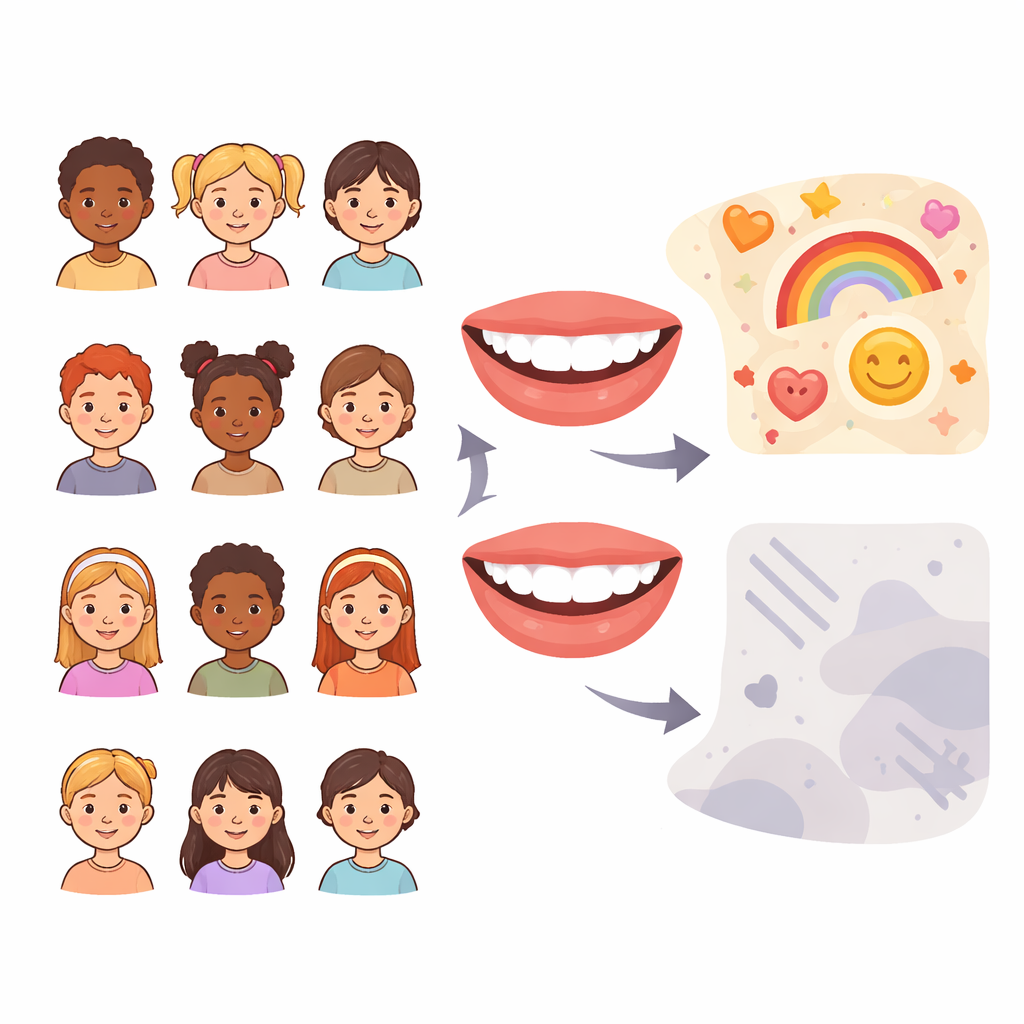
To focus purely on the effect of the teeth, the researchers used computer-generated faces of children rather than photographs of real kids. For each face, they created two versions: one with an open-bite smile and one with a typical overlapping bite, keeping every other facial feature exactly the same. Children aged 4 to 12 years were then invited to take part in an online questionnaire, usually at schools or shopping centers. Each child saw a set of twelve faces from their own age group, a mix of smiles with and without the open bite, and rated how attractive each smile was using a simple illustrated scale of faces ranging from “very ugly” to “very beautiful.”
What Children Thought of the Smiles
Across all ages—from preschoolers to preteens—the pattern was clear: smiles with a normal overbite were rated as more attractive than the same faces with an open bite. Even very young children could pick up on this difference. When asked direct yes-or-no questions such as whether the child in the picture had a beautiful smile or beautiful teeth, children were more likely to say “yes” for the normal-bite smiles. This gap became especially strong in the older groups, suggesting that as children grow, they become even more sensitive to dental appearance. Interestingly, boys and girls judged the smiles in much the same way; the child’s own sex did not change how they felt about the different smiles.
Looks Versus Getting Along
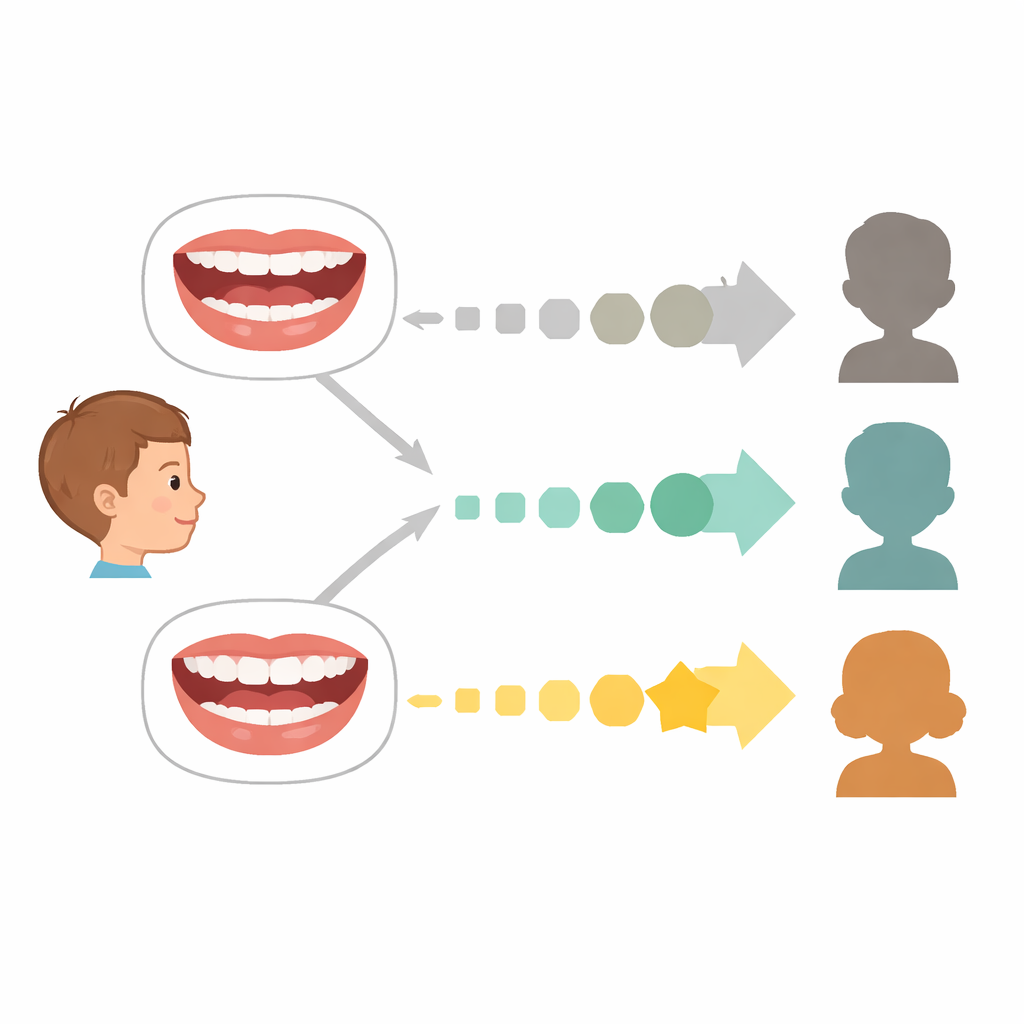
One might worry that a less-preferred smile also leads to social rejection, but the study found a more nuanced picture. When children answered questions about social traits—whether the child in the picture seemed cool, intelligent, happy, or someone they would like as a friend—the presence of an open bite did not make a consistent difference. In other words, while kids did notice and rate the open-bite smiles as less attractive, they did not typically see those children as less friendly, less fun, or less smart. The authors suggest that, in childhood, many kids share imperfect or changing smiles as their baby teeth fall out and adult teeth arrive, which may soften any social impact of dental irregularities.
What This Means for Families and Dentists
The study concludes that anterior open bite clearly affects how attractive a child’s smile looks to their peers, even at very young ages, but it does not, by itself, seem to damage how children judge one another socially. Still, because appearance can influence self-esteem and later peer relationships, the authors argue that dentists should consider these perceptions when planning treatment and advising parents about habits that may cause open bite. Showing children side-by-side images of smiles with and without the gap may help them understand why breaking a thumb-sucking or similar habit is worthwhile: it is not just about straight teeth, but also about feeling better about their own smile as they grow.
Citation: Faria, Ê., Freitas, K.M.S., Cotrin, P. et al. Peer aesthetic and social perceptions of anterior open bite in children. Sci Rep 16, 12538 (2026). https://doi.org/10.1038/s41598-026-43275-4
Keywords: anterior open bite, children’s smiles, dental aesthetics, orthodontic habits, peer perception