Clear Sky Science · en
Indicator-based assessment of social sustainability in urban water management across contrasting governance contexts
Why Fair Water Matters in Cities
Clean, reliable water is one of the quiet essentials of city life, yet not everyone experiences it in the same way. Some neighborhoods face leaks, shortages, or high bills, while others enjoy steady service with little say in how the system is run. This article explores how “social sustainability” — ideas like fairness, voice, and inclusion — can be measured in urban water systems, and why improving these human factors can be as important as building new pipes or treatment plants.
Looking Beyond Pipes and Pumps
Most conversations about city water focus on technology: where the water comes from, how it is treated, and how much is lost to leaks. The authors argue that this view misses a crucial part of the story: how people experience the system. They propose a simple framework to capture social sustainability in four dimensions: how aware people are of water issues, how they use water in their daily lives, whether different groups have fair access, and how far residents are included in decisions. Instead of collecting thousands of household surveys, they build a structured scoring system informed by existing studies, local reports, and expert knowledge to show how these dimensions can be compared across cities in a clear and transparent way.
Two Cities, Different Climates, Similar Obstacles
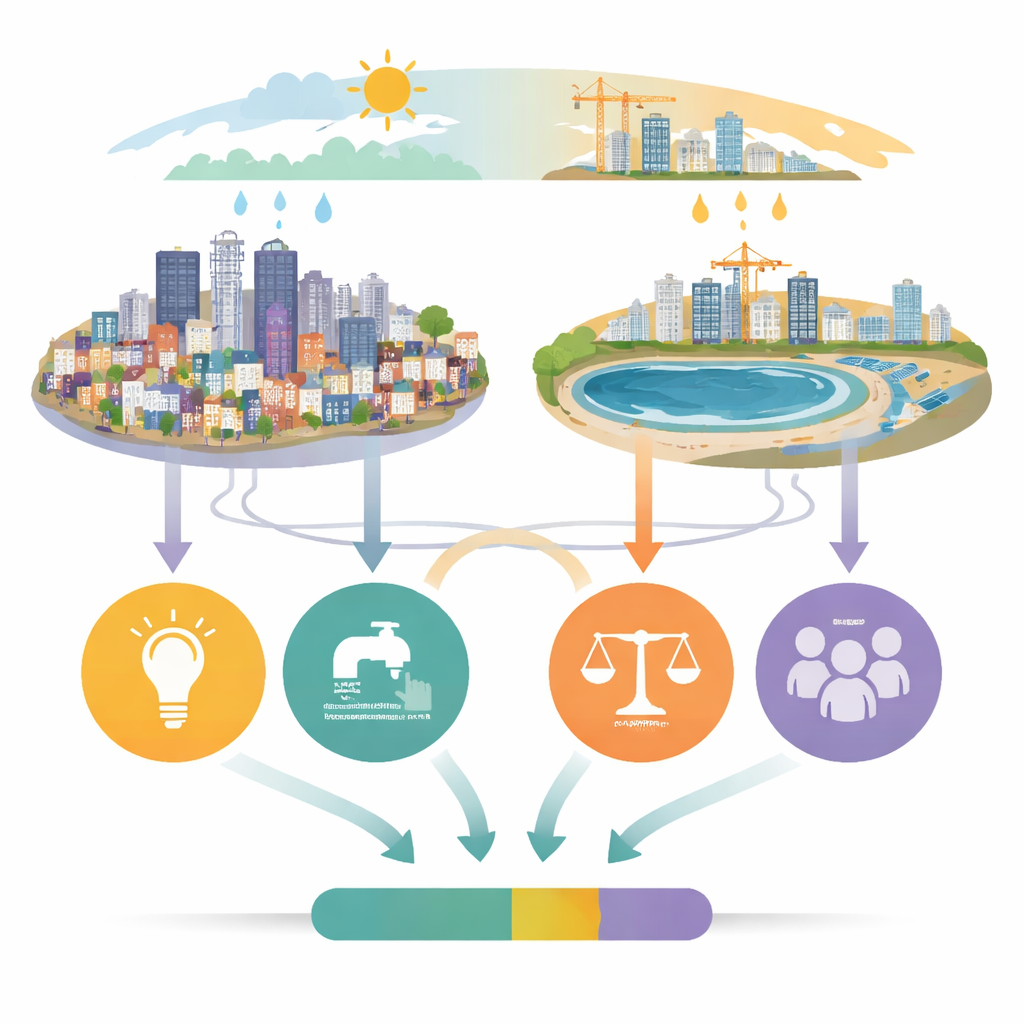
To test their approach, the researchers apply it to two very different cities: Peshawar in Pakistan and Al-Jouf in Saudi Arabia. Peshawar is a fast-growing city with aging pipes, uneven service, and limited institutional capacity. Many residents face interruptions and rely on groundwater, and poorer areas often struggle most. Al-Jouf, by contrast, sits in a dry region where water is scarce but service is more stable and tightly managed through centralized planning and non-traditional sources. Despite these contrasts in climate, infrastructure, and wealth, both cities share a common pattern: people are reasonably aware of water scarcity and many practice some level of conservation, yet deep problems remain in who gets what water and who gets heard.
Scoring Awareness, Behavior, Fairness, and Voice
Using a 1–10 scoring scale that is converted into standardized values, the authors build a composite “social sustainability index.” On this scale, the two cities reach only about 38 percent of the best possible score, signaling moderate-to-low social sustainability. Awareness and everyday water-use practices perform at a moderate level: many residents recognize scarcity and adjust their behavior, often because they have lived through shortages or high costs. But the equity and inclusion dimensions score low. Access to safe, affordable water remains uneven, especially for marginalized and low-income communities, and opportunities for meaningful public participation in water planning are limited. The analysis stresses that these numbers are not precise measurements of how many people are served, but consistent positions within a common yardstick that lets different places be compared and discussed.
Why Rules and Representation Matter Most
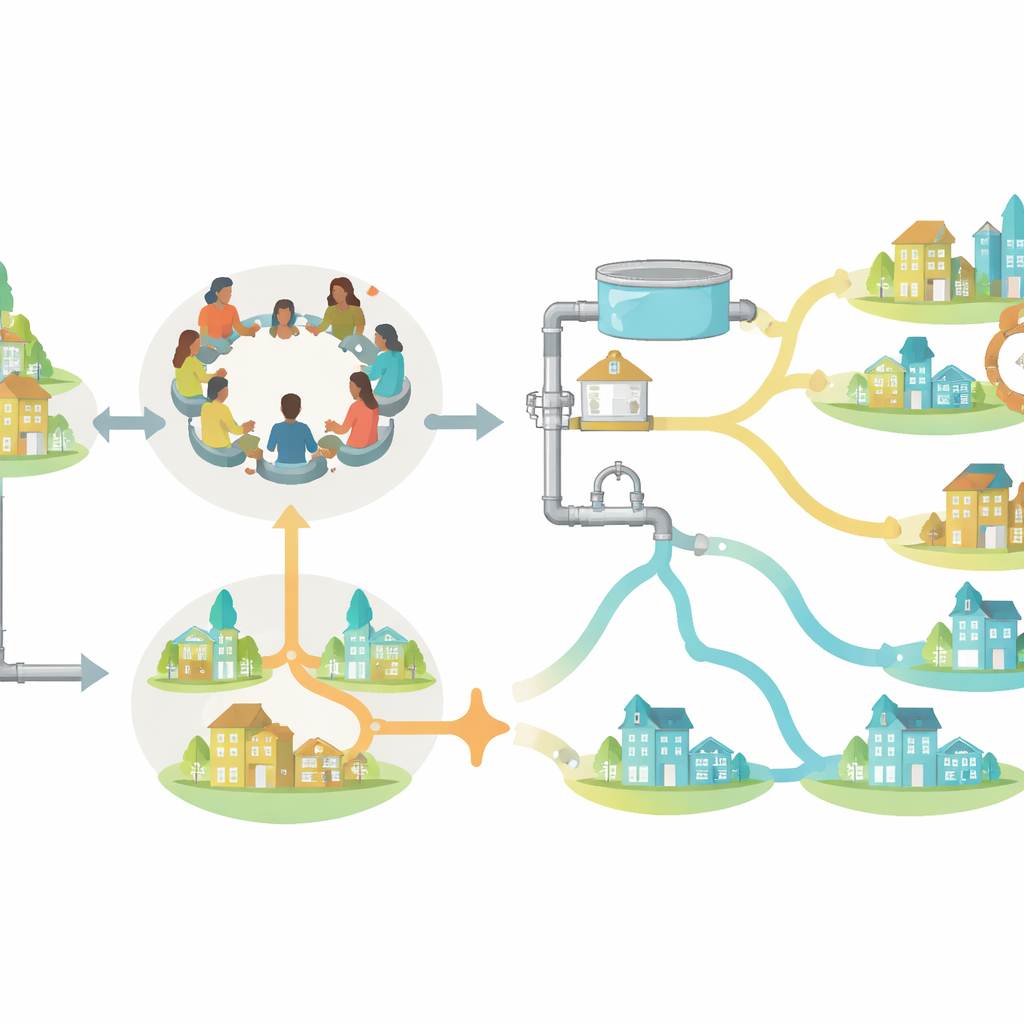
To see which levers matter most, the authors run a sensitivity analysis: they ask how much the overall index would change if one dimension improved while the others stayed the same. Hypothetical boosts in equity and inclusion cause much larger jumps in the overall score than similar improvements in awareness or personal behavior. In other words, better campaigns and household habits help, but do not fix the core problem. What really moves the needle are fairer rules for who receives reliable service and stronger channels for people to influence decisions. The study also highlights a sustainability “gap”: a clear distance between current conditions and the desired state where most people enjoy secure access and a meaningful voice.
Turning Insight into Fairer Water Futures
For non-specialists, the key takeaway is straightforward: cities cannot achieve truly sustainable water systems by focusing only on engineering and asking individuals to “use less.” The human side — fair access, shared decisions, and accountable institutions — is just as important. The framework presented in this article does not claim to capture every nuance, and it relies on expert judgment rather than new surveys. But it offers a practical starting point for city leaders and communities to diagnose where their water systems fall short socially, compare progress over time, and design reforms that prioritize equity and inclusion. In doing so, it points the way toward urban water systems that are not only efficient and resilient, but also more just.
Citation: Alrowais, R., Rehman, R., Bashir, M.T. et al. Indicator-based assessment of social sustainability in urban water management across contrasting governance contexts. Sci Rep 16, 12977 (2026). https://doi.org/10.1038/s41598-026-43239-8
Keywords: urban water governance, social sustainability, water equity, public participation, water scarcity