Clear Sky Science · en
Hidden in the pollen: tracing 3000 years of human footprints in a mountain landscape
Tracing Footsteps in a Mountain Valley
In a quiet mountain valley in northern Slovakia, a small wetland has been quietly recording human history for three thousand years. Instead of words on paper, this archive is made of grains of pollen, bits of charcoal, and traces of soil washed in by rain. By reading this natural record and comparing it with archaeological finds, scientists can see when people cut forests, grazed animals, farmed fields, and when they abandoned the land. Their work shows that today’s treasured open wetlands in the Western Carpathians are not untouched wilderness, but living legacies of long-term human presence.
A Mountain Basin Shaped by People and Climate
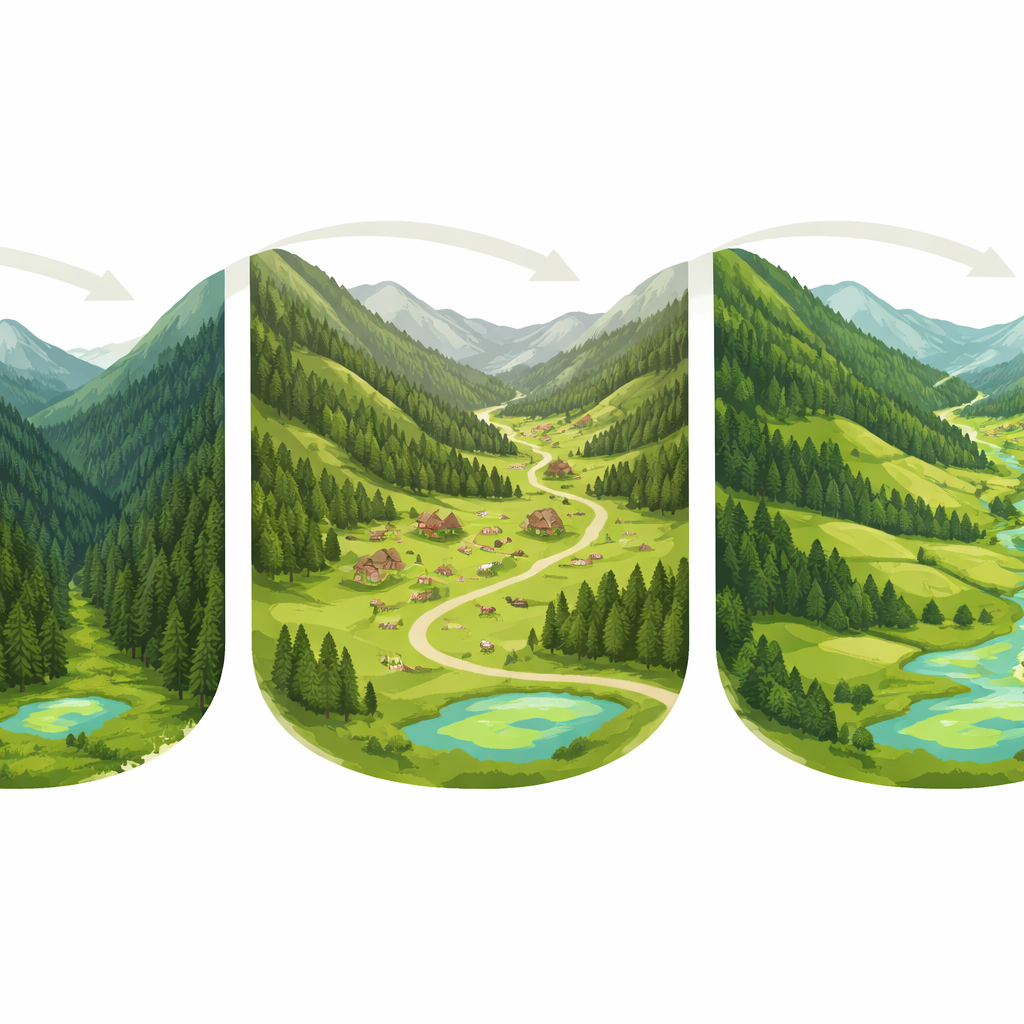
The study focuses on the Liptov region, a basin ringed by high mountains in the Western Carpathians. This terrain creates sharp contrasts in moisture and temperature, supporting a patchwork of dense spruce woods, dry grasslands, and rare alkaline wetlands fed by mineral springs. One such site, the Demänovská slatina calcareous fen, still harbors endangered plants and snails that depend on sunlight and open, wet ground. To understand how this fen and the wider landscape came to look the way they do, the researchers combined detailed pollen records from the fen and nearby sites with maps of ancient and medieval settlements.
Reading the Story Hidden in Pollen
Layer by layer, the fen has trapped pollen from surrounding plants, dust from the hillsides, and tiny charcoal particles from fires. By slicing a deep core through the peat and dating pieces of plant material, the team built a precise timeline reaching back to about 1100 BC. Shifts in the mix of tree and herb pollen, together with signs of grazing and burning, reveal when forests closed in and when they were pushed back. The scientists looked for pollen from crops such as cereals, as well as plants that thrive on trampled ground, to mark farming and herding. They also measured the chemistry of the sediments to track erosion and spring activity.
Rises, Falls, and Returns of Human Activity
The record shows that human influence near the fen waxed and waned over the centuries. During the Late Bronze Age and early Iron Age, people expanded into higher ground, building fortified hilltop sites and clearing slopes for wood, fields, and pasture. Around the fen, tree cover shrank, open vegetation spread, and signs of grazing and crops became clear in the pollen. Later, in Roman and Migration times, political upheaval and population decline led to much lower local activity. Forests, especially spruce, advanced over the fen, erosion slowed, and pollen diversity dropped. Only centuries later, in the Middle Ages, did renewed settlement and land use reopen the landscape, with continuous cereal cultivation and intensive grazing peaking from about AD 1250 onward.
Comparing Valleys to See the Bigger Picture
To test whether this story was unique, the researchers compared Demänovská slatina with two other fens about 30 kilometers away in the Váh River valley. There, long pollen records show that spruce-dominated forests covered much of the region for millennia, but that open habitats and grazing increased from the Bronze Age onward. Interestingly, in this neighboring area, the pollen suggests more continuous use of the land during times when archaeology records few visible sites. Together, the three pollen archives and the settlement data reveal that local topography and land use decisions shaped each valley differently, even under the same climate and cultural waves.
How People Helped Rare Wetlands Survive
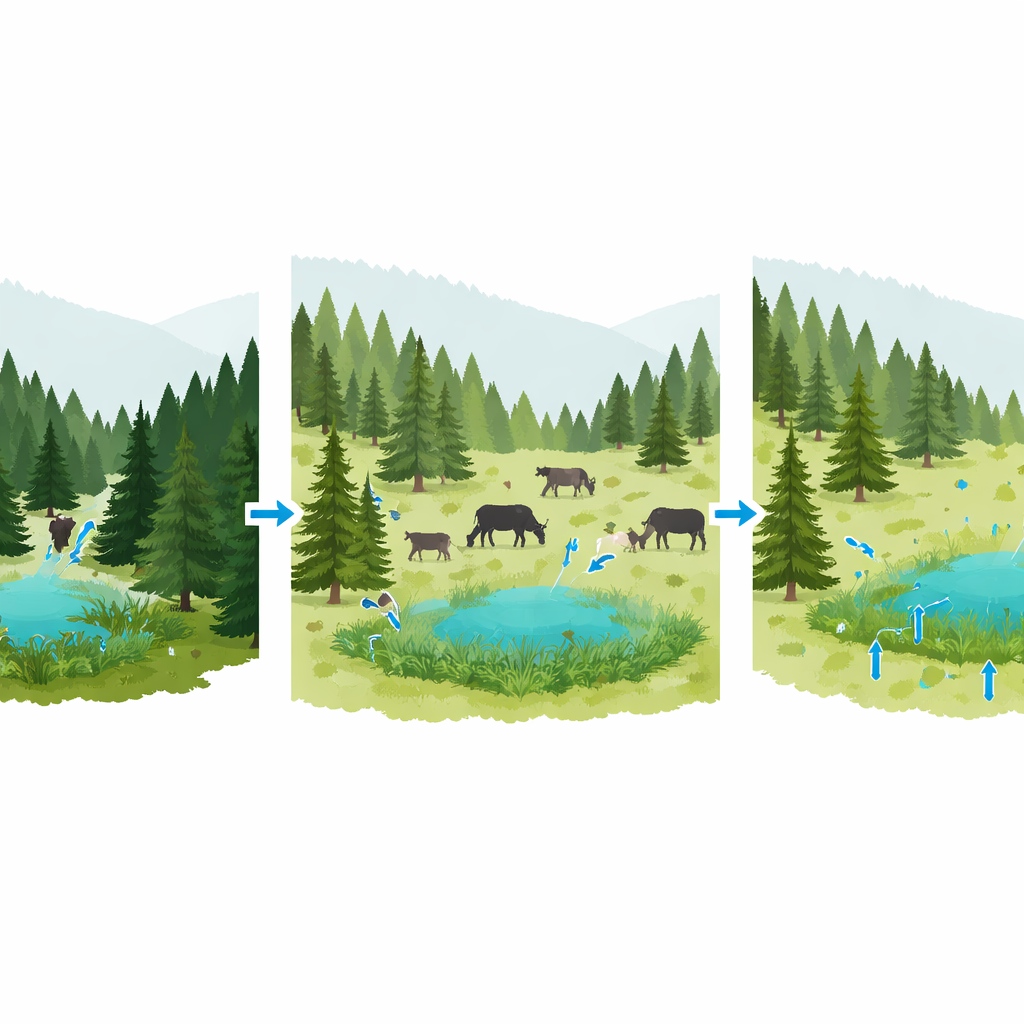
One of the most striking findings is that continual low-level disturbance by people and their herds helped calcareous fens like Demänovská slatina form and persist. When grazing and cutting kept trees—especially spruce—from taking over, sunlight reached the wet ground, springs stayed active, and specialized fen plants thrived. When human pressure eased, woods spread, the fen shrank, and plant diversity fell. This runs counter to the idea that the most natural state of such valleys is closed forest: here, some of the most conservation-prized open habitats owe their existence to thousands of years of human use.
Why This Ancient Story Matters Today
For today’s land managers and conservationists, the message is clear. The rare fens and open meadows of the Western Carpathians are not fragile leftovers from a pristine past, but dynamic ecosystems that have long depended on grazing, mowing, and other forms of disturbance. Simply walking away and letting nature take its course often means that shrubs and trees will overrun these sites, erasing the very communities we hope to protect. By learning how past societies shaped these landscapes, we gain practical guidance for keeping them alive: thoughtful, ongoing human care may be the key to preserving their unique biodiversity in a changing climate.
Citation: Eva, J., Lucia, B., Libor, P. et al. Hidden in the pollen: tracing 3000 years of human footprints in a mountain landscape. Sci Rep 16, 14470 (2026). https://doi.org/10.1038/s41598-026-43228-x
Keywords: pollen, calcareous fen, human impact, Holocene, Western Carpathians