Clear Sky Science · en
Predictors of adult ICU mortality: a retrospective study at two government hospitals in Ethiopia
Why Care About Intensive Care?
When someone becomes critically ill after a major operation, a stroke, or a severe infection, their best chance of survival often lies in an intensive care unit (ICU). But ICU care is not the same everywhere. This study from two large public hospitals in Addis Ababa, Ethiopia, asks a stark question: who survives ICU care, who does not, and why? The answers matter not only for patients and families, but also for health systems in low-income countries trying to save more lives with limited resources.

Taking a Closer Look at ICU Patients
The researchers reviewed the medical charts of 309 adults who stayed at least two days in the ICUs of Tikur Anbessa Specialized Hospital and Zewditu Memorial Hospital between December 2023 and May 2024. These units receive some of the sickest patients in Ethiopia’s capital. Most were young to middle-aged adults, with a median age of 39 years, and men and women were almost equally represented. Nearly half of the patients arrived from the emergency department, reflecting sudden, severe illness or injury. Others came from operating rooms or medical wards, showing how both planned surgery and unexpected crises can lead to intensive care.
Why People Landed in Intensive Care
The main reasons for ICU admission paint a picture of the health threats facing adults in this setting. Many patients were recovering from major surgery, while others were battling septic shock (a life‑threatening response to infection), stroke, heart failure, or serious breathing problems such as acute respiratory distress syndrome. These conditions can quickly overwhelm the body, requiring constant monitoring, organ support, and advanced treatments that are only available in an ICU. Despite this, resources such as staff, equipment, and infection control measures are often stretched thin in public hospitals in low-income countries.
A Heavy Toll in the ICU
The study found that almost half of the ICU patients—46.3 percent—died during their stay. This rate was similar in both hospitals and is higher than typical figures reported from many wealthier countries, though comparable to some other African settings. The findings echo previous studies showing that limited resources, newer ICU units, and shared spaces for surgical and medical patients can push death rates upward. Differences in staffing levels, availability of essential drugs and machines, and the training of critical care teams likely contribute to the high toll.
Three Key Warning Signs
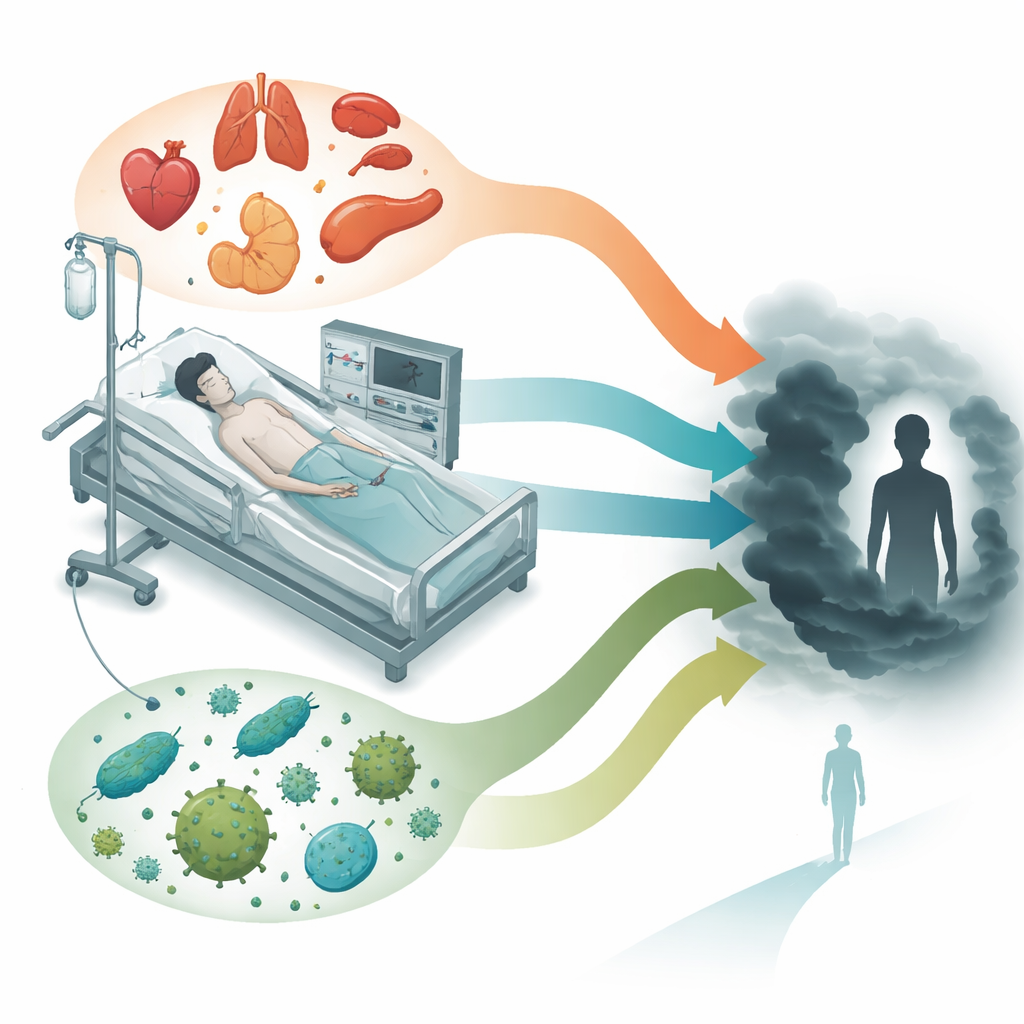
To understand which patients were at greatest risk, the team used statistical models to link clinical features with survival. Three factors stood out as powerful, independent predictors of death. First, patients who arrived needing mechanical ventilation—machines that take over breathing—were more than four times as likely to die as those who did not. Second, patients with a high Charlson Comorbidity Index, a score that sums up long‑standing illnesses like heart disease, diabetes, and chronic lung problems, had roughly double the risk of death compared with those with fewer or milder conditions. Third, patients who developed infections while in the hospital, known as hospital‑acquired infections, had nearly three times the odds of dying. Together, these risks highlight how underlying health, the severity of acute illness, and the safety of hospital care interact to shape outcomes.
What This Means for Patients and Policy
For a layperson, the message is straightforward but urgent: patients who arrive sicker, with many prior illnesses, who need machines to breathe, and who pick up new infections in the hospital are far more likely not to make it out of the ICU alive. The study suggests that better infection control, earlier and more effective management of chronic diseases, improved training in mechanical ventilation, and stronger national policies for critical care could save many lives. By focusing on these modifiable warning signs, Ethiopia and similar countries can turn the ICU from a place of last resort into a more reliable bridge back to health.
Citation: Weldemedhn, S.G., Hagos, B.T., Kebede, A.M. et al. Predictors of adult ICU mortality: a retrospective study at two government hospitals in Ethiopia. Sci Rep 16, 12487 (2026). https://doi.org/10.1038/s41598-026-43206-3
Keywords: intensive care units, hospital-acquired infection, mechanical ventilation, comorbidities, Ethiopia