Clear Sky Science · en
Exploring the influence of locality on stakeholder behavioral intentions in industrial heritage tourism from a sense of place perspective
Why old factories still matter today
Across the world, disused factories, mines, and salt works are being reborn as tourist attractions. Yet simply turning machines into museum pieces can strip these places of the very soul that makes them special. This study looks at China’s historic Zigong Salt Farm to ask a human question with wide relevance: how do people’s feelings about a place shape what they choose to do there, from supporting conservation to recommending it to friends? The answers help explain why some industrial heritage sites thrive as living parts of their communities while others become hollow backdrops.
What makes a place feel truly local
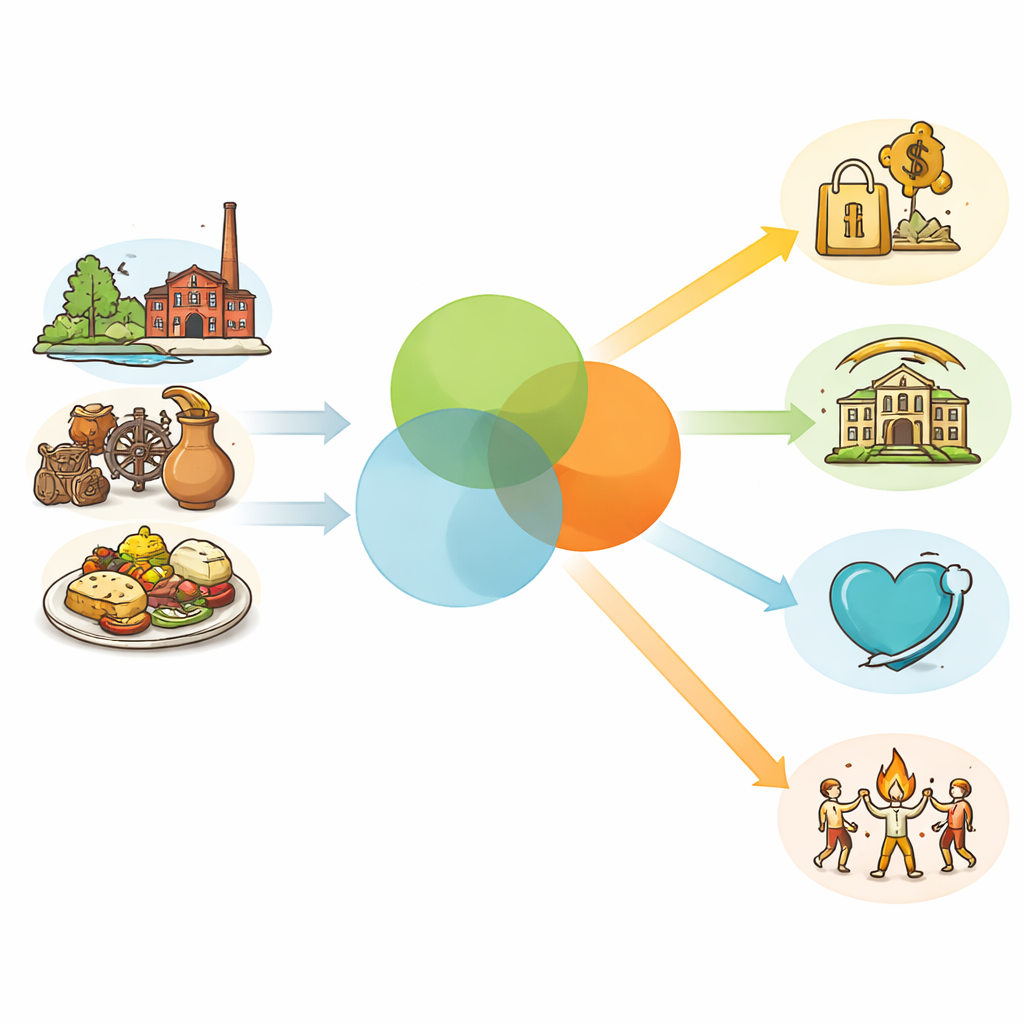
The authors start from the idea of “locality” – the blend of landscape, history, social life, customs, and culture that makes one place different from any other. At Zigong Salt Farm, this includes ancient salt wells, distinctive production equipment, famous wartime stories, and local foods and festivals. While industrial heritage is often seen as a symbol of global modernity, the study argues that such sites only gain real meaning when they are understood in their specific setting. Preserving smokestacks and workshops is not enough; what counts is keeping alive the links between the site, its surrounding community, and the stories people tell about it.
How thought, feeling, and action are connected
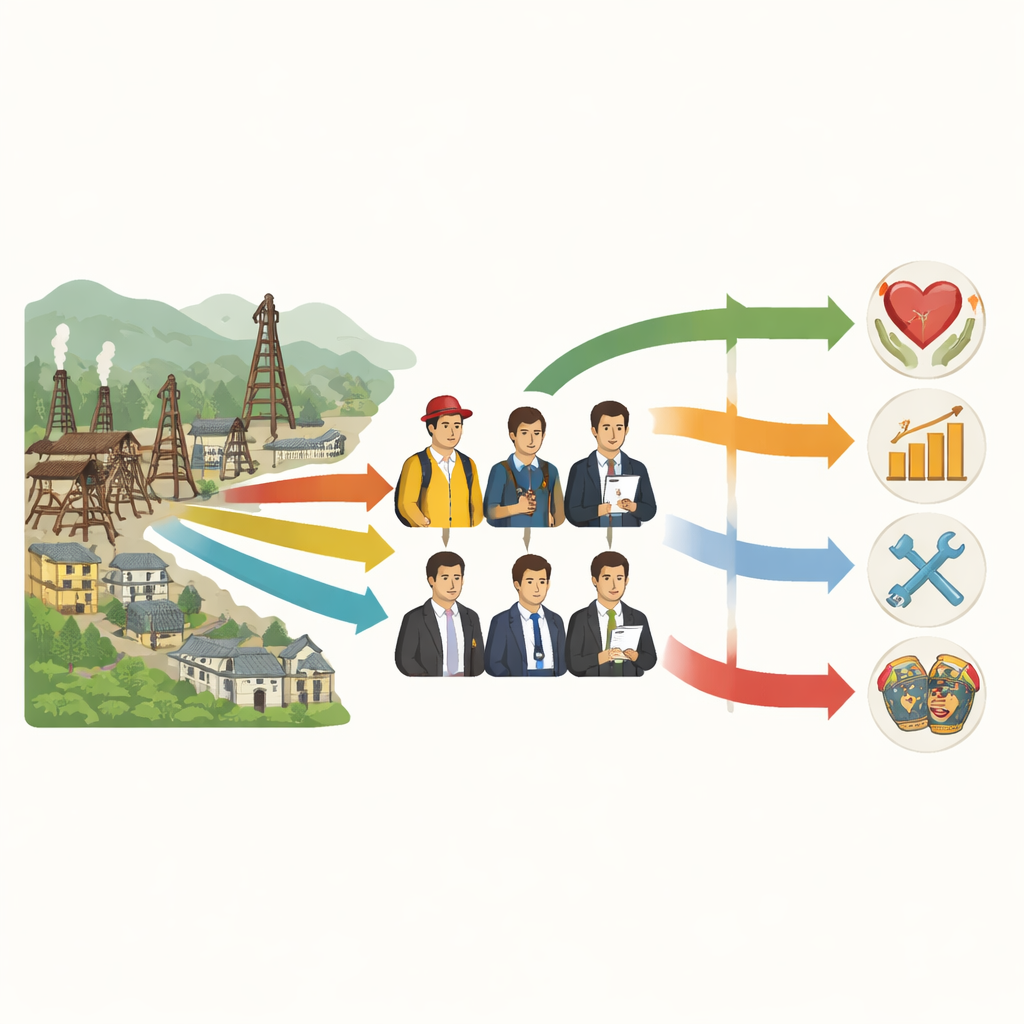
To untangle these links, the researchers extend a well-known psychological framework called the Cognitive–Affective–Conative model. In plain terms, this model says that what people think leads to what they feel, and what they feel leads to what they intend to do. Here, “thinking” is how clearly people perceive the local character of the salt farm. “Feeling” is their sense of place – whether they see the site as part of who they are, rely on it for valued experiences, and feel emotionally attached to it. “Doing” is captured through four kinds of intended actions: practical support (such as buying local products or promoting tourism), value-driven support (such as backing protection of heritage), emotional responses (like wanting to return), and tradition-based behaviors (such as visiting because friends and family do).
Listening to many voices around one heritage site
The team surveyed 1,336 people linked to three salt-farm sites in Zigong: tourists, nearby residents, government staff, and employees of tourism businesses. Using a detailed questionnaire built from earlier research, they measured each person’s perception of local features, their sense of place, and their future intentions. They then applied advanced statistical techniques, including structural equation modeling and comparisons across groups, to test a set of hypotheses. These tools allowed them not only to check whether the three layers – perception, feeling, and intention – were connected, but also to see whether these links worked differently for different kinds of stakeholders.
What the numbers reveal about place and behavior
Overall, the results show a clear chain: stronger perceptions of locality are tied to a stronger sense of place, and both are linked to more positive intentions toward the industrial heritage site. People who more vividly noticed Zigong’s unique history, machinery, landscape, and customs were more likely to feel that the salt farm was special, important, and emotionally meaningful to them. In turn, those with a stronger sense of place were more inclined to support economic development based on the site, back heritage protection, return for repeat visits, and follow community norms around visiting and recommendation. The study also finds that different aspects of sense of place connect to different types of intentions. For example, identifying with the place is closely related to practical support, while emotional attachment is especially tied to value-driven, emotional, and tradition-based actions.
Different roles, different journeys
The picture becomes richer when the four stakeholder groups are compared. Government staff, who work closely with heritage and planning issues, show especially strong links between local perception, feelings about place, and intended support. Tourists and nearby residents also display robust connections, though for somewhat different reasons – visitors often seek novel experiences and stories, while residents carry long-term social and emotional ties. Employees of tourism businesses show the weakest links, perhaps because their daily routines center on tasks rather than on the broader cultural meaning of the salt farm. These differences suggest that there is no single pathway from locality to behavior; instead, each group travels its own route through perception and feeling toward action.
Why this matters for saving industrial heritage
For readers wondering whether it is worth investing in old industrial sites, the study sends a clear message. People are more likely to support, protect, and repeatedly visit these places when they recognize their local distinctiveness and feel personally connected to them. The “engine” driving positive behavior is not just good marketing or fresh paint, but a carefully nurtured sense of place. Managers and policymakers who highlight authentic local stories, maintain meaningful connections with surrounding communities, and design experiences that deepen emotional bonds can turn rusting infrastructure into shared cultural assets. In this way, understanding locality and sense of place is not an academic exercise, but a practical roadmap for keeping industrial heritage alive and relevant.
Citation: Chen, H., Mei, Y. Exploring the influence of locality on stakeholder behavioral intentions in industrial heritage tourism from a sense of place perspective. Sci Rep 16, 13747 (2026). https://doi.org/10.1038/s41598-026-43189-1
Keywords: industrial heritage tourism, sense of place, locality, stakeholder behavior, heritage conservation