Clear Sky Science · en
Machining performance investigation on 17-4PH steel material with innovative textured tools
Cooler Cutting for Tough Metals
From aircraft landing gear to power-plant parts, many critical components are made from 17‑4PH stainless steel, a metal prized for its strength but notorious for being hard to machine. High heat and rapid tool wear make shaping this alloy expensive and energy‑hungry. This study explores a deceptively simple idea: adding tiny grooves to the surface of cutting tools so they can hold and feed coolant more effectively, keeping temperatures in check, extending tool life, and leaving smoother finishes on these demanding parts.
Tiny Grooves with a Big Job
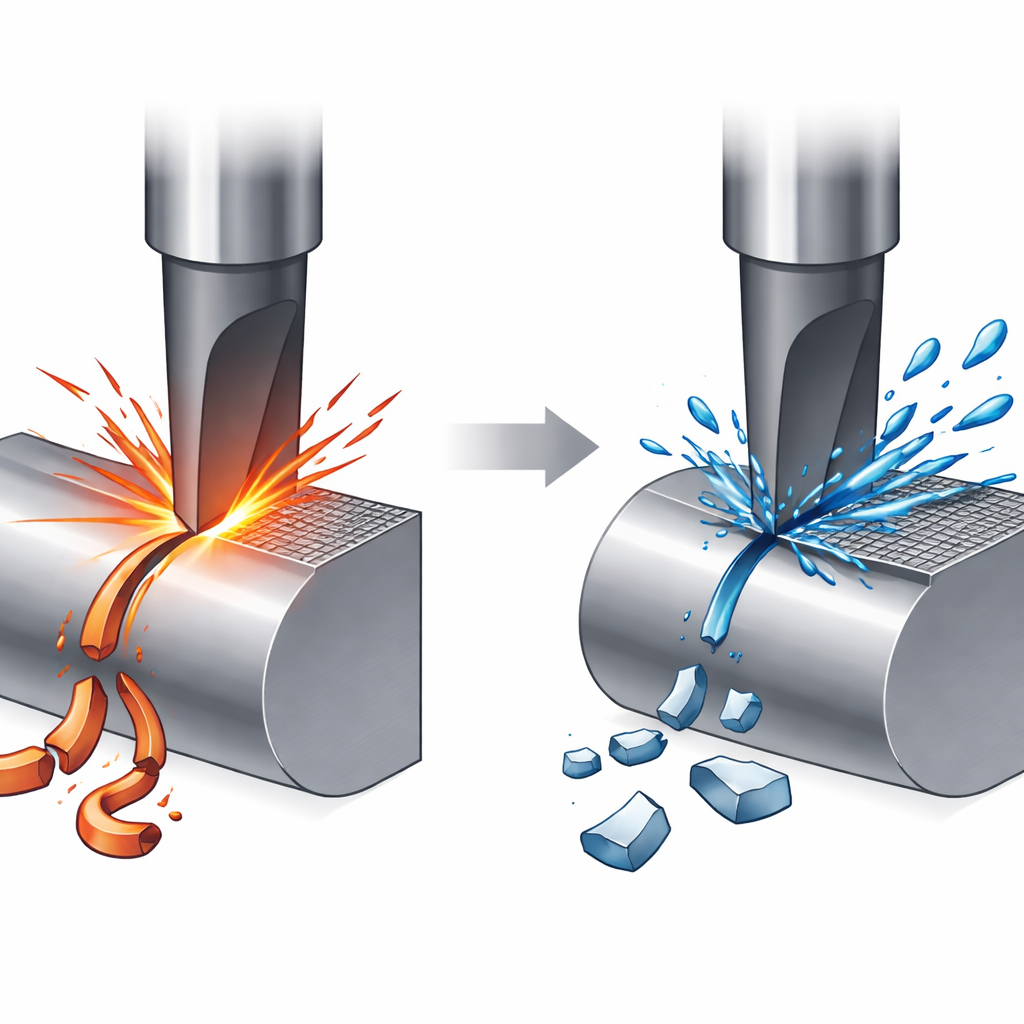
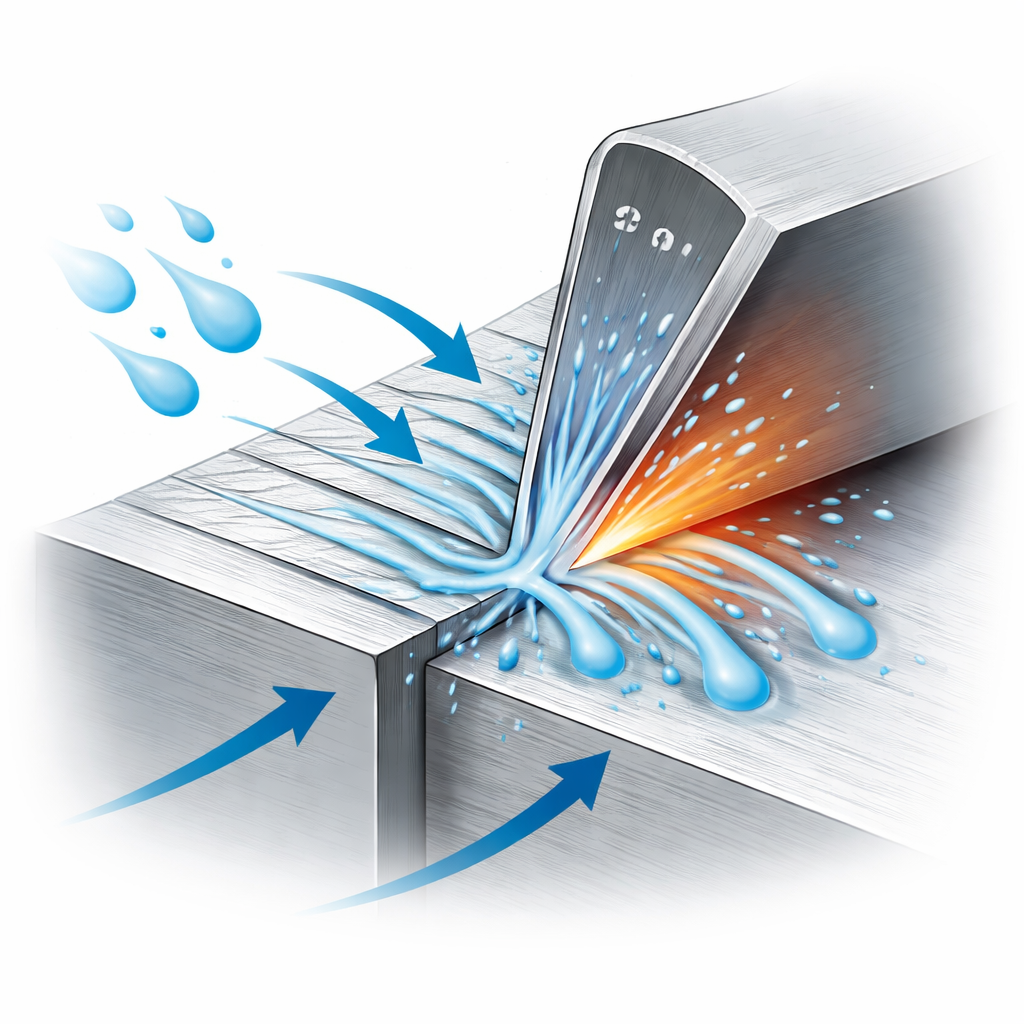
The researchers designed an innovative "hybrid" textured cutting insert whose working face is covered with a pattern of microscopic grooves. Unlike traditional designs that use only one groove direction, this tool combines grooves running both parallel and perpendicular to the direction in which the metal chip flows, plus grooves aligned with the main and secondary cutting edges. All of these features were created using a fiber laser on standard tungsten–carbide inserts. The idea is that the grooves act as miniature reservoirs and channels for liquid coolant, allowing it to reach and stay in the tiny gap where the tool, chip, and workpiece meet.
Putting the New Tool to the Test
To see whether this texturing actually improves performance, the team turned cylindrical bars of 17‑4PH steel on a lathe under wet cooling, comparing the grooved inserts with conventional smooth ones. They focused on three practical measures that matter to industry: cutting temperature at the tool–workpiece contact zone, surface roughness of the machined steel (a measure of finish quality), and wear on both the tool’s rake face and its flank, which together determine how long an insert lasts before it must be replaced. Tests were run at two cutting speeds while keeping feed and depth of cut small and constant, and further experiments explored how changing speed, feed, and depth together shapes the results.
Cooler Cuts, Smoother Surfaces, Longer Tool Life
The textured tools consistently ran cooler than their untextured counterparts. At the lower cutting speed, the hybrid design cut temperature by about one‑quarter compared with the smooth tool; even at the higher speed, where friction is more intense and coolant has less time to penetrate, the textured insert still reduced temperature by more than a tenth. These cooler conditions translated into less damage to the tool itself. Rake‑face wear and flank wear were both lower for the textured tools, with reductions on the order of 10–20%, and the cutting edge stayed sharper. Microscopic images showed that abrasion was the main wear mechanism in both tool types, but it was noticeably less severe when the grooves were present.
Better Chips and Cleaner Finishes
Chip shape, often overlooked outside machine shops, also improved. At lower speeds, the smooth tools tended to produce long, continuous chips that can tangle and interfere with automated production. The grooved tools, by contrast, promoted a "derivative" or segmented cutting action that broke the chip into shorter pieces, helped by the coolant stored in and released from the microgrooves. Surface finish benefited as well: the hybrid inserts delivered lower roughness values than conventional tools, with the largest improvements—around 28%—appearing at the higher cutting speed. Statistical contour plots of the data showed that cutting speed strongly governed temperature and wear, while feed rate was the dominant factor for surface roughness; across these conditions, the presence of texture consistently shifted the results toward cooler, smoother, and less worn.
What This Means for Manufacturing
For manufacturers shaping hard‑to‑cut steels like 17‑4PH, these findings suggest that carefully designed tool textures can deliver real gains without changing machines or resorting to exotic cooling methods. By turning the tool surface into a network of tiny coolant reservoirs and channels, the hybrid grooves help keep heat under control, protect the cutting edge, and improve the quality of the machined surface—all under standard wet cooling. In practical terms, that can mean fewer tool changes, more consistent parts, and lower energy and fluid use. The authors argue that such textured tools are ready to be adopted in metal‑cutting industries and that further tuning of groove patterns and cooling strategies could unlock even greater efficiencies.
Citation: Sivaiah, P., Rao, K., Yuvaraj, C. et al. Machining performance investigation on 17-4PH steel material with innovative textured tools. Sci Rep 16, 13242 (2026). https://doi.org/10.1038/s41598-026-42889-y
Keywords: cutting tool texturing, stainless steel machining, coolant-assisted turning, tool wear reduction, surface finish improvement