Clear Sky Science · en
Prioritization of waste management strategies in sugar industry using Fuzzy Analytic Hierarchy Process (FAHP): a sustainable approach
Turning Sugar Factory Leftovers into New Resources
Every spoonful of sugar hides a messy secret: for every batch produced, factories generate large piles of fibrous stalks, muddy sludge, ash, and beet pulp. In Iran, where sugarcane and sugar beet processing is widespread, these leftovers are often treated as a nuisance instead of a resource. This study asks a deceptively simple question with big consequences for jobs, farmland, and clean air: if we cannot do everything at once, which waste-to-resource options should come first?
Why Sugar Waste Choices Matter
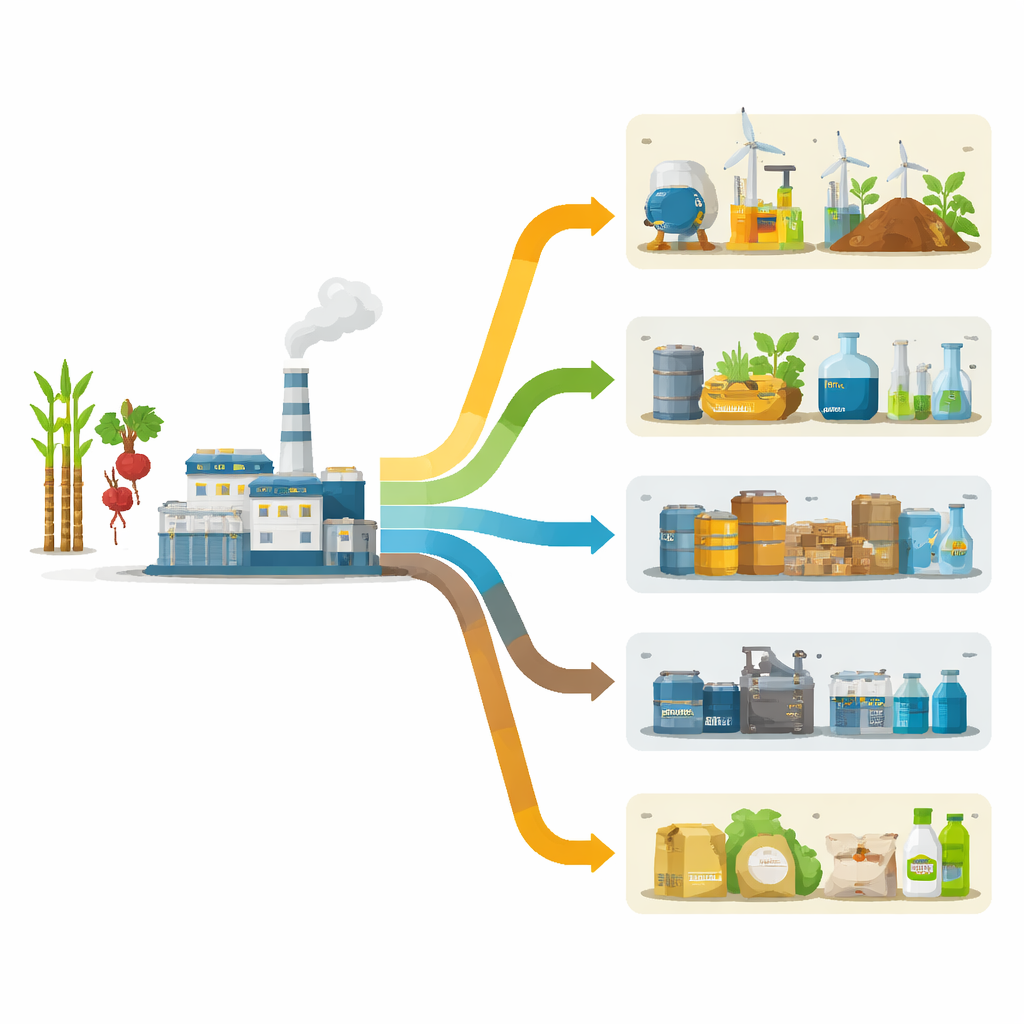
The sugar industry in Iran produces several major waste streams, from bagasse (the dry, fibrous remains of sugarcane) and fly ash from burning it, to filter mud and beet pulp. All of these materials can be turned into something useful: fuel, soil improvers, building materials, industrial products, even ingredients for food or cosmetics. Yet in practice, much of this potential value is lost. Factories face tough trade-offs—limited budgets, uneven infrastructure, uncertain markets—and past studies mostly described options without ranking them. Managers were left without a clear, evidence-based guide to which strategies are both realistic and worthwhile under local conditions.
How Experts Ranked the Options
To tackle this, the researchers turned to a decision tool designed for messy, uncertain choices. They gathered 20 specialists—professors, doctoral students, and waste management professionals—and asked them to compare different waste uses, not with hard numbers that often do not exist, but with experienced judgments such as “slightly better” or “much better.” These verbal opinions were converted into ranges of values and processed with a method called Fuzzy Analytic Hierarchy Process. This approach weighs options step by step, checks whether the judgments are logically consistent, and produces a set of scores that reflect both expert knowledge and uncertainty.
Money Versus Practicality
The team focused on two main questions: which matters more, economic return or ease of implementation, and how do different waste uses perform on each? Environmental impact was treated as a basic entry requirement—only options that reduce pollution were considered at all. When experts compared the criteria, money came out ahead: economic aspects received a weight of 0.61, while feasibility scored 0.39. In other words, in cash-strapped factories with limited support, a promising idea that does not pay its way quickly is unlikely to survive, no matter how elegant it looks on paper.
Winners and Runners-Up Among Waste Uses
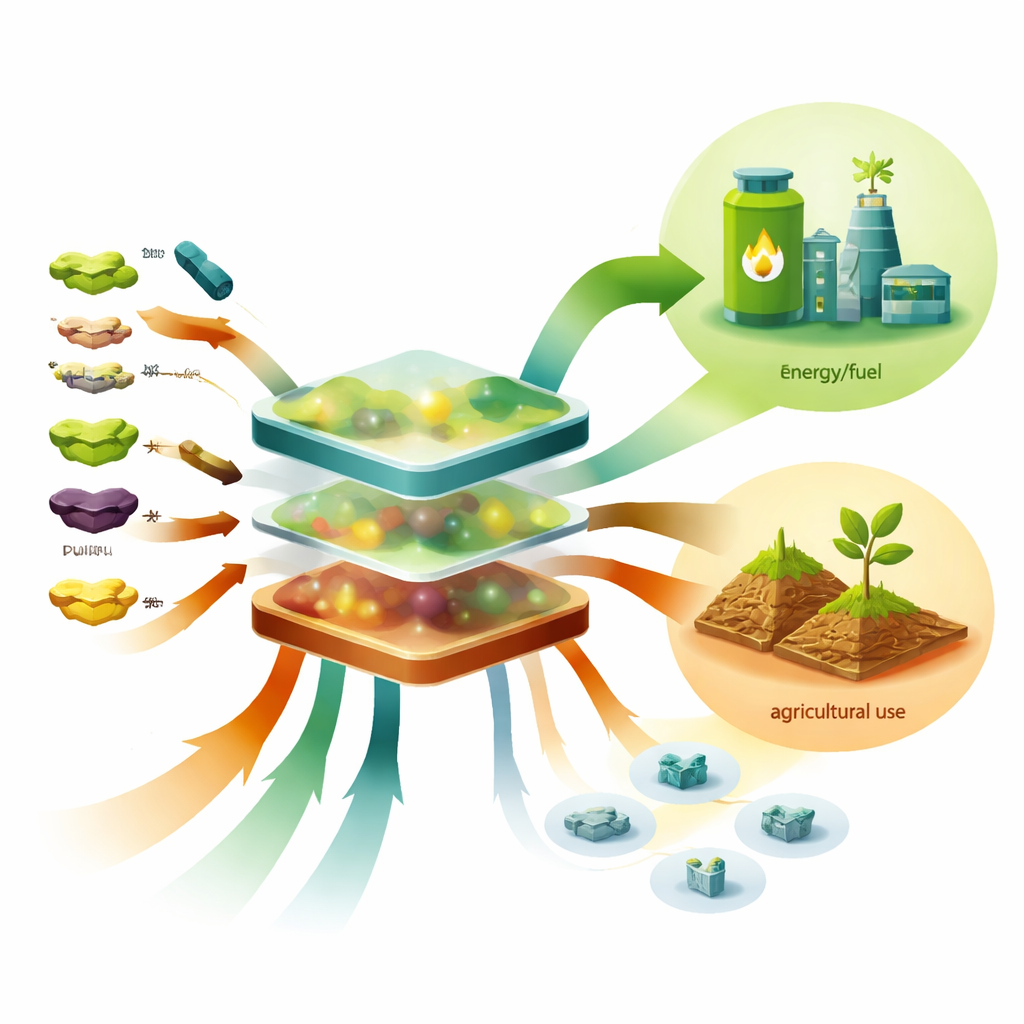
Six broad strategies were ranked: producing fuel and energy, using waste in agriculture, feeding it into industrial processes, making construction materials, purifying pollutants, and producing food, pharmaceutical, or cosmetic ingredients. Across both money and practicality, two routes clearly rose to the top. Turning waste into fuel and energy ranked first economically and second in feasibility. Using it in agriculture—such as compost or organic soil amendments—ranked second economically but first in feasibility. Other uses, including building materials or high-value specialty products, scored middling or lower, mostly because they demand more complex technology, higher upfront investment, or stricter quality control.
Cross-Checking the Answer
To see if these results depended on the specific method used, the authors ran a second type of analysis, called Grey Relational Analysis, on the same data. This separate technique also handles incomplete and uncertain information, but it calculates closeness to an “ideal” option in a different way. The two approaches largely agreed: agricultural applications and fuel and energy production again emerged as the leading strategies, with only minor shuffling among the lower-ranked options. This consistency suggests that the priority order is robust rather than a quirk of one formula.
What This Means for Sugar Factories
For a non-specialist, the takeaway is straightforward: if Iranian sugar mills want to turn a pollution problem into a business opportunity, their best starting bets are using waste as a source of energy and as a resource for farms. These routes can cut fuel costs, support cleaner electricity or heat, and improve soils while reducing dependence on chemical fertilizers. However, both paths still face real-world hurdles, from high initial investment in energy systems to the need for clear standards and safeguards when applying waste to fields. The authors recommend pilot projects and careful testing before widespread rollout, but their message is clear: treating sugar waste as a valuable feedstock, rather than a burden to be discarded, is both economically sensible and practically achievable.
Citation: Salimifard, A., Yaghmaeian, K., Aghaei, M. et al. Prioritization of waste management strategies in sugar industry using Fuzzy Analytic Hierarchy Process (FAHP): a sustainable approach. Sci Rep 16, 14612 (2026). https://doi.org/10.1038/s41598-026-42671-0
Keywords: sugar industry waste, bioenergy, agricultural reuse, multi-criteria decision-making, circular economy