Clear Sky Science · en
Sex-dependent dysregulation of the gut-brain NPYergic system in a mouse model of autism spectrum disorder
Why the gut and brain matter in autism
Many autistic people experience not only social and communication differences but also chronic stomach and bowel problems. Scientists now think these two worlds—the brain and the gut—are closely linked. This study explores a chemical messenger called neuropeptide Y (NPY), which helps the gut and brain talk to each other, and asks whether this system works differently in males and females in a mouse model related to autism. Understanding these differences could one day help tailor treatments that ease both behavior and digestive symptoms.
A chemical messenger on the gut–brain highway
NPY is a small protein used by nerve cells in both the brain and the gut. It acts through several “docking sites” on cells, known as Y1, Y2, Y4 and Y5 receptors, to influence mood, stress responses, and how the gut moves and senses its contents. The researchers used mice that carry a mutation in the Nf1 gene, a change that in humans is linked to neurofibromatosis type 1 and increased rates of autism-like traits. Although this mouse is not a classic autism model, it shows social and cognitive changes reminiscent of autism. The team measured NPY and its receptor genes in key brain areas involved in emotion and thinking—the prefrontal cortex, amygdala, and hippocampus—as well as in the intestine, and examined gut bacteria with a focus on Lactobacillus, a group often tied to brain health.
Different patterns in male and female brains
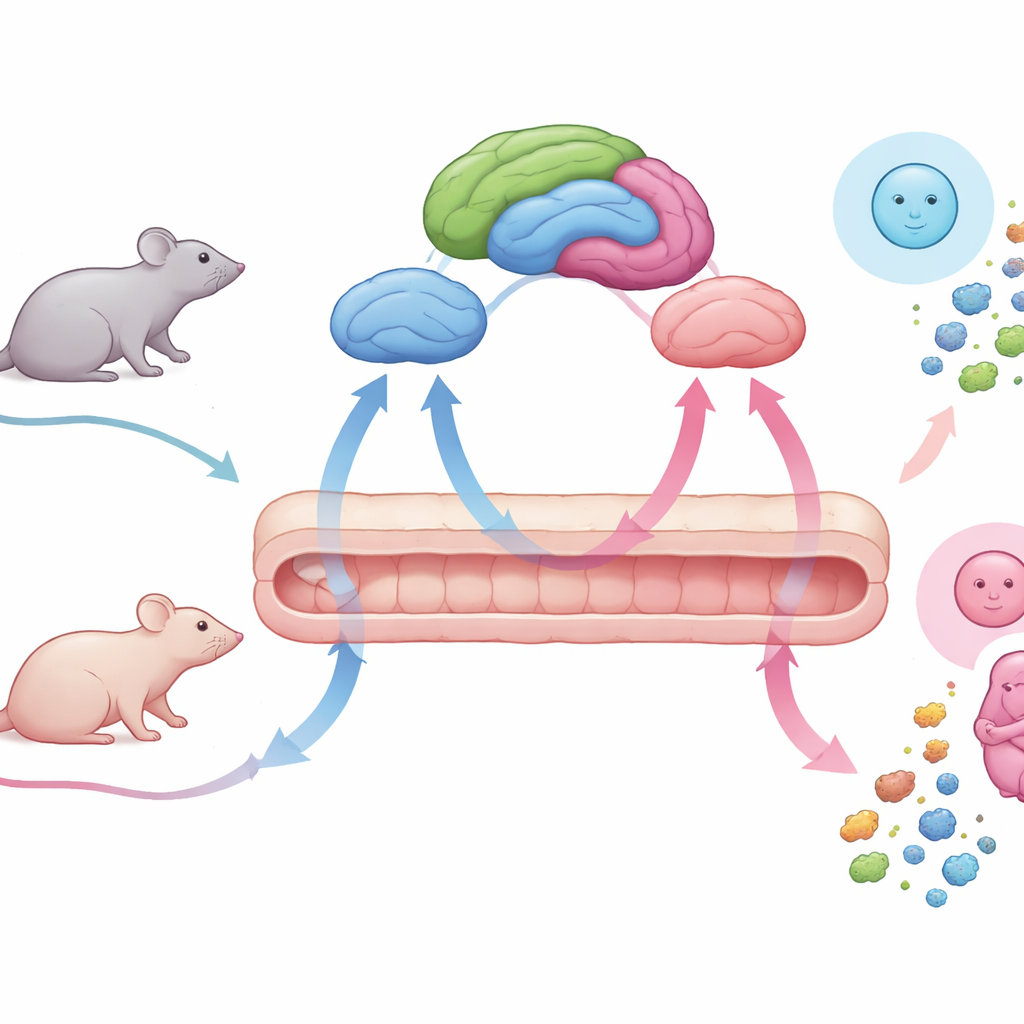
The study found that the NPY system in the brain was strongly shaped by sex. In the prefrontal cortex, female mutant mice showed lower levels of NPY and two of its receptors, Y1 and Y5, compared with normal females, while males showed little change. In the amygdala, which helps process fear and anxiety, only mutant females had higher levels of the Y2 receptor. In the hippocampus, an area important for memory, mutant males—but not females—had more NPY than their healthy counterparts. The team also tracked the female reproductive cycle and saw that in mutant females, NPY and its receptors in the amygdala and hippocampus rose and fell with hormonal phases, suggesting that monthly hormone shifts can reshape this stress- and emotion-related signaling system.
Sex-specific changes in the gut and its microbes
Differences were just as striking in the intestine. Mutant females had higher levels of NPY, a related messenger called peptide YY (PYY), and the Y2 and Y4 receptors in the gut wall. Mutant males, in contrast, mainly showed a drop in Y2 levels. When the researchers compared brain and gut measurements, normal females showed tightly linked patterns: higher activity in the cortex and hippocampus went hand in hand with lower NPY-related signals in the gut. These links largely disappeared in mutant females, hinting that their gut–brain communication had been rewired. The gut bacteria also shifted. Mutant males had fewer Lactobacillus overall, whereas mutant females had lower amounts of one particular species, Limosilactobacillus reuteri, previously tied to social behavior in animal studies.
Connecting microbes, gut signals, and the brain
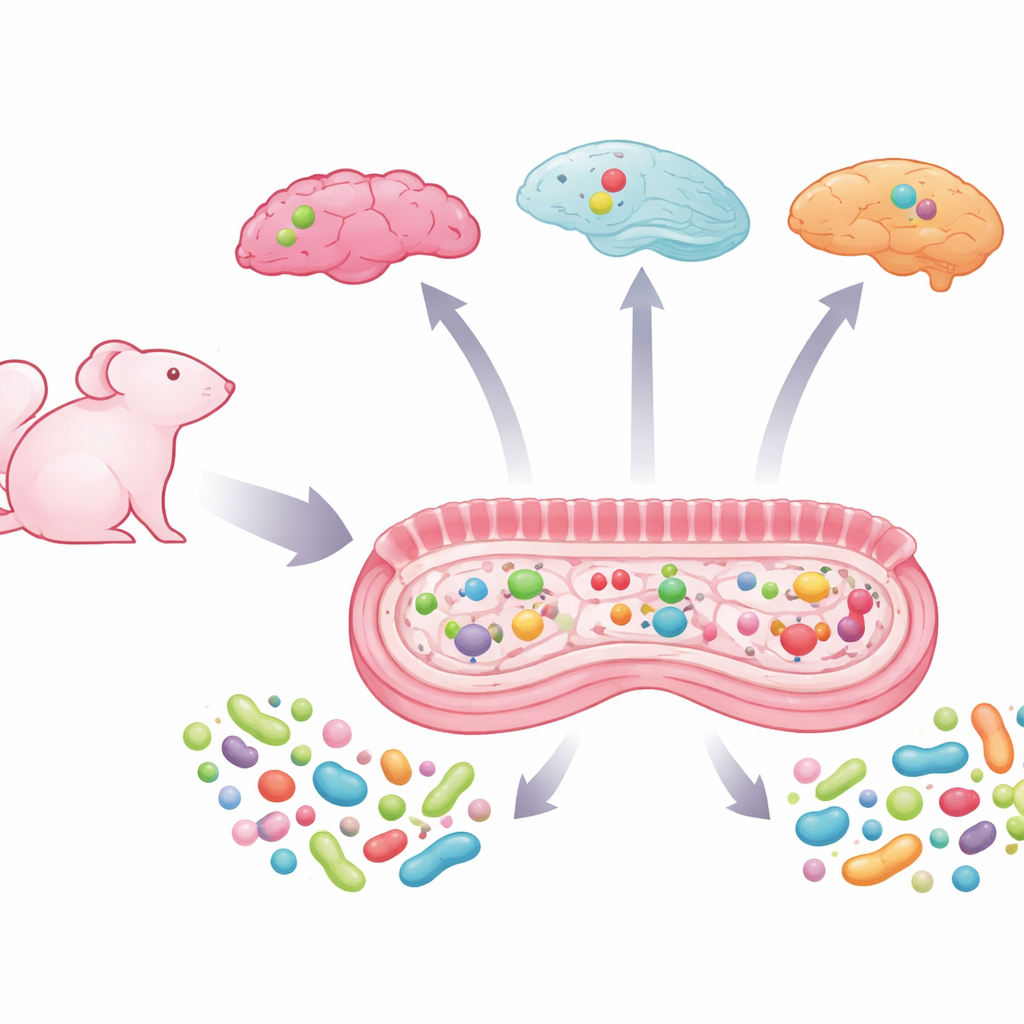
To see how microbes and gut signals might move together, the team looked at how bacterial levels lined up with the intestinal NPY system. In healthy females, more of a Lactobacillus species called L. rumni was linked with weaker NPY-related signaling in the gut, suggesting a balancing act between microbes and gut nerves. In mutant females, these patterns vanished and new ones emerged: higher intestinal Y2 levels were now tied to lower amounts of Lactobacillus and L. reuteri. No such relationships appeared in males. When the researchers analyzed all brain, gut, and microbiome data together, mutant females stood out as a separate cluster, underlining that they carry a distinctive pattern of gut–brain–microbe interactions.
What this could mean for people
In plain terms, this work suggests that a key signaling system, built around NPY and its receptors, may help explain why gut problems and brain differences tend to travel together in autism—and why they might not look the same in males and females. Female mutant mice seemed especially vulnerable, showing broad changes in both brain and gut NPY systems and in their gut bacteria, some of which shifted with hormone cycles. Among the receptors, Y2 in the intestine stood out as a consistent marker of these changes and may serve as a future biological signpost for autism-related gut–brain disruption. Although this is early, animal-based research, it points toward the idea that helping the gut microbiome and tuning NPY-related pathways—while taking sex and hormones into account—could one day become part of a more personalized approach to supporting people on the autism spectrum.
Citation: Martins, B., Martins, J., Castelo-Branco, M. et al. Sex-dependent dysregulation of the gut-brain NPYergic system in a mouse model of autism spectrum disorder. Sci Rep 16, 11931 (2026). https://doi.org/10.1038/s41598-026-42601-0
Keywords: autism and gut microbiome, neuropeptide Y, gut brain axis, sex differences in autism, Lactobacillus reuteri