Clear Sky Science · en
Evidence of a putative new species Haemagogus ‘Trinidad sp. A’ from the Caribbean sharing mitogenome lineages with species endemic to the Amazon
A Hidden Mosquito with a Big Story
Most of us think of mosquitoes as a single annoying summertime pest. But hidden in tropical forests are many different mosquito species, some of which quietly move dangerous viruses between animals and, sometimes, to humans. This study uncovers strong evidence that a previously overlooked mosquito in Trinidad is actually a distinct species, closely related to a mosquito found far away in the Brazilian Amazon. By reading and comparing the mosquitoes’ full mitochondrial “power‑cell” DNA, the researchers reveal a deep evolutionary tie between Caribbean and Amazon forests that also matters for tracking future disease threats.
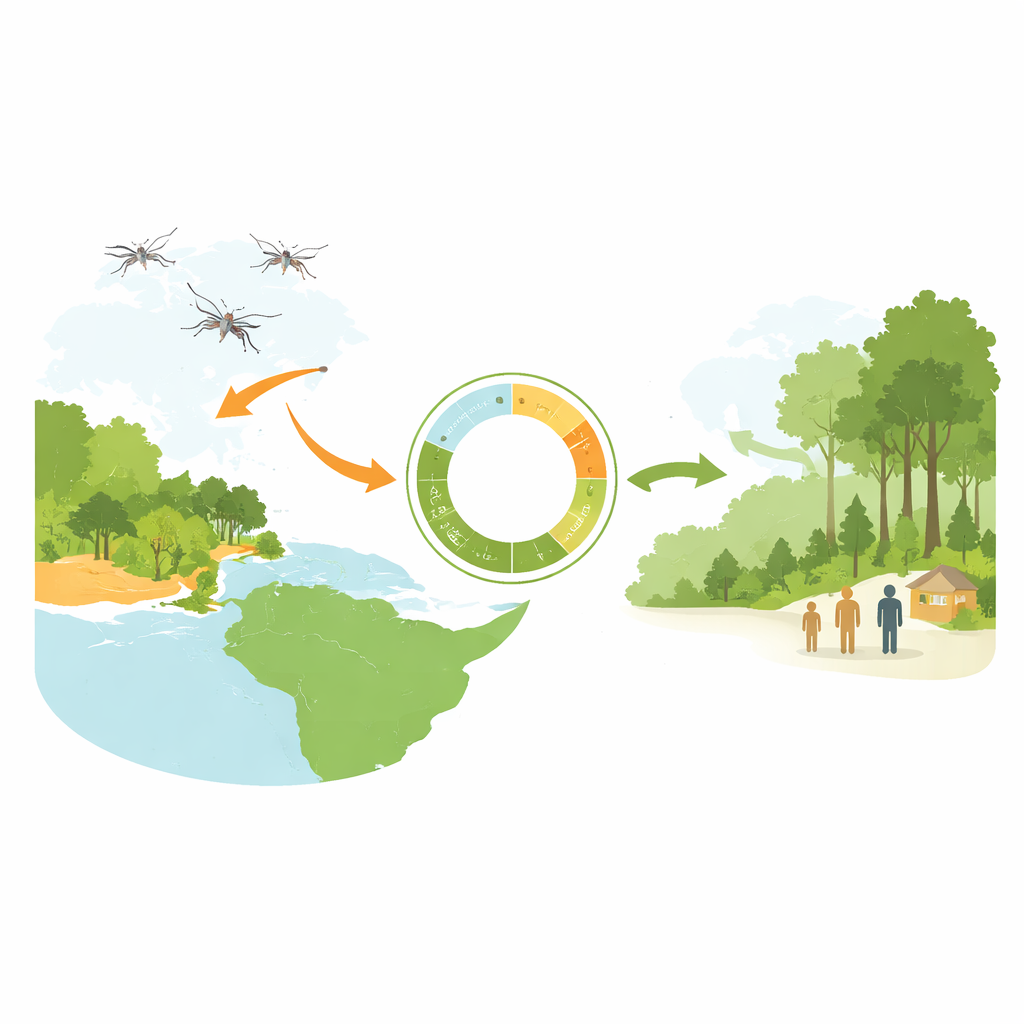
Mosquitoes of the Forest Canopy
The mosquitoes at the center of this work belong to a group called Haemagogus, best known for living high in the forest canopy of Central and South America and on islands such as Trinidad, Tobago, and Jamaica. These striking, metallic-colored insects breed in rainwater that collects in tree holes, bamboo, and plant cups. They mostly feed on monkeys and birds, but can drop down to bite humans who work, live, or travel near forest edges. Several Haemagogus species are already known carriers of yellow fever and Mayaro viruses, and at least one has picked up an Oropouche-like virus, raising concern that other members of this group may harbor viruses we do not yet fully understand.
When Look-Alikes Are Not the Same
In Trinidad, four Haemagogus species have been reported, with one, Hg. janthinomys, considered the most common. Under the microscope, females of some species in this group are almost indistinguishable, with differences visible mainly in male genitalia or subtle traits such as claw shape and leg proportions. Earlier work using short DNA “barcodes” hinted that some mosquitoes, originally labeled as Hg. janthinomys, actually formed a separate genetic cluster, dubbed “Trinidad sp. A.” However, those barcodes were too short to settle the question: were these just local variants, or a genuinely separate species with its own evolutionary history?
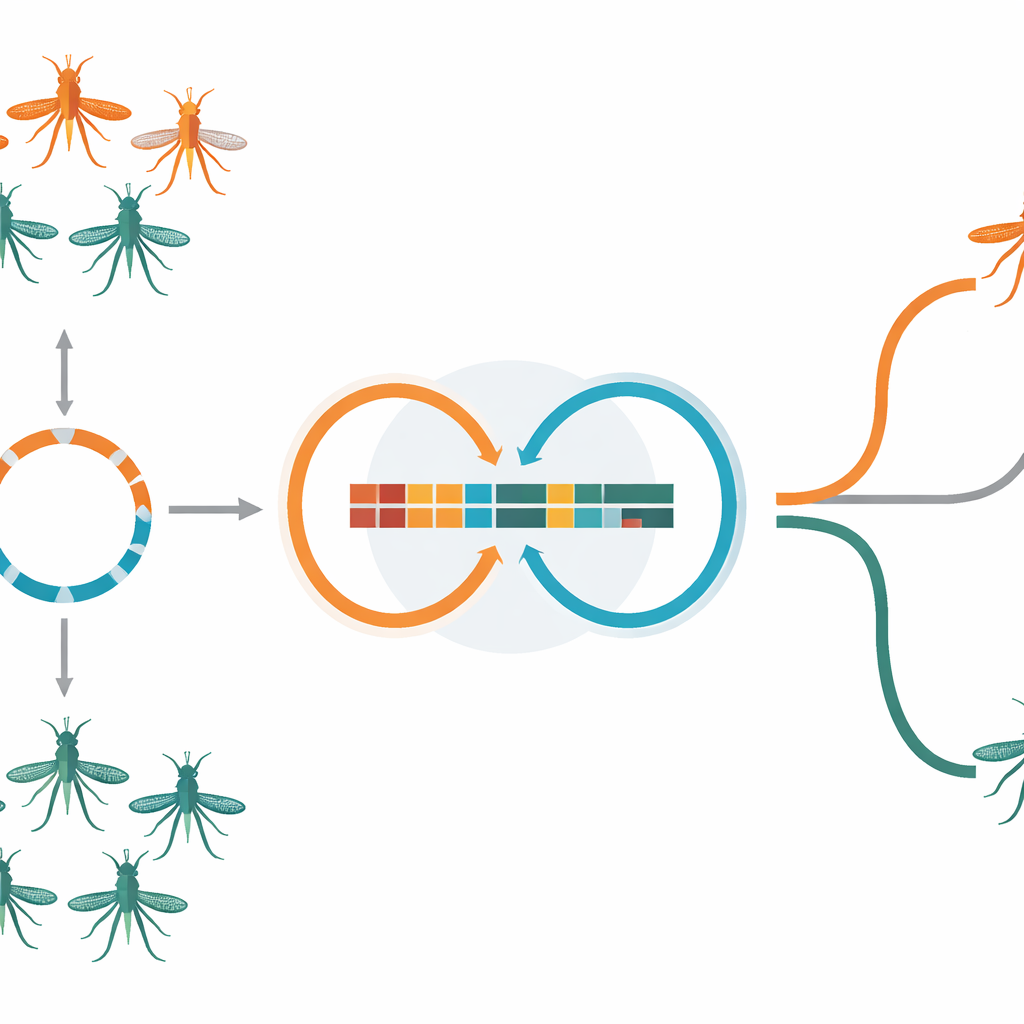
Reading the Mosquito’s Power-Cell Genome
To get a clearer picture, the researchers sequenced the complete mitochondrial genomes of nine Trinidad mosquitoes previously tagged as “Trinidad sp. A.” Mitochondria are tiny structures inside cells that provide energy, and their small circular genomes are especially useful for reconstructing family trees. The team found that all nine Trinidad mosquitoes shared nearly identical mitochondrial sequences, confirming they form a single lineage. When these sequences were compared with those of other Haemagogus species from Brazil, Jamaica, and Trinidad, the Trinidad lineage showed the strongest similarity not to local Hg. janthinomys, but to Hg. tropicalis, a mosquito confined to flood-prone areas where the Amazon River meets the Atlantic Ocean.
An Ancient Split Between Forest Cousins
Using computer models that combine DNA differences with known evolutionary time points, the scientists estimated when these lineages branched apart. The results suggest that “Trinidad sp. A” and Amazonian Hg. tropicalis last shared a common ancestor roughly 61 million years ago, though the true value could be tens of millions of years higher or lower. Within the broader Haemagogus family, the analysis supports splitting the genus into two main subgroups and three sections, and places “Trinidad sp. A” solidly in the same section as Hg. tropicalis. In contrast, Trinidad and Brazilian populations of Hg. janthinomys appear to have separated much more recently, around 12 million years ago. These timelines fit with geological evidence that land connections between Trinidad and the South American mainland have changed dramatically over millions of years, helping to isolate and diversify forest species.
Why a New Mosquito Matters
The discovery of a likely new mosquito species in Trinidad is not just a curiosity for taxonomists. If “Trinidad sp. A” has been consistently mistaken for Hg. janthinomys, its true distribution, habits, and ability to transmit viruses are all unknown. As forests are cleared, cities expand, and forest mosquitoes increasingly use artificial containers near homes for breeding, the chances of new contact between wildlife viruses and people grow. This study shows that looking at the full mitochondrial genome can uncover hidden diversity and clarify mosquito family relationships. For public health, that clarity is essential: you cannot properly judge disease risk, or plan surveillance and control, if you do not know exactly which mosquito you are dealing with.
Citation: Ali, R.L.M.N., Singh, S., Sandiford, S.L. et al. Evidence of a putative new species Haemagogus ‘Trinidad sp. A’ from the Caribbean sharing mitogenome lineages with species endemic to the Amazon. Sci Rep 16, 10640 (2026). https://doi.org/10.1038/s41598-026-42587-9
Keywords: Haemagogus mosquitoes, Trinidad Caribbean, mitochondrial genome, cryptic species, yellow fever vectors