Clear Sky Science · en
Abdominal obesity in India: sex stratified multilevel estimates across 707 districts from a nationally representative cross-sectional survey
Why belly fat matters for India today
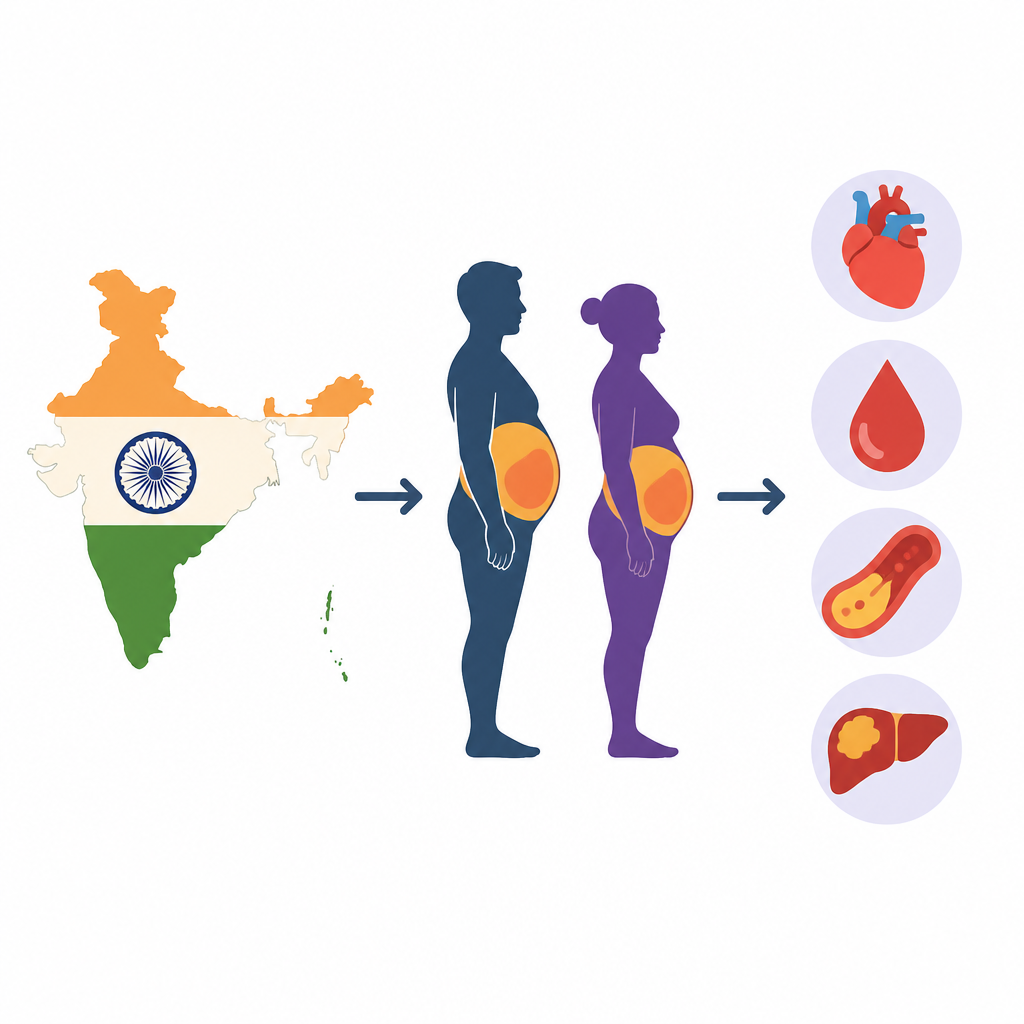
Many people think of extra weight as a problem of wealthy countries, but this study shows that abdominal fat around the waist has become a widespread concern in India. The authors looked beyond simple weight and focused on belly fat, which is more closely tied to heart disease and diabetes. They reveal how common this hidden risk has become for Indian women and men, and how it varies by age, income, and where people live, down to the district level.
Looking closely at waistlines
The researchers used data from the National Family Health Survey carried out between 2019 and 2021, which measured waist and hip size for more than 760,000 adults across all states and union territories. Instead of using body mass index alone, they calculated the waist to hip ratio, a simple measure that captures how much fat is stored around the middle of the body. They then used statistical models that account for the way people are grouped within communities, districts, and states to estimate how common abdominal obesity is among women and men in 707 districts.
How widespread abdominal obesity has become
The findings are striking. More than half of Indian women and nearly half of Indian men in the study had abdominal obesity by World Health Organization standards. The share was highest among older adults, with women in their late forties and men in their early fifties showing the greatest levels of risky waist size. Abdominal obesity was more frequent among married people, those from richer households, and those living in cities, but it was also common in poorer and rural groups, suggesting that this is no longer a problem limited to the wealthy. Everyday habits such as junk food intake were linked with higher levels, while tobacco and alcohol use showed weaker or less consistent ties once other factors were taken into account.
Where you live shapes your risk
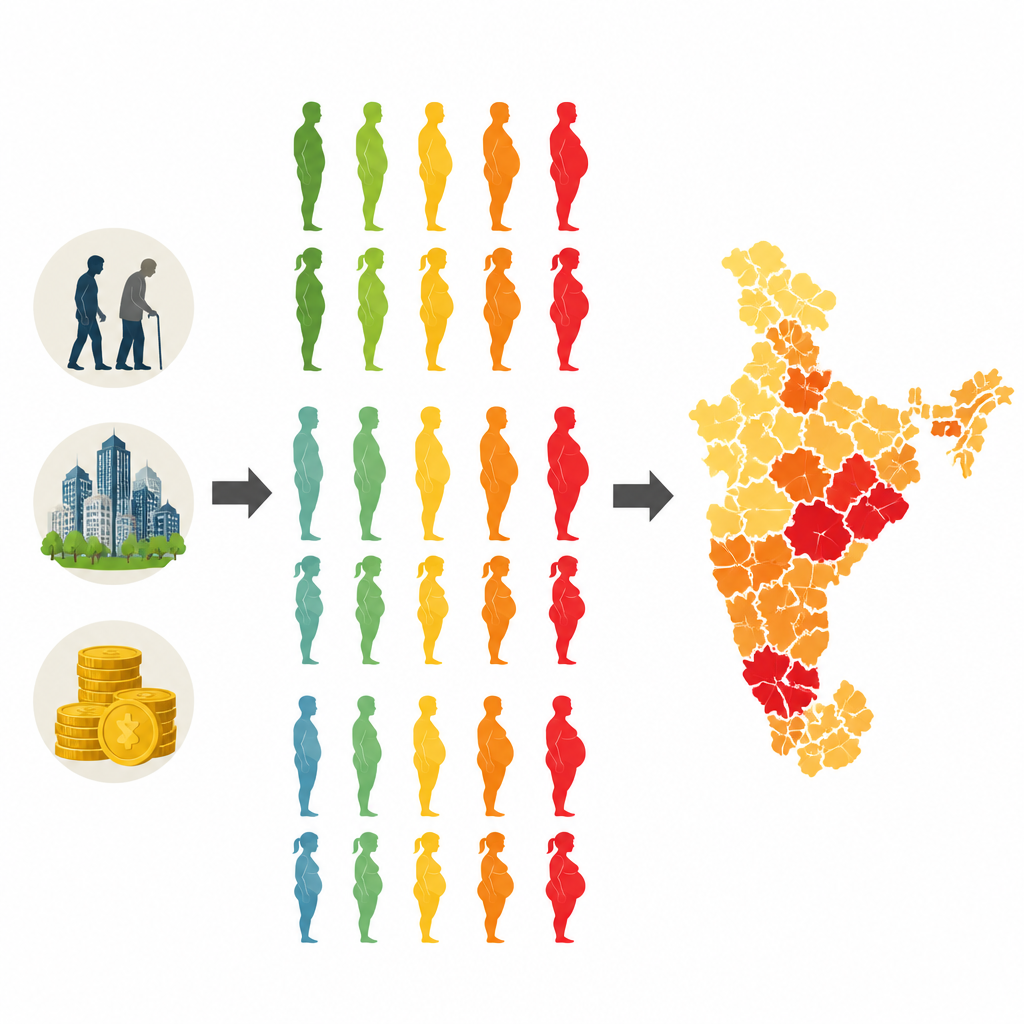
By mapping the results, the study uncovers clear geographic patterns. Districts in northern and eastern India, including much of Punjab, Haryana, Delhi, Jammu and Kashmir, Himachal Pradesh, Uttarakhand, West Bengal, Odisha, and parts of the northeast, showed especially high levels of abdominal obesity in both women and men. Some southern districts, such as in Kerala and Tamil Nadu, had high levels for women but lower levels for men, while the reverse pattern appeared in parts of Telangana and Uttar Pradesh. Big city regions around Delhi, Kolkata, and Chennai stood out as hotspots. These differences suggest that local culture, food environments, work patterns, and urban design all influence how body fat is gained and stored.
Personal traits and local settings both matter
The statistical models allowed the authors to separate the influence of personal traits from the influence of place. They found that roughly two thirds of the variation in abdominal obesity could be explained by individual differences such as age, marital status, wealth, and lifestyle. The remaining third was linked to the broader context of communities, districts, and states, even after accounting for these personal features. This unmeasured context may reflect factors like the availability of healthy foods, safe spaces for walking, local occupations, and social norms about body size. The results suggest that effective prevention must combine support for healthier choices with changes in the environments where people live and work.
What this means for health policy
The authors argue that focusing on abdominal obesity, not just overall weight, is essential for India as it faces rising rates of heart disease and diabetes. They suggest that routine checks of waist and hip size could be added to existing national programs for non communicable diseases, and that district level data should guide where limited resources are directed first. Public campaigns can challenge the idea that a large belly reflects prosperity and instead promote active lives and balanced diets. In simple terms, the study concludes that reducing harmful belly fat in India will require both personal action and carefully targeted local policies that respond to the unique patterns seen across the country.
Citation: John, P., Bajpai, R., Shukla, S.K. et al. Abdominal obesity in India: sex stratified multilevel estimates across 707 districts from a nationally representative cross-sectional survey. Sci Rep 16, 14837 (2026). https://doi.org/10.1038/s41598-026-42458-3
Keywords: abdominal obesity, India, waist to hip ratio, district level health, non communicable diseases