Clear Sky Science · en
Rheological and biochemical comparison of cord and adult blood red cells for transfusion applications
Why Tiny Patients May Need a Different Kind of Blood
Preterm babies, especially those born extremely early, often depend on blood transfusions to survive their first weeks of life. Today, these transfusions almost always use blood from adults. But babies are not just small adults: their bodies, and even their red blood cells, work differently. This study asks a simple but important question: could blood taken from the umbilical cord at birth be a safer and more natural match for fragile newborns than standard adult blood, at least for the first days of life?
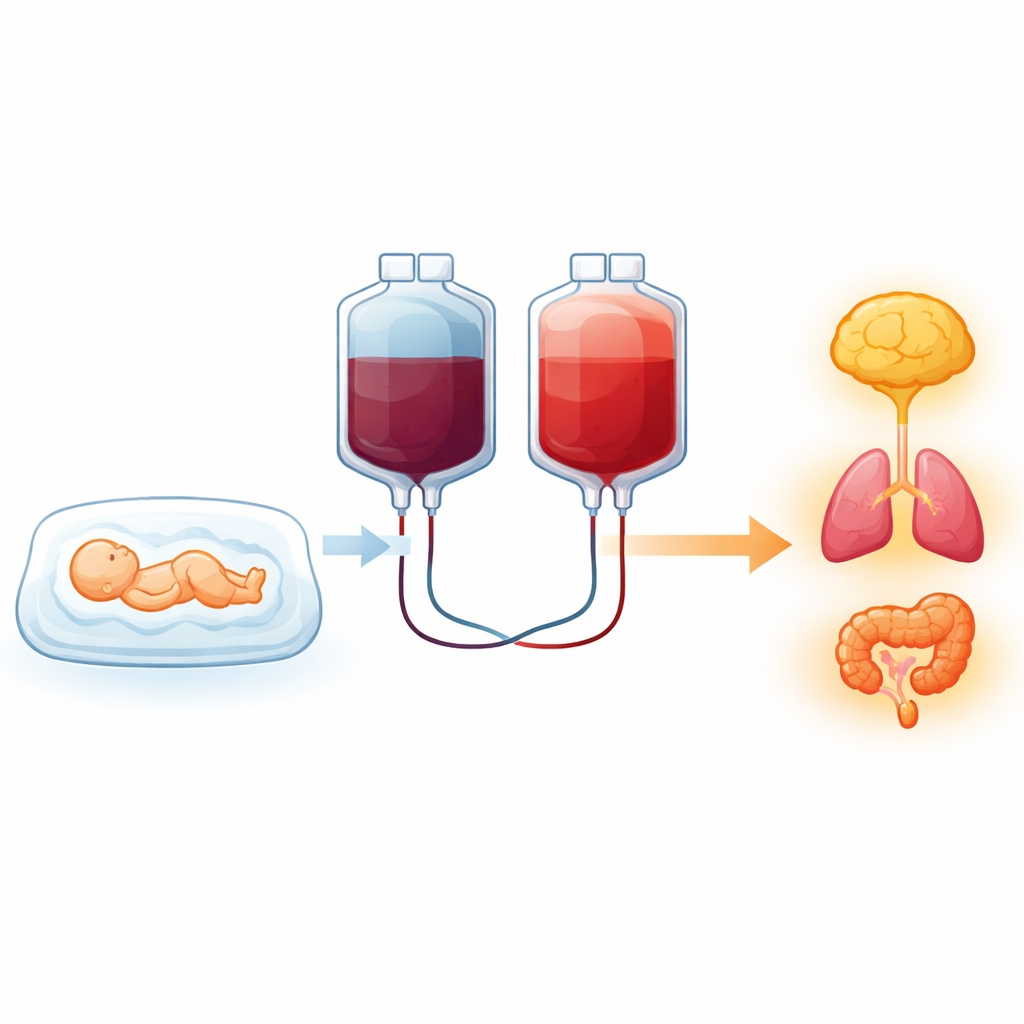
Two Sources of Blood, One Delicate Balance
Umbilical cord blood has long been prized as a source of stem cells for transplants, yet most collected units are never used for that purpose. At the same time, very premature infants receive multiple adult-blood transfusions, which may increase their risk of serious complications such as eye damage, lung disease, and gut injury. A key difference lies in the type of hemoglobin carried by red blood cells: cord blood is rich in fetal hemoglobin, which holds on to oxygen more tightly and is naturally tuned to the needs of babies. This has led researchers to wonder whether red cells from cord blood might better support oxygen delivery in newborns while putting less stress on their immature organs.
Putting Cord Blood Cells to the Test
The research team collected cord blood units that were not suitable for stem-cell banking but met strict safety criteria. They processed these units into red cell concentrates using methods similar to those used for adult donors, then stored them at refrigerator temperatures for up to ten days, sometimes exposing them to gamma irradiation as would be done before transfusion. In parallel, they prepared and stored adult red cell units under the same conditions. They then compared basic blood counts, cell size, cell shape under the microscope, how easily the cells deform to squeeze through tiny vessels, energy content in the form of ATP, and a series of chemical markers such as potassium, sodium, glucose, lactate, acidity (pH), and oxygen level.
How Cord Blood Cells Behaved in Storage
Cord and adult red cells were broadly similar in their basic properties: red cell number, hemoglobin content, and overall concentration remained stable during ten days of storage, with or without irradiation. Cord cells were consistently larger than adult cells and somewhat less deformable, reflecting natural differences between fetal and adult red cells rather than damage. Under the microscope, both types developed typical storage-related shape changes over time, but cord cells showed less outright breakage (hemolysis), staying within regulatory safety limits. Their energy stores, measured as ATP, started lower than in adult cells and declined in both groups during storage, though this drop was modest and not worsened by irradiation.
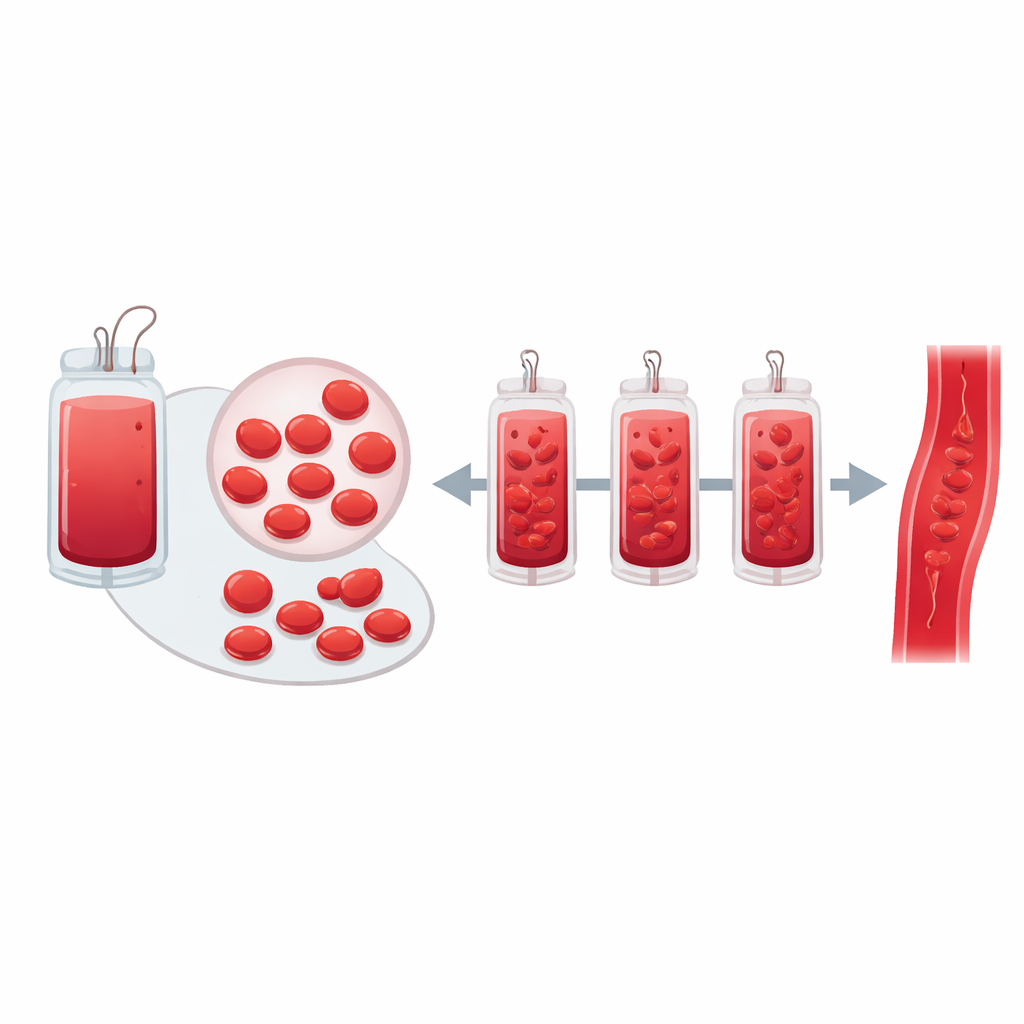
Hidden Chemical Shifts Inside the Bag
The chemical environment around the cells changed in familiar ways as storage progressed. In both cord and adult units, potassium and lactate built up outside the cells, while sodium and glucose fell and the fluid became more acidic, a fingerprint of ongoing cell metabolism in a closed container. Some measurements in cord units at day ten were difficult to quantify precisely because of mild hemolysis, but values remained within accepted safety thresholds. Notably, cord blood units showed higher oxygen levels than adult units, consistent with the strong oxygen-holding behavior of fetal hemoglobin. Importantly, irradiation, a standard safety step to prevent certain immune complications, had little impact on the mechanical or metabolic health of the stored cord cells.
What This Could Mean for Preterm Babies
Taken together, the findings suggest that red cells derived from cord blood can be collected, processed, irradiated, and stored for up to about ten days while largely preserving their structure, flexibility, and chemistry at levels comparable to adult red cells. Their few differences—slightly larger size, somewhat reduced deformability, and lower but acceptable energy content—appear to reflect their natural fetal identity rather than damage. For clinicians, this supports the idea that cord blood red cells could become a realistic, physiologically well-matched option for transfusing preterm infants, particularly the most vulnerable. However, the study was done in the laboratory, with relatively few units, so clinical trials in real patients are still needed to confirm long-term safety, benefits, and the best ways to store and use these specialized blood products.
Citation: Mykhailova, L., Vercellati, C., Montemurro, T. et al. Rheological and biochemical comparison of cord and adult blood red cells for transfusion applications. Sci Rep 16, 13320 (2026). https://doi.org/10.1038/s41598-026-42457-4
Keywords: cord blood transfusion, preterm infants, red blood cell storage, fetal hemoglobin, neonatal intensive care