Clear Sky Science · en
Effectiveness of endovenous ablation techniques and surgery for great saphenous vein incompetence: a comprehensive meta-analysis of randomized controlled trials
Why leg vein treatments matter
Many people think varicose veins are just a cosmetic nuisance, but for millions they cause aching, heaviness, and swelling that can limit daily life. These bulging veins are often driven by a faulty trunk vein in the thigh called the great saphenous vein. For decades, the main fix was an operation to surgically remove this vein. In recent years, however, simpler keyhole-style procedures done under local anesthesia have become popular. This article pulls together the best available trials to ask a practical question that matters to patients and clinicians alike: do these newer treatments work as well as surgery, and are they safer or more comfortable?
Old operation versus new keyhole options
Historically, surgeons treated the problem vein by tying it off at the groin and stripping it out through incisions along the leg. The newer endovenous techniques take a different approach: instead of removing the vein, a thin catheter is threaded into it and heat or steam is applied from the inside, causing the vein to seal shut and gradually shrink. The main methods include endovenous laser ablation, radiofrequency ablation, and a newer steam-based technique. The authors systematically searched major medical databases and found 27 randomized clinical trials, reported in 38 papers, that directly compared these options in adults with great saphenous vein disease. Only rigorously randomized studies were included, and the focus was on whether veins stayed closed, how patients felt, and what complications occurred.
Do modern treatments close the vein as well as surgery?
The central measure of success was simple: after treatment, does blood still leak backwards through the target vein, or is it properly shut down on ultrasound scans? Across more than two dozen trials, the answer was reassuring. Laser treatment and radiofrequency ablation closed the faulty vein just as reliably as surgery, with closure rates typically in the 90 percent range. When the authors pooled results from multiple studies, there was essentially no difference between laser and surgery, between radiofrequency and surgery, or between laser and radiofrequency themselves. In other words, all three approaches were similarly effective at tackling the root plumbing problem that causes varicose veins in the first place. 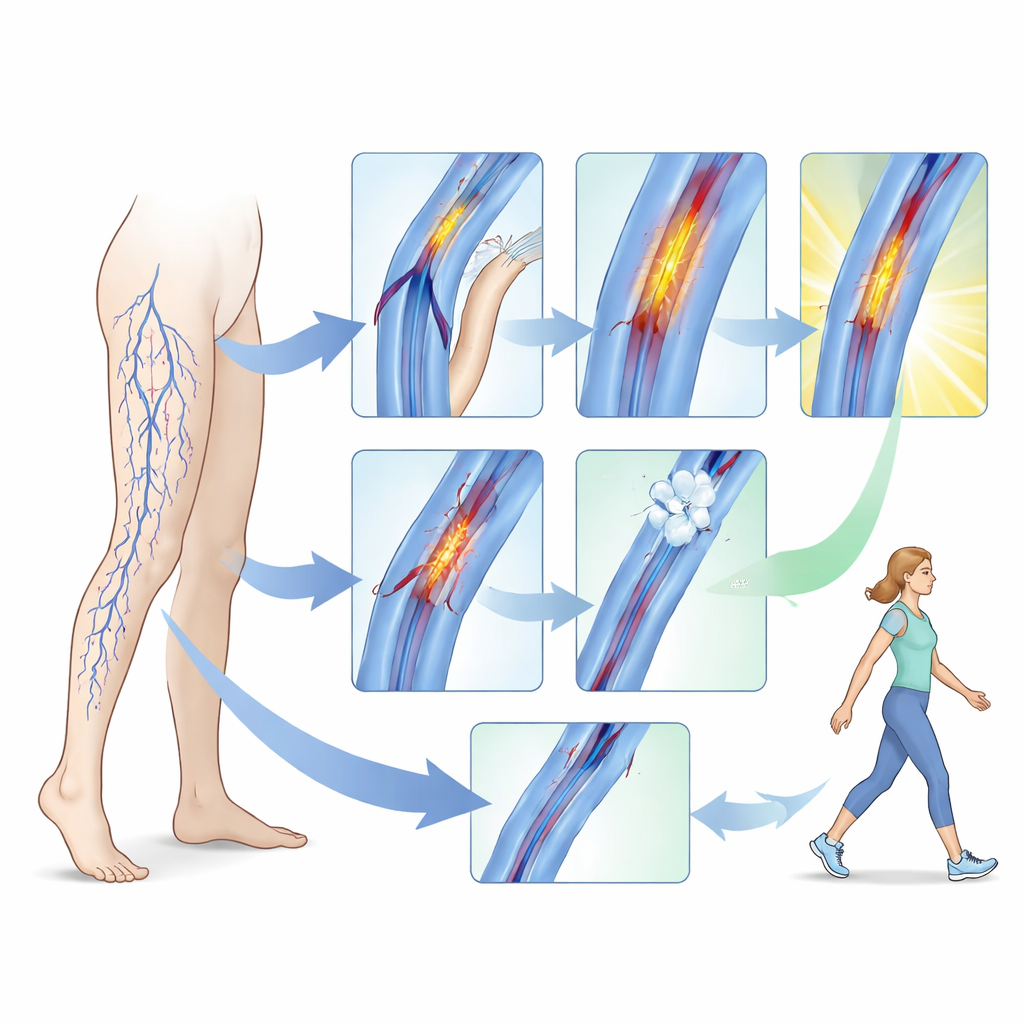
Comfort, nerve safety, and day-to-day recovery
Where the treatments did diverge was in safety and comfort. Surgical stripping sometimes irritates nearby sensory nerves that run close to the vein, leaving patches of numbness or tingling. When the authors combined data from ten trials, patients treated with laser had about half the risk of nerve disturbance compared with those who had surgery. Radiofrequency ablation showed broadly similar nerve-safety to surgery, although data were sparser and less precise. Overall, both heat-based methods had low rates of nerve problems, and most symptoms tended to fade over time. When it came to how patients actually felt in daily life—measured by standardized symptom and quality-of-life questionnaires—all of the main procedures performed similarly well. People reported less pain, better leg function, and improved quality of life regardless of whether they had surgery, laser, or radiofrequency treatment, with endovenous methods often offering quicker early recovery.
Newer options and how long results last
The review also looked at more recent techniques. Steam ablation appeared to match laser in short-term success and may offer slightly less pain and faster return to normal activities, but only a few trials exist so far. Foam injections, which are cheap and can be done in a clinic room, improved symptoms in the short term but were clearly less durable. In several studies, treated veins reopened or new leaky pathways formed more often after foam than after surgery or heat-based methods, meaning patients were more likely to need repeat procedures. Long-term data up to ten years suggest that traditional surgery may still have a slight edge in preventing very late recurrences compared with older laser systems, but patients in both groups maintained similar symptom relief and satisfaction, often with minor touch-up treatments as needed. 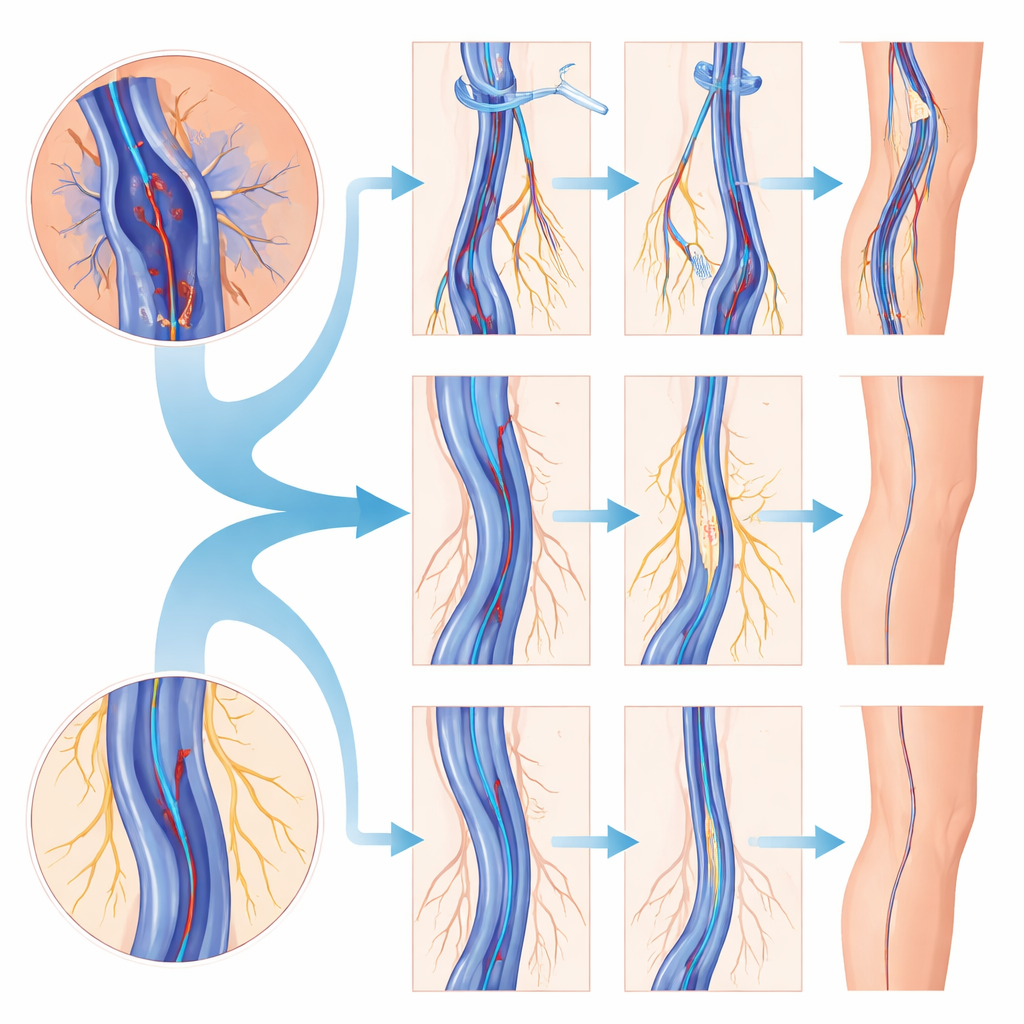
What this means for people with varicose veins
For someone struggling with troublesome varicose veins caused by a leaky great saphenous vein, the overall message is encouraging. Decades of randomized trials show that minimally invasive procedures using laser or radiofrequency energy are just as good as surgery at shutting down the problem vein, and they tend to cause fewer nerve issues and allow quicker recovery. Steam-based treatment looks promising but needs longer-term study, while foam injections are best reserved for people who cannot undergo more definitive procedures or as a backup option. In practice, this means most patients can choose from several effective treatments, working with their doctor to weigh comfort, durability, and personal preference. The key is not which modern method is used, but that the faulty vein is accurately identified and properly treated, offering lasting relief from the heaviness, pain, and cosmetic concerns of varicose veins.
Citation: Sayarer, C., Arayici, M.E., Gencpinar, T. et al. Effectiveness of endovenous ablation techniques and surgery for great saphenous vein incompetence: a comprehensive meta-analysis of randomized controlled trials. Sci Rep 16, 11424 (2026). https://doi.org/10.1038/s41598-026-42413-2
Keywords: varicose veins, endovenous laser, radiofrequency ablation, vein surgery, great saphenous vein