Clear Sky Science · en
Design of a hybrid quantum machine learning architecture and analysis of quantum noise effects
Why adding noise to quantum computers might help
Today’s quantum computers are powerful in theory but messy in practice: their delicate quantum bits are constantly disturbed by noise, which usually hurts performance. This study asks a surprising question: can some of that noise actually be turned into an advantage? The authors design a hybrid system that mixes a small quantum circuit with a conventional neural network and test how realistic levels of noise affect its ability to detect breast cancer from medical data.
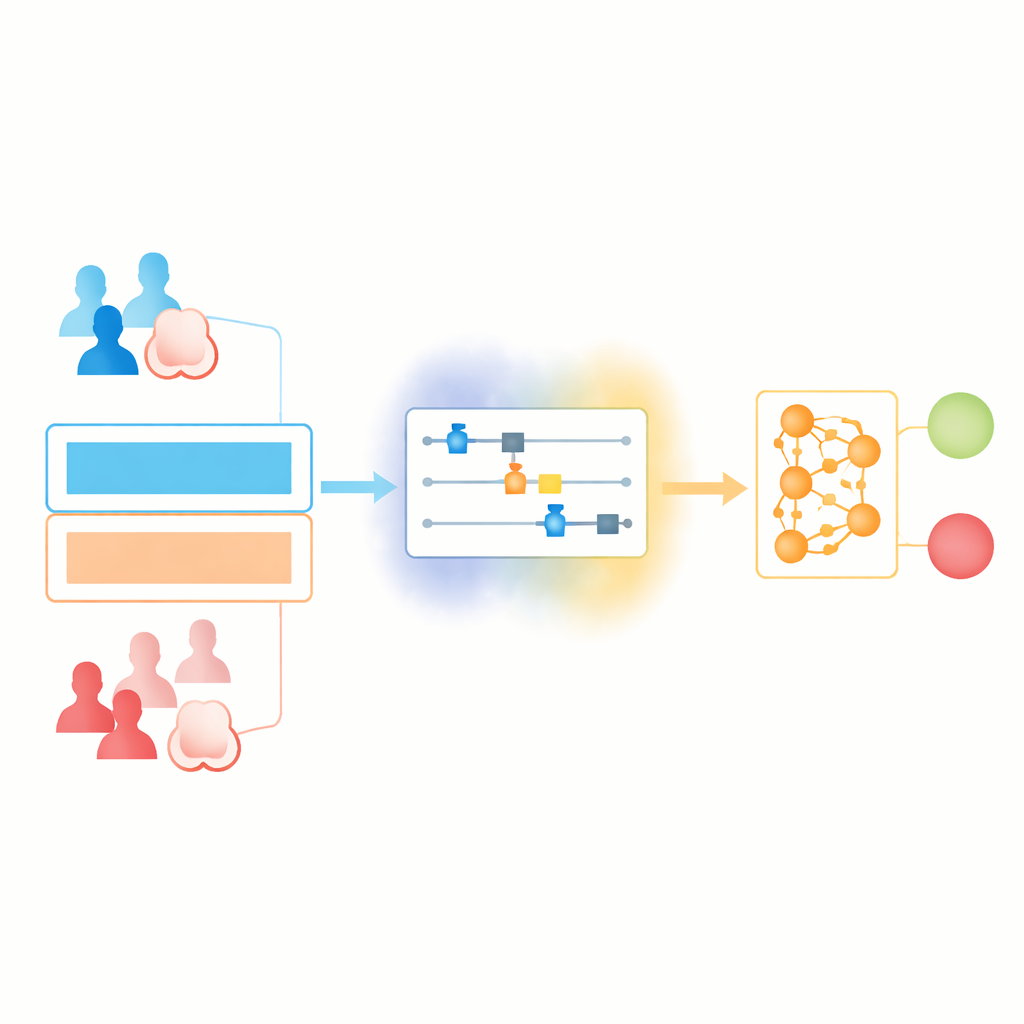
Blending two worlds: quantum and classical learning
The researchers build a “hybrid” learning pipeline that lets quantum and classical parts each do what they do best. First, ordinary medical records are cleaned and normalized so that every number fits within a fixed range. These numbers are then fed into a compact quantum circuit, where each feature is encoded onto a set of qubits using carefully chosen rotations. The qubits are briefly entangled and transformed, then measured to produce a new set of numbers. These become the input to a standard neural network, which makes the final yes-or-no prediction about cancer.
Teaching a quantum model in a noisy world
Rather than pretending the quantum hardware is perfect, the team explicitly builds noise into the training process. They use a high‑fidelity emulator of superconducting quantum devices and inject realistic errors at three key stages: when qubits are initialized, when quantum gates are applied, and when measurements are taken. The noise strengths are taken from calibration data that represent current devices, an ambitious near‑term goal, and a future “wish list” with even lower error rates. This allows them to explore how the same learning architecture behaves as quantum technology gradually improves.
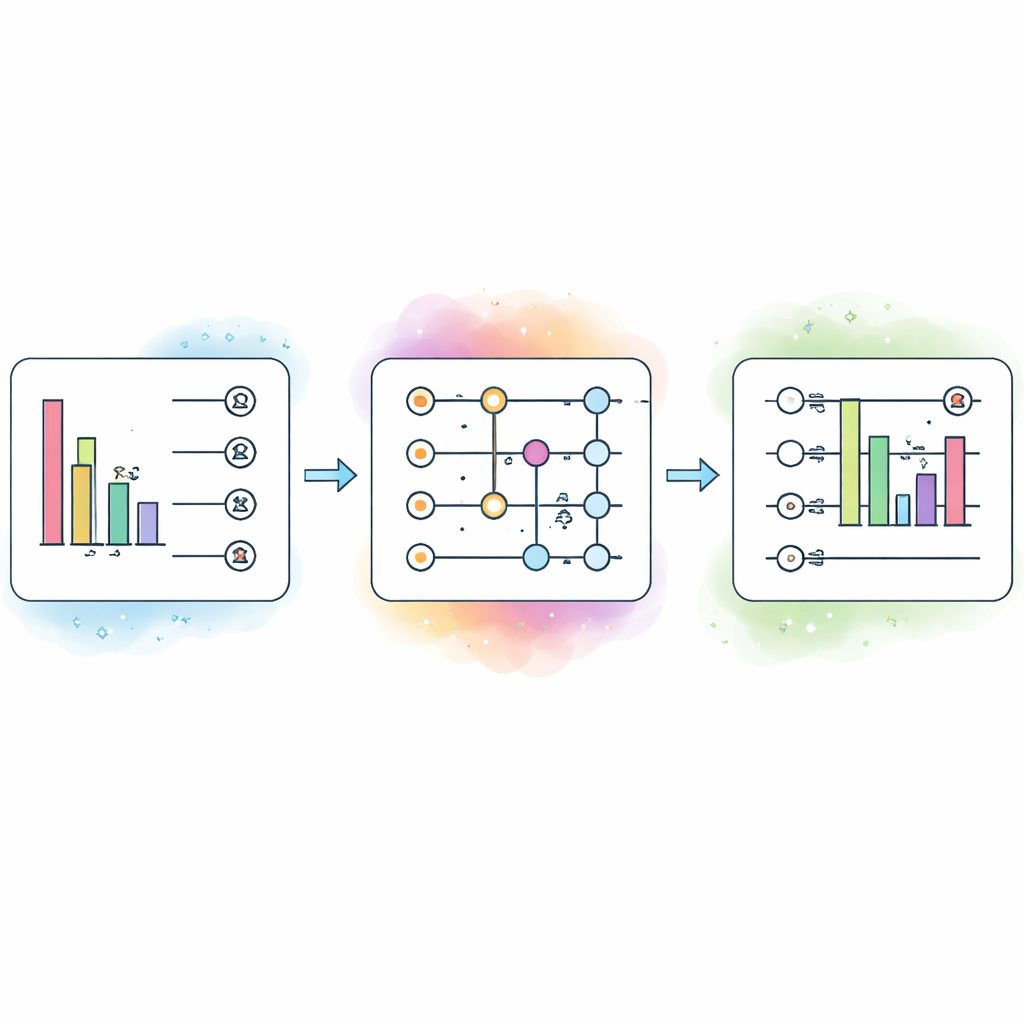
Breast cancer data as a real‑world test bed
To see whether this setup is useful in practice, the authors test it on three public breast cancer datasets that differ in size and difficulty. One has relatively limited information, another contains many overlapping or redundant signals, and the third is well‑suited for learning clear patterns. For each dataset they vary the number of qubits and the amount of noise, then track how accuracy and training time change. To keep the comparison fair, they start from a common baseline design and then systematically adjust only the quantum size and classical hyperparameters such as learning rate, number of layers, and activation functions.
When fewer qubits — and more noise — are enough
The results challenge the intuition that more qubits and less noise always lead to better models. In several cases, the best noisy configurations reach essentially the same accuracy as the idealized, noise‑free versions while using fewer qubits. For example, depending on the dataset, peak performance is reached with as few as two to seven qubits when realistic noise is included, compared with larger quantum circuits in the noiseless case. Because the cost of simulation and, eventually, real execution grows rapidly with each extra qubit, this reduction translates into large savings in training time — speed‑ups ranging from about 1.6‑fold to over 4‑fold, without sacrificing meaningful predictive power.
Noise as a built‑in guardrail against overfitting
Looking more closely at how the training and validation errors evolve, the authors find that completely noiseless quantum layers tend to overfit: they learn the quirks of the training data too well and fail to generalize. When moderate noise is present, the models often achieve slightly higher validation accuracy and more stable loss curves, especially for the best‑tuned noise levels. In effect, the quantum errors behave like a form of regularization familiar from classical deep learning, such as dropout, nudging the system away from brittle solutions and toward simpler, more robust architectures.
What this means for the future of quantum learning
To a non‑specialist, the main message is that today’s imperfect quantum machines might already be useful partners for classical AI, especially when their flaws are treated as part of the design rather than as a nuisance to be ignored. This work shows that a carefully crafted hybrid model can keep medical prediction accuracy nearly unchanged while using fewer quantum resources and training much faster under realistic noise. Instead of waiting for perfectly quiet quantum hardware, researchers may be able to harness moderate noise as a helpful ingredient, guiding leaner models that are easier to train and deploy in real‑world applications.
Citation: Bravo-Montes, J.A., Martín-Toledano, A., Velasco-Gallego, C. et al. Design of a hybrid quantum machine learning architecture and analysis of quantum noise effects. Sci Rep 16, 13496 (2026). https://doi.org/10.1038/s41598-026-42216-5
Keywords: quantum machine learning, hybrid neural networks, quantum noise, breast cancer detection, noisy intermediate-scale quantum