Clear Sky Science · en
Non-ablative transurethral laser treatment for collagen remodeling with functional recovery in an in vivo model of stress urinary incontinence
A Common, Often Hidden Problem
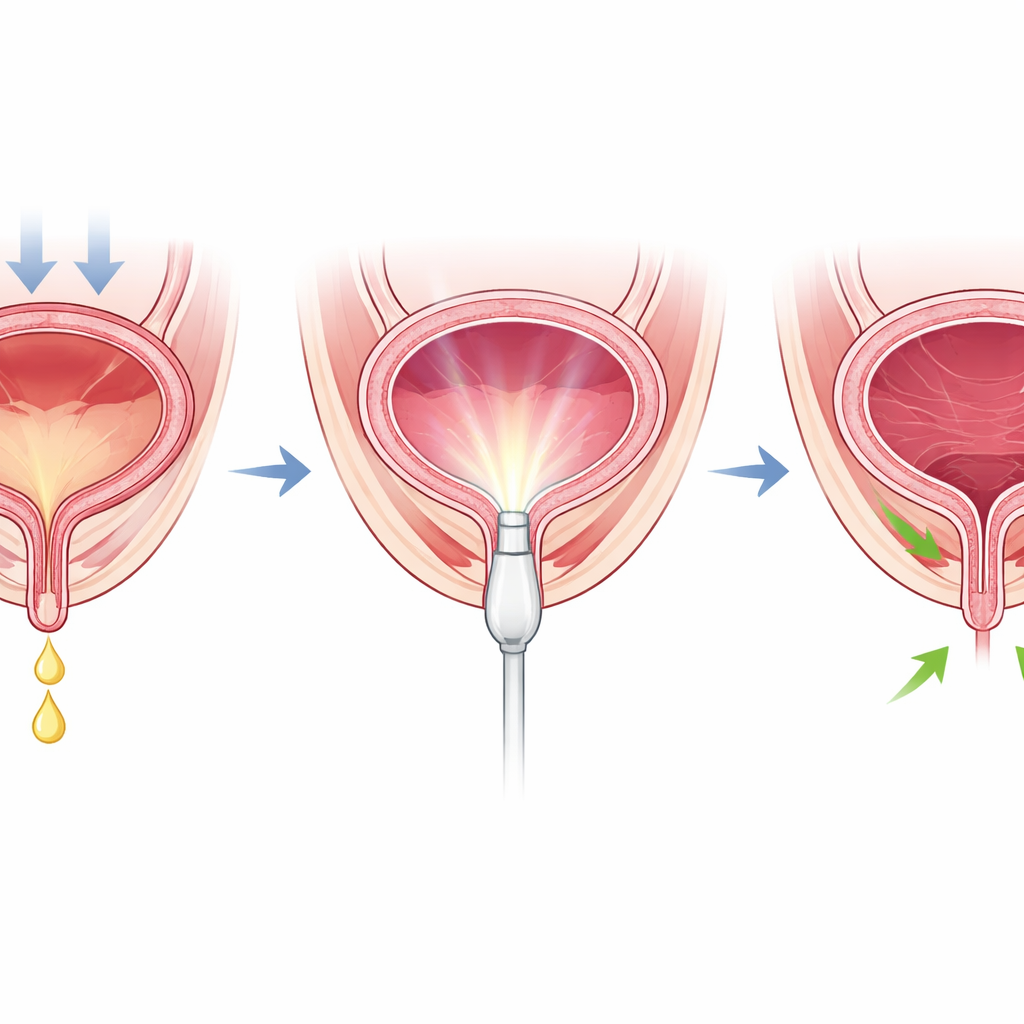
Many people, especially women, quietly live with stress urinary incontinence—the small but embarrassing urine leaks that can happen when coughing, laughing, or exercising. Current treatments range from pelvic floor exercises to surgery that places a supportive sling under the urethra. Exercises may not work well for more severe cases, while surgery is effective but invasive and can cause complications. This study explores a very different idea: using gentle, precisely delivered laser heat inside the urethra to strengthen the tissue that keeps urine in, potentially offering a minimally invasive alternative to surgery.
Why Leaks Happen
Stress urinary incontinence usually appears when the muscles and supporting tissues around the urethra—the channel that carries urine out of the bladder—have been weakened. Childbirth, aging, hormonal changes, and excess body weight can all stretch or damage this support system. When pressure in the abdomen suddenly rises, as it does during a cough or a jump, the weakened urethra cannot stay closed and urine escapes. Existing laser treatments have tried to tighten tissues from the vaginal side, but they heat the surface more than the deeper urethral muscle, and can sometimes cause burns or pain. The authors reasoned that directly treating the urethra from the inside could target the true “valve” more effectively and safely.
A Gentle Heat Treatment from Within
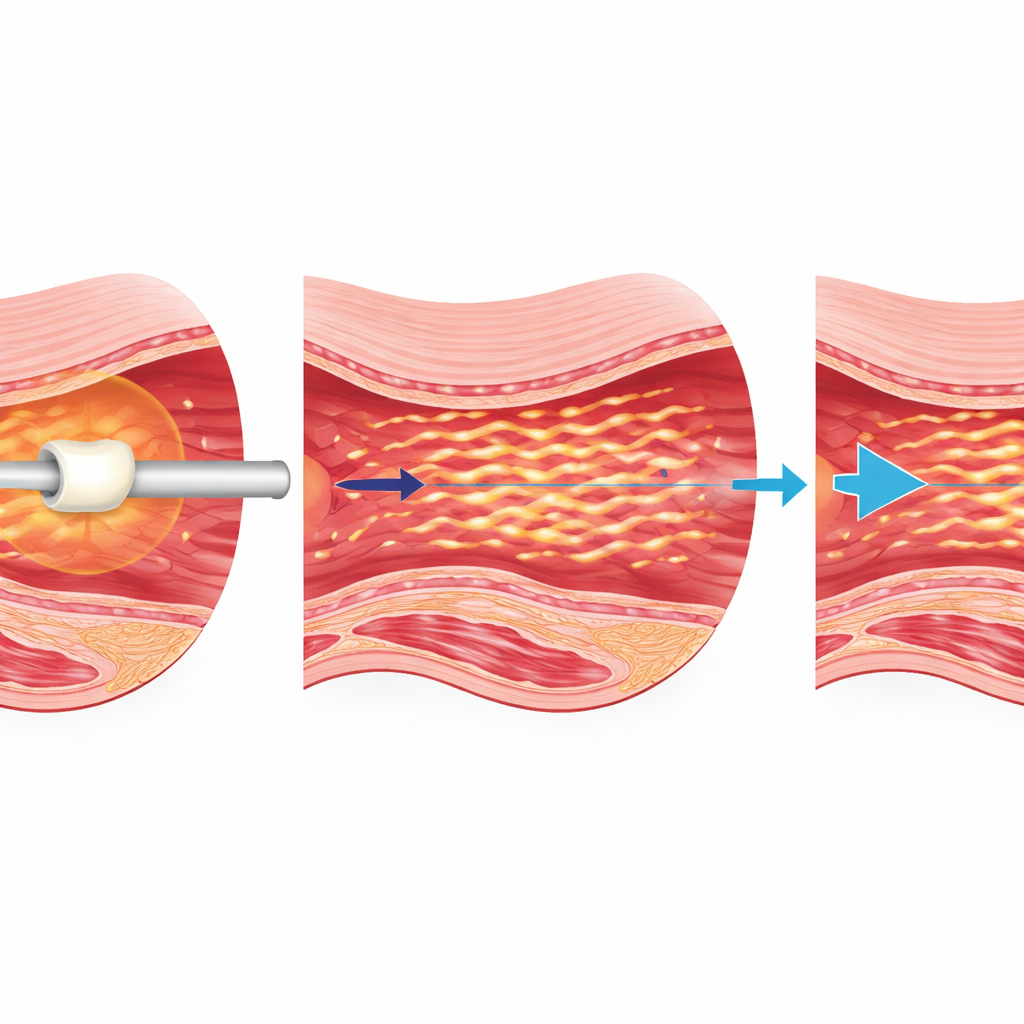
The team developed a thin optical device that can be threaded through the urethra, much like a catheter. Around its tip is a small balloon filled with cool liquid, and at its core is a light-diffusing fiber that spreads 980-nanometer laser light evenly in all directions. Computer simulations showed that, under carefully chosen settings, this setup could warm the deeper tissue layers to about 45 °C—warm enough to trigger biological repair processes—while the cooled balloon protects the inner surface from damage. The device was tested in female guinea pigs in which the researchers temporarily injured the pelvic tissues by stretching the vagina, creating a well-established animal model that mimics stress urinary incontinence.
Measuring Recovery in Leaks and Tissue Strength
Animals were divided into three groups: healthy controls, injured animals without treatment, and injured animals that received the transurethral laser exposure. Over two weeks, the researchers measured how much pressure the bladder could withstand before urine leaked, and examined the urethral tissue under the microscope. In untreated animals, leak point pressure dropped and stayed low, and the muscle ring around the urethra became thinner with less supportive tissue. In contrast, laser-treated animals showed a 65% increase in leak point pressure from day 0 to day 14, approaching or exceeding normal values. Microscopy revealed thicker skeletal muscle around the urethra and greater collagen content—the body’s natural “reinforcing fibers”—without any obvious damage to the delicate lining facing the urine.
What Happens Inside the Cells
To see how this mild heating reshaped the tissue from within, the team measured activity of genes linked to collagen production, muscle growth, and inflammation. In the laser-treated animals, genes associated with building new collagen and enlarging muscle fibers were strongly switched on, while those tied to harmful inflammation were toned down. At the same time, markers of a stiff, scar-like response were not elevated to the same degree as in untreated injured animals. Together, these molecular changes align with the structural findings: the urethra’s support scaffold became denser and the muscle that closes it grew thicker, in a way that suggests regeneration rather than scarring.
Looking Ahead to Human Care
This work shows that a non-ablative, transurethral 980 nm laser treatment can safely deliver gentle heat to the urethra in an animal model, stimulating collagen remodeling and muscle strengthening and restoring continence function over two weeks. While guinea pigs recover more quickly than humans and the model reflects an acute injury rather than long-term disease, the results point toward a future minimally invasive option that could sit between simple exercises and full surgery. Before it can be offered to patients, the approach will need to be tested in larger animals, over longer periods, and eventually compared head-to-head with standard sling operations. Still, the study offers an intriguing glimpse of how carefully controlled light and heat might one day help many people regain bladder control without going under the knife.
Citation: Shin, H., Ta, M.D., Kang, M. et al. Non-ablative transurethral laser treatment for collagen remodeling with functional recovery in an in vivo model of stress urinary incontinence. Sci Rep 16, 12684 (2026). https://doi.org/10.1038/s41598-026-42167-x
Keywords: stress urinary incontinence, transurethral laser, collagen remodeling, minimally invasive therapy, pelvic floor function