Clear Sky Science · en
Active artisanal mining-induced radiogenic hazards: insights from radiogeochemistry of Wamba Areas, north-central Nigeria
Hidden Risks Beneath Everyday Life
In the gold‑rich hills of Wamba in north‑central Nigeria, small‑scale miners dig for valuable metals using hand tools and shallow pits. Beneath their feet, however, the rocks also contain naturally occurring radioactive elements that quietly release energy and invisible gas. This study asks a simple but important question: are the people who mine these rocks, drink local water, and live on this land being exposed to unsafe levels of radiation, even though no obvious disease cluster has yet been reported?
The Land, the Rocks, and the Miners
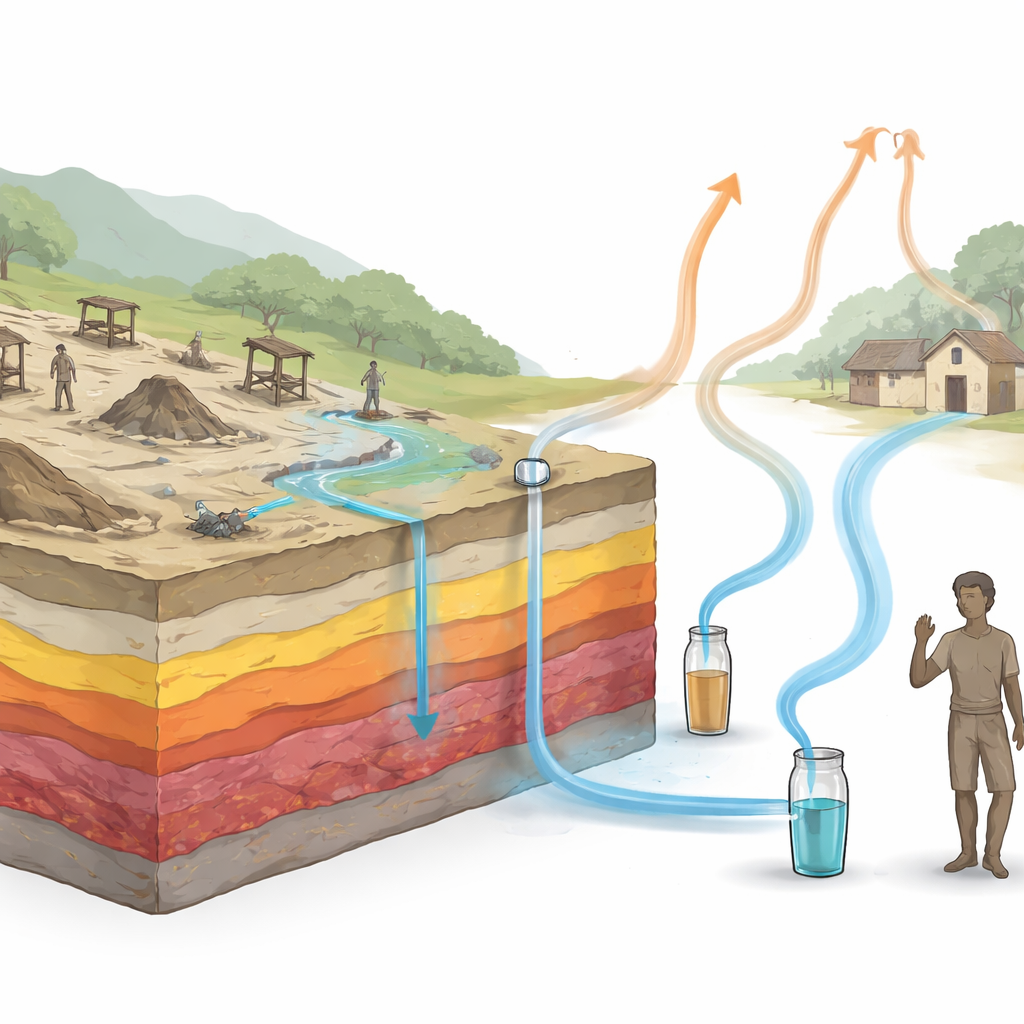
The Wamba region sits where ancient hard rocks meet younger sedimentary layers. Miners here work informally to extract gold, lead, and other minerals, often without protective equipment or water treatment. The researchers combined three kinds of information: detailed maps of rock types, airplane‑based measurements of radiation coming from the ground, and readings of radon gas dissolved in wells and streams used for drinking. By tying these pieces together, they could see not just how much radioactivity is present, but exactly which rock units and mining zones contribute most to people’s exposure.
Measuring Invisible Elements and Heat
Using airborne gamma‑ray spectrometry, the team mapped three key radioactive elements: potassium‑40, thorium‑232, and uranium‑238. These elements are part of the Earth’s natural makeup, but their concentrations vary strongly from rock to rock. In Wamba, the highest levels were found in ancient basement rocks such as migmatite and granite gneiss, as well as in a shale‑and‑limestone unit. These rock types sometimes held two to three times more radioactive material than nearby sandstone and alluvial deposits. The decay of these elements also produces heat, so the scientists calculated how much warmth the rocks generate. Although the heat output was too low to make the area a good geothermal energy prospect, it closely followed the zones of strongest radioactivity, confirming that geology is the main driver of local radiation patterns.
Radiation Doses and Health Markers
From the measured element concentrations, the authors estimated how much radiation a typical person in Wamba receives indoors and outdoors each year. On average, the absorbed dose in air was slightly higher than the global background but still within commonly accepted limits, and indices that summarize general external and internal hazards mostly stayed below international safety thresholds. Yet two health indicators told a more troubling story. The calculated annual dose to sensitive reproductive organs was about 50 percent above the recommended guideline, and the estimated excess lifetime cancer risk was roughly three to four times higher than standard reference values. These elevated values were most pronounced over the high‑radiation rock units in the northern part of the study area, where artisanal mining is intense.
Radon in Water and the Air We Breathe
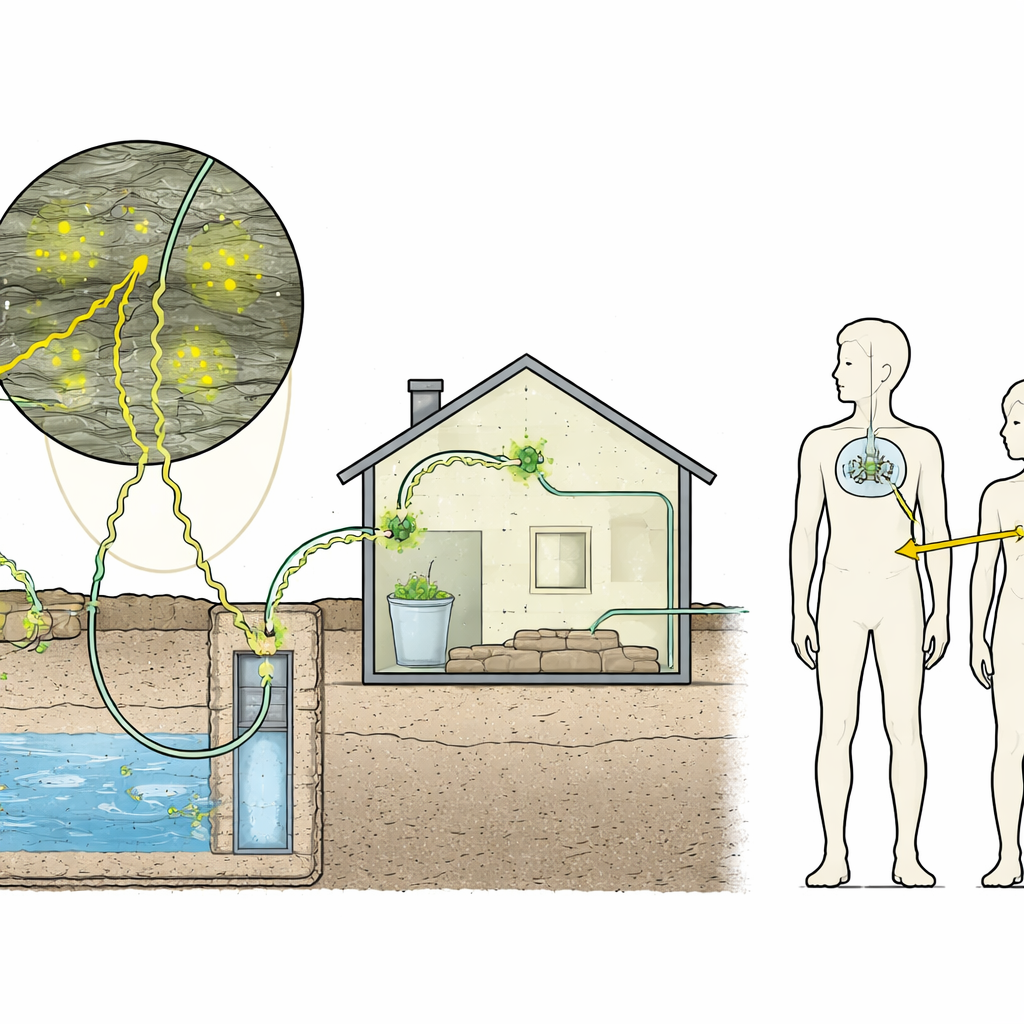
The team also sampled 30 water sources, including hand‑dug wells and streams that supply local households. They measured radon‑222, a radioactive gas that seeps from uranium‑bearing rocks, dissolves into groundwater, and can later escape into the air when water is used for washing, cooking, or drinking. The radon levels in water were comfortably below the World Health Organization limit, and doses from swallowing this water were small for both adults and children. However, when the scientists accounted for radon released into indoor air and then inhaled, the picture changed dramatically. The average annual dose from breathing radon was about 3.5 millisieverts—far above typical safety benchmarks and hundreds of times larger than the dose from drinking the same water. As a result, the estimated lifetime cancer risk from radon exposure alone was more than forty times higher than global average values.
What This Means for Local Communities
In plain terms, the study concludes that Wamba cannot be considered radiologically safe, even though headline dose numbers may appear modest. The combination of uranium‑ and thorium‑rich rocks, their disturbance by artisanal mining, and the build‑up of radon in air lead to long‑term health risks that standard broad indices can understate. The findings suggest that the greatest danger comes not from the water itself but from the air people breathe in homes and around mine workings. The authors call for targeted health studies, routine monitoring of high‑risk rock units, better ventilation and water‑handling practices, and mining rules that limit disturbance of the most radioactive formations, so that livelihoods built on the land do not quietly erode the health of the people who depend on it.
Citation: Adewumi, T., Adegoke, B.A., Faweya, B.E. et al. Active artisanal mining-induced radiogenic hazards: insights from radiogeochemistry of Wamba Areas, north-central Nigeria. Sci Rep 16, 10840 (2026). https://doi.org/10.1038/s41598-026-42034-9
Keywords: artisanal mining, radon exposure, environmental radiation, groundwater safety, Nigeria geology