Clear Sky Science · en
RAS/BRAF wild-type metastatic high-methylated colorectal cancer has gene expression patterns related to MSI-H and BRAF V600E mutant: a translational research
Why this study matters for people with colon cancer
Colorectal cancer is one of the most common cancers worldwide, and many patients are now offered treatments tailored to the genetic makeup of their tumors. Yet even when tumors look similar under the microscope and have the same well-known gene mutations, patients can have very different outcomes. This study asks whether another layer of biology—chemical tags on DNA called methylation—can help explain why some people with metastatic colorectal cancer live longer and respond better to treatment than others.
Two hidden types of metastatic colon cancer
The researchers focused on patients with metastatic colorectal cancer who took part in a large Japanese clinical trial comparing standard chemotherapy combinations. From these patients, they collected stored tumor samples and analyzed them in detail. Instead of looking only at a handful of genes, they measured DNA methylation across the whole genome and grouped tumors into two broad categories: high-methylated colorectal cancer (HMCC) and low-methylated colorectal cancer (LMCC). They also determined whether each tumor carried mutations in important driver genes called RAS and BRAF, which are already used to guide therapy.
Linking methylation patterns to survival
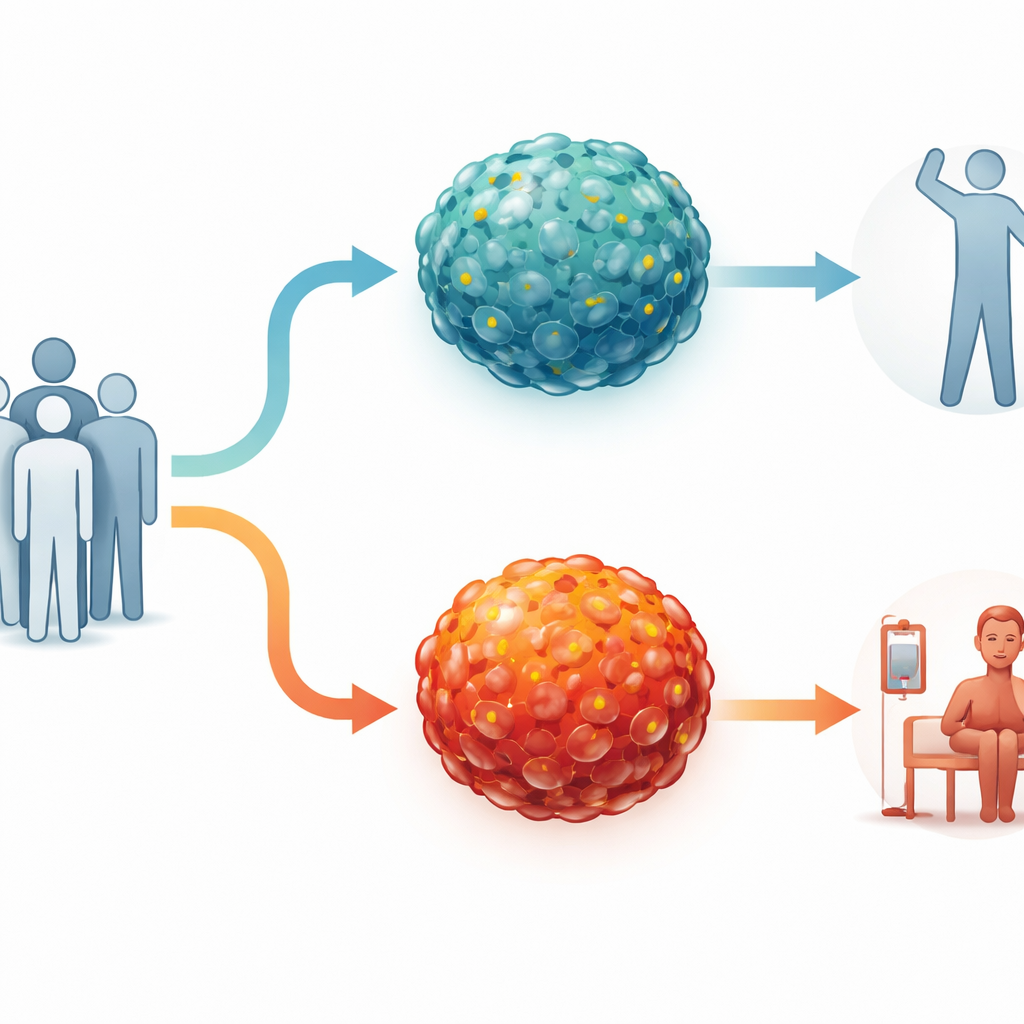
Out of 226 patients with complete data, about half had tumors without RAS or BRAF mutations (called wild-type), while the rest had RAS or BRAF mutations. Across all patients, those with highly methylated tumors had shorter overall survival than those with low methylation. But when the team looked more closely, they found that this difference was driven almost entirely by the RAS/BRAF wild-type group. In these patients, high methylation was strongly linked to poorer survival, bringing their outlook down to the level usually seen in patients whose tumors already carry RAS mutations. In contrast, among patients whose tumors already had RAS mutations, methylation level did not meaningfully change prognosis.
A tumor that behaves like a different, more aggressive subtype
To understand why highly methylated, RAS/BRAF wild-type tumors behave so badly, the researchers examined gene activity patterns. Using a method called gene set enrichment analysis, they compared the expression of thousands of genes in HMCC versus LMCC. Surprisingly, the high-methylated wild-type tumors turned out to have gene expression profiles that closely resembled two well-known high-risk subtypes: tumors with microsatellite instability (MSI-high) and tumors with the BRAF V600E mutation. Both of these subtypes are associated with aggressive disease and, in some settings, poor responses to certain drugs. Even when the few tumors with clear mismatch repair defects were removed from the analysis, the similarity in gene patterns remained, suggesting that methylation can make a tumor “MSI-like” even when standard tests do not show it.
Clues to drug resistance and future treatment choices
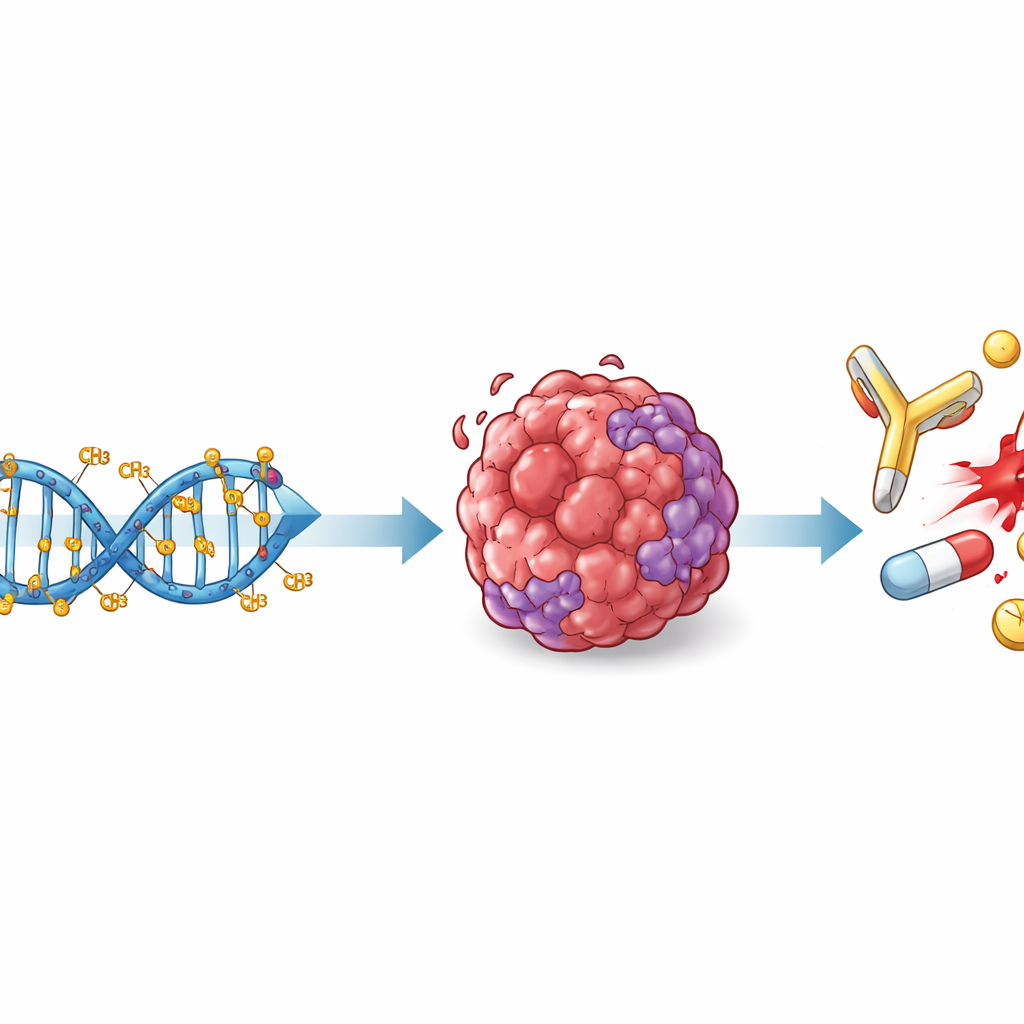
The team then asked how these methylation-driven patterns might affect treatment. In patients whose tumors lack RAS and BRAF mutations, antibodies that block the EGFR protein are often used, especially in later lines of therapy. Prior work hinted that highly methylated tumors respond less well to these drugs. In this study, the gene patterns of RAS/BRAF wild-type HMCC resembled those seen in experimental models that are resistant to the anti-EGFR antibody cetuximab, while LMCC resembled sensitive models. This supports the idea that high methylation marks a subgroup of patients whose tumors look suitable for anti-EGFR therapy by standard genetic tests but may actually be less likely to benefit, and who instead might be better candidates for other approaches, including immunotherapy aimed at MSI-like cancers.
What this means for patients and doctors
Overall, the study shows that in metastatic colorectal cancer without RAS or BRAF mutations, tumors with widespread DNA methylation form a distinct, higher-risk group. These tumors behave, at the level of gene activity, as if they carried MSI-high or BRAF V600E features, and they may be less responsive to commonly used anti-EGFR antibody drugs. While more work is needed to confirm these findings and to translate them into routine testing, measuring genome-wide methylation could eventually help doctors refine prognosis, choose more suitable therapies, and identify patients who might benefit from emerging treatments such as immune checkpoint inhibitors.
Citation: Wakayama, S., Takahashi, S., Ouchi, K. et al. RAS/BRAF wild-type metastatic high-methylated colorectal cancer has gene expression patterns related to MSI-H and BRAF V600E mutant: a translational research. Sci Rep 16, 12566 (2026). https://doi.org/10.1038/s41598-026-42033-w
Keywords: metastatic colorectal cancer, DNA methylation, RAS BRAF wild type, treatment resistance, microsatellite instability