Clear Sky Science · en
Comparison of efficacy and safety of remimazolam and midazolam in elderly patients undergoing laparoscopic cholecystectomy: a retrospective study
Why this matters for patients and families
For many older adults, gallbladder surgery is a necessary step to relieve pain and avoid serious infections. Although the surgery itself is now usually done through small "keyhole" cuts, the drugs used to keep patients asleep still carry risks—especially for seniors, whose bodies recover more slowly. This study looks at whether a newer sleep medicine, remimazolam, can help elderly patients wake up faster and just as safely as a long‑used drug, midazolam, when they undergo laparoscopic gallbladder removal.
A closer look at gallbladder surgery in older adults
Laparoscopic cholecystectomy, a minimally invasive removal of the gallbladder, is the standard treatment for gallstones and related inflammation. The approach usually means less pain, shorter hospital stays, and quicker return to normal life. But for patients in their 60s, 70s, or older, the choice of anesthesia can strongly influence how smoothly they wake up, how stable their blood pressure and breathing remain during surgery, and how long they need to stay in the recovery unit afterward. Traditional sedatives like midazolam work well but may linger in the body, slowing recovery and, in some cases, clouding thinking in the days after surgery.
A new kind of sleep medicine enters the scene
Remimazolam is part of the same family of calming and sleep‑inducing drugs as midazolam, but it is designed to be broken down much more quickly by enzymes in the body. Earlier studies in procedures like endoscopy and bronchoscopy suggested that remimazolam could help patients wake up faster with fewer breathing problems, particularly in older or fragile individuals. However, it had not been closely compared with midazolam in seniors undergoing laparoscopic gallbladder surgery, where changes in pressure inside the abdomen and stress on the heart and lungs can be more demanding than in simple diagnostic procedures.
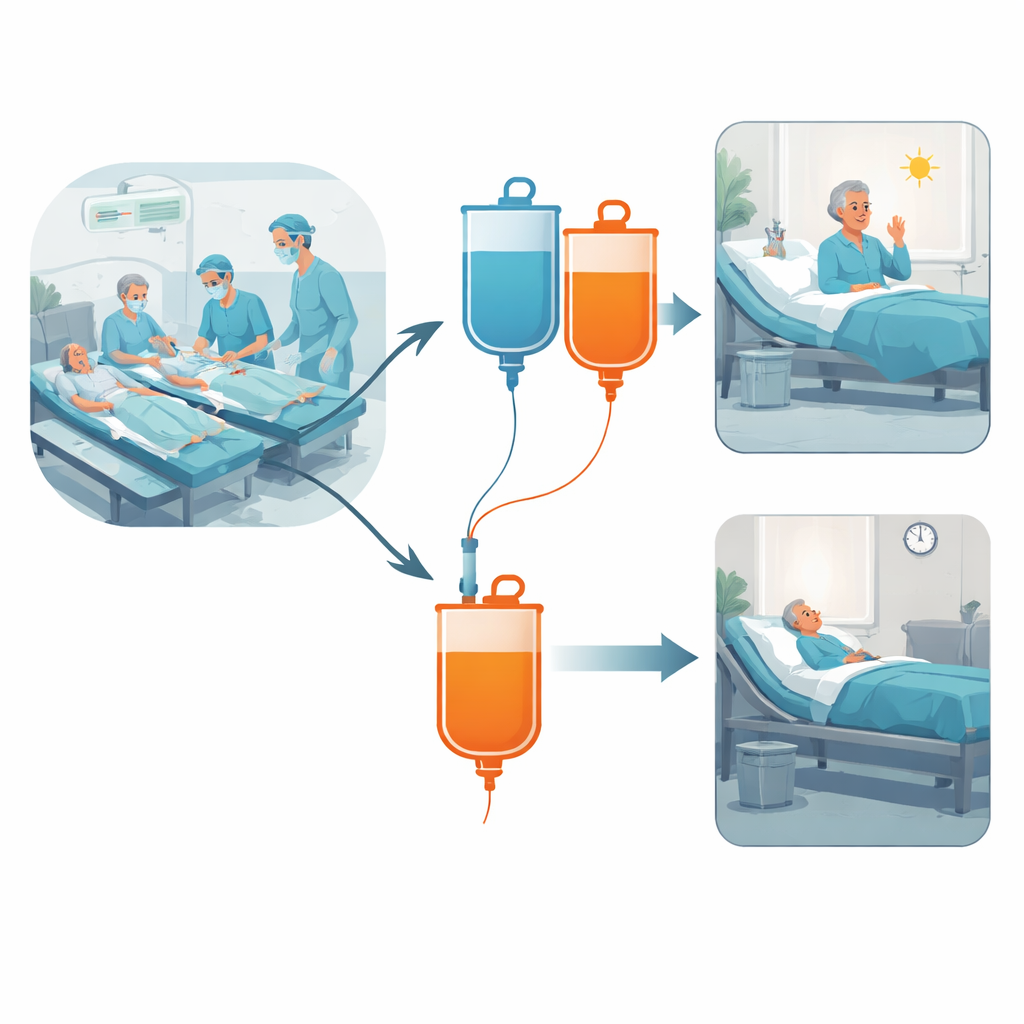
How the study was done
Researchers at a single hospital in China reviewed records from 184 patients aged 60 to 80 who had elective keyhole gallbladder surgery under general anesthesia between early 2022 and early 2024. All had a moderate level of surgical risk and broadly similar health profiles, including body weight and length of surgery. Eighty‑one patients received remimazolam and 103 received midazolam as their main sleep medicine, while other parts of the anesthesia (pain relief, muscle relaxants, and inhaled gas) followed the same protocols in both groups. The main yardstick was how long it took from the end of anesthesia until the breathing tube could be safely removed. The team also tracked how long patients stayed in the post‑anesthesia care unit, how their blood pressure, heart rate, and oxygen levels changed during surgery, and whether they experienced problems such as low blood pressure, slow heart rate, or breathing difficulties.
What the researchers found
Patients who received remimazolam woke up enough to have their breathing tube removed several minutes sooner than those who received midazolam. On average, the remimazolam group reached this point in just over half an hour, while the midazolam group took closer to three quarters of an hour. Time spent in the recovery unit also differed: patients given remimazolam were typically ready to leave about 10 minutes earlier than those given midazolam. Importantly, both drugs produced similarly stable patterns of blood pressure, heart rate, and oxygen levels during the operation. The rates of low blood pressure and slow heart rate were slightly lower with remimazolam but not different enough to rule out chance, and neither group showed cases of dangerous breathing slowdown, severe oxygen drops, or postoperative nausea and vomiting.

What this means for real‑world care
Taken together, the findings suggest that, for older patients having keyhole gallbladder surgery, remimazolam can offer a faster and smoother wake‑up without sacrificing safety. Shorter times to remove the breathing tube and leave the recovery unit may improve comfort for patients and help hospitals use recovery beds more efficiently—an important benefit in busy surgical centers. At the same time, both medicines maintained good control of blood pressure and breathing, which is reassuring for a group that often has heart or lung problems.
Where we go from here
Because this was a retrospective study from a single hospital, it cannot prove cause and effect as strongly as a randomized trial, and the results may not apply to every type of patient or surgery. Still, the work adds to a growing body of evidence that remimazolam is a promising choice for anesthesia in elderly people, especially for minimally invasive operations. Larger, multi‑center studies will be needed to confirm whether the quicker recovery seen here translates into better long‑term outcomes and whether similar benefits appear in other kinds of surgery.
Citation: Zhou, Y., Xu, X., Xia, Q. et al. Comparison of efficacy and safety of remimazolam and midazolam in elderly patients undergoing laparoscopic cholecystectomy: a retrospective study. Sci Rep 16, 11960 (2026). https://doi.org/10.1038/s41598-026-41918-0
Keywords: remimazolam, midazolam, elderly anesthesia, laparoscopic gallbladder surgery, postoperative recovery