Clear Sky Science · en
Development and physicochemical evaluation of nutritional drink using underutilized Caralluma tuberculata L.
A New Kind of Thirst-Quencher
Imagine a summer drink that does more than cool you down: it also supplies hard-to-get minerals, natural antioxidants, and comes from a hardy desert plant that poor communities already know well. This study explores exactly that idea, turning the underused succulent Caralluma tuberculata into a nutritious, plant-based beverage that could help support healthier diets and more sustainable food systems in regions facing heat, water stress, and food insecurity.
The Desert Plant Behind the Drink
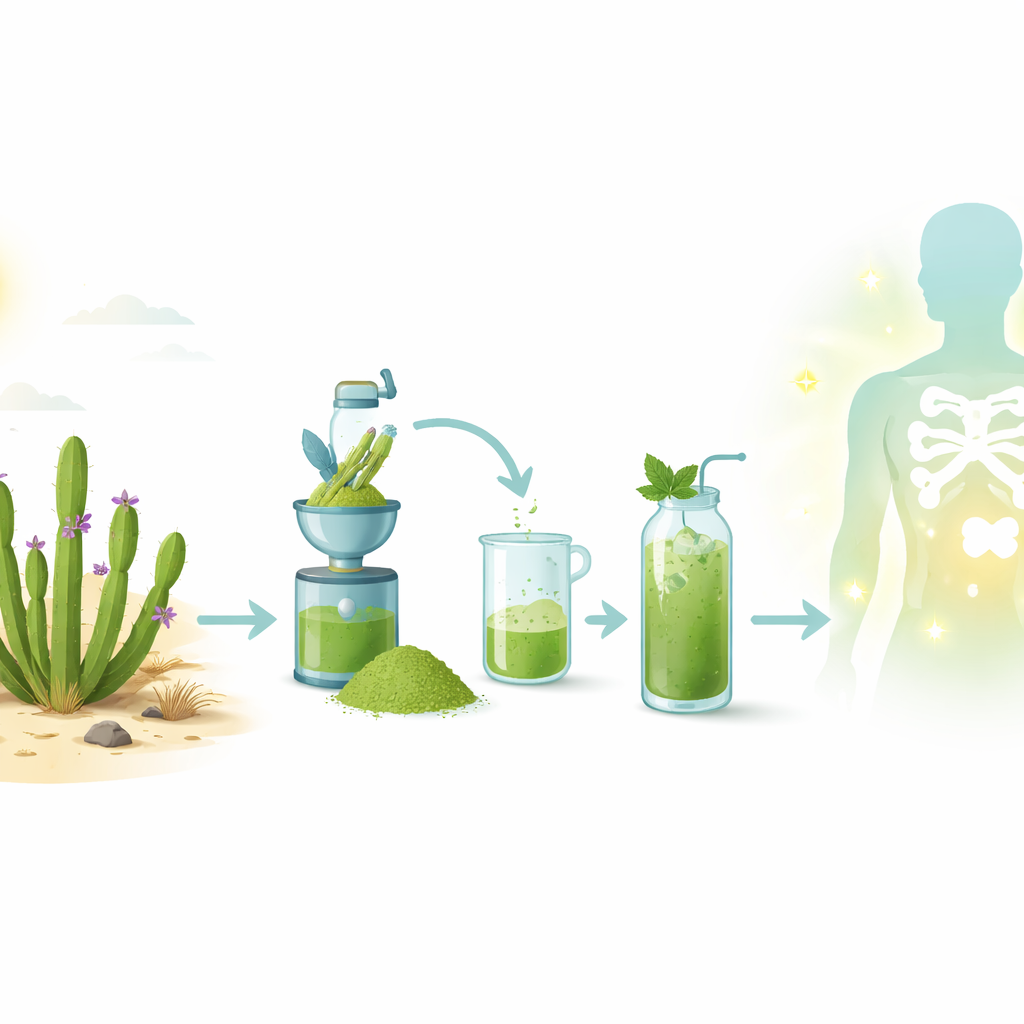
Caralluma tuberculata is a cactus-like herb eaten in parts of South Asia and the Middle East as a cooked vegetable, tea, or dried powder, and long valued in folk medicine for lowering blood sugar, easing pain, and fighting inflammation. Yet it is rarely used in everyday foods or drinks. The researchers began by carefully collecting and identifying plant stems from Pakistan, drying and grinding them into a fine powder, and then measuring their basic nutritional makeup. They found the stems to be rich in fiber and mineral "ash," with modest amounts of protein and very little fat or calories. Important minerals like calcium, magnesium, iron, zinc, manganese, and copper were present in meaningful quantities, along with vitamin C and plant pigments known to act as antioxidants. Together, these traits make the stem an appealing candidate for boosting the nutritional value of simple beverages.
Designing a Simple Everyday Beverage
To test how this plant could work in practice, the team developed five drink recipes. Each one started with water, lemon juice, a low-calorie sweetener, a small amount of thickener, and food-grade color. What changed from recipe to recipe was the amount of Caralluma stem powder, ranging from none at all (the control drink) up to 2 grams per 100 milliliters. After pasteurizing these drinks to make them safe, the scientists stored them in the refrigerator and tested them over 21 days. They tracked changes in physical properties such as acidity, sweetness, and thickness; measured vitamins, plant chemicals, and antioxidant activity; checked mineral levels; monitored bacterial growth; and asked a panel of adults to rate the drinks’ taste, color, mouthfeel, and overall acceptability.
What Happened Inside the Bottles
Adding more Caralluma stem powder clearly changed the drinks. Compared with the control, the Caralluma versions became slightly less acidic and thicker, while their measured sweetness dropped somewhat, likely because the plant material contributes more insoluble solids than sugars. As the powder level increased, the drinks’ calcium, magnesium, potassium, zinc, and copper contents all rose sharply, showing that even modest amounts of the plant could substantially lift mineral intake. Vitamin C, carotenoids, and classic plant defense compounds such as phenols and flavonoids were all higher in the more heavily fortified drinks, and so was their overall antioxidant capacity—an indication that they might help the body neutralize harmful free radicals.

How Well the Drink Held Up Over Time
Storage told a more nuanced story. Over three weeks in the fridge, all drinks gradually lost some sweetness, thickness, vitamin C, carotenoids, flavonoids, and antioxidant strength. These declines are common in fruit and herbal beverages, as natural pigments and vitamins slowly break down and microbes use sugars as fuel. At the same time, total phenolic content actually rose, probably because storage and mild breakdown of plant tissues released additional phenolic compounds or changed them into forms that the lab test detects more strongly. Bacteria counts increased with time and with higher plant powder levels, reflecting both the added nutrients and slow fermentation, although the drinks remained within typical experimental limits.
How People Liked the New Drink
Ultimately, any functional drink must still be pleasant to sip. In sensory tests using a standard 9-point scale, panelists judged color, flavor, taste, mouthfeel, appearance, and overall acceptability. The mid-to-high Caralluma levels (especially the third and fourth recipes) scored best, suggesting that a clearly noticeable presence of the plant actually improved perceived flavor and mouthfeel compared with the plain control, at least during the first week of storage. Scores gradually declined for all recipes by day 21, likely due to color fading, flavor changes, and growing microbial activity, but the better-fortified drinks remained the most appealing of the set.
Why This Matters for Everyday Diets
To a non-specialist, the takeaway is straightforward: a little-known desert plant can be transformed into a refreshing drink that quietly delivers extra minerals, fiber, vitamin C, and natural antioxidants, without adding much fat or energy. By blending traditional knowledge with modern food science, this work shows how underused wild plants like Caralluma tuberculata could help diversify diets, support the United Nations’ zero-hunger and better-nutrition goals, and provide new, sustainable options for health-conscious consumers living in hot, resource-limited regions.
Citation: Iftkhar, A., Din, G.M.U., Nadeem, M. et al. Development and physicochemical evaluation of nutritional drink using underutilized Caralluma tuberculata L.. Sci Rep 16, 13241 (2026). https://doi.org/10.1038/s41598-026-41886-5
Keywords: functional beverage, Caralluma tuberculata, antioxidant drink, underutilized plants, sustainable nutrition