Clear Sky Science · en
Quantifying the impact of heat stress on labour productivity in outdoor workplaces in Southern India amid a changing climate
Why hot days matter for everyday work
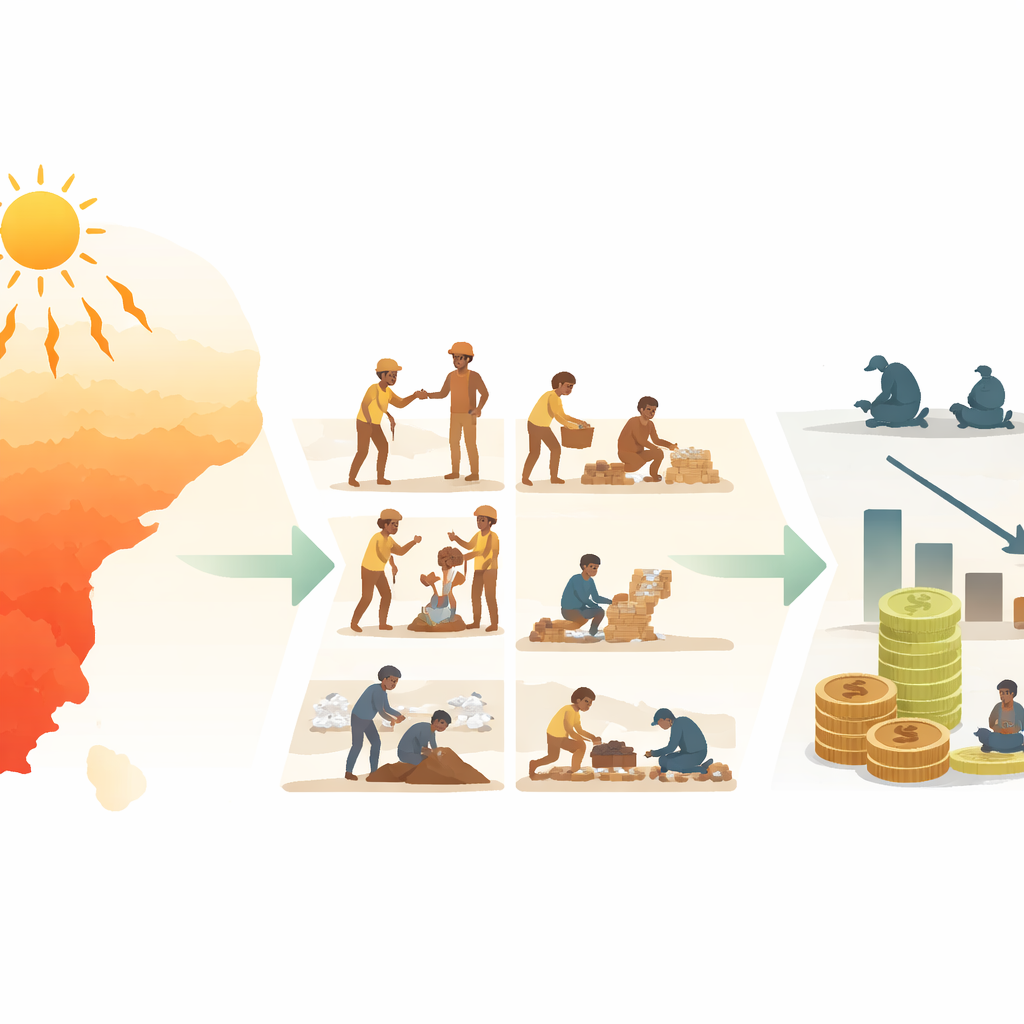
For millions of people who work outside, from farmers to construction crews, a hot day is more than an inconvenience—it can decide how much money they bring home and how healthy they stay. This study looks closely at outdoor workers in Tamil Nadu, a state in southern India, to find out how rising heat linked to climate change is already cutting into their ability to work and earn. By measuring both the heat in their workplaces and the workers’ own experiences, the researchers show how high temperatures quietly drain strength, time, and income—and what can be done to protect those most exposed.
A closer look at outdoor work in the heat
The researchers focused on five common outdoor jobs: agriculture, construction, brick making, salt pans, and stone quarries. These are largely informal, low-wage occupations where people work long hours in the open sun, often without cooling or social protections. Between 2021 and 2023, the team visited worksites across 11 districts of Tamil Nadu and collected information from 1,560 workers aged 18 to 60. They used a standard heat index called Wet Bulb Globe Temperature (WBGT), which combines air temperature, humidity, sun, and wind to capture how hot it actually feels to the human body, and compared those readings with accepted safety limits for moderate and heavy work.
Measuring heat, strain, and lost work
To understand how heat affected people, the study combined on-site measurements with worker surveys and basic health checks. Heat levels were recorded during typical work hours, and jobs were categorized by how physically demanding they were. Workers answered questions—often read aloud in the local language—about symptoms like extreme sweating, thirst, tiredness, cramps, headache, or fainting, as well as whether they missed hours or days of work, failed to meet daily targets, or lost pay because of heat-related illness. For over 1,400 volunteers, the team also measured simple signs of physical strain, including body temperature, sweat loss, and hydration status using urine concentration.
What happens when heat crosses safe limits
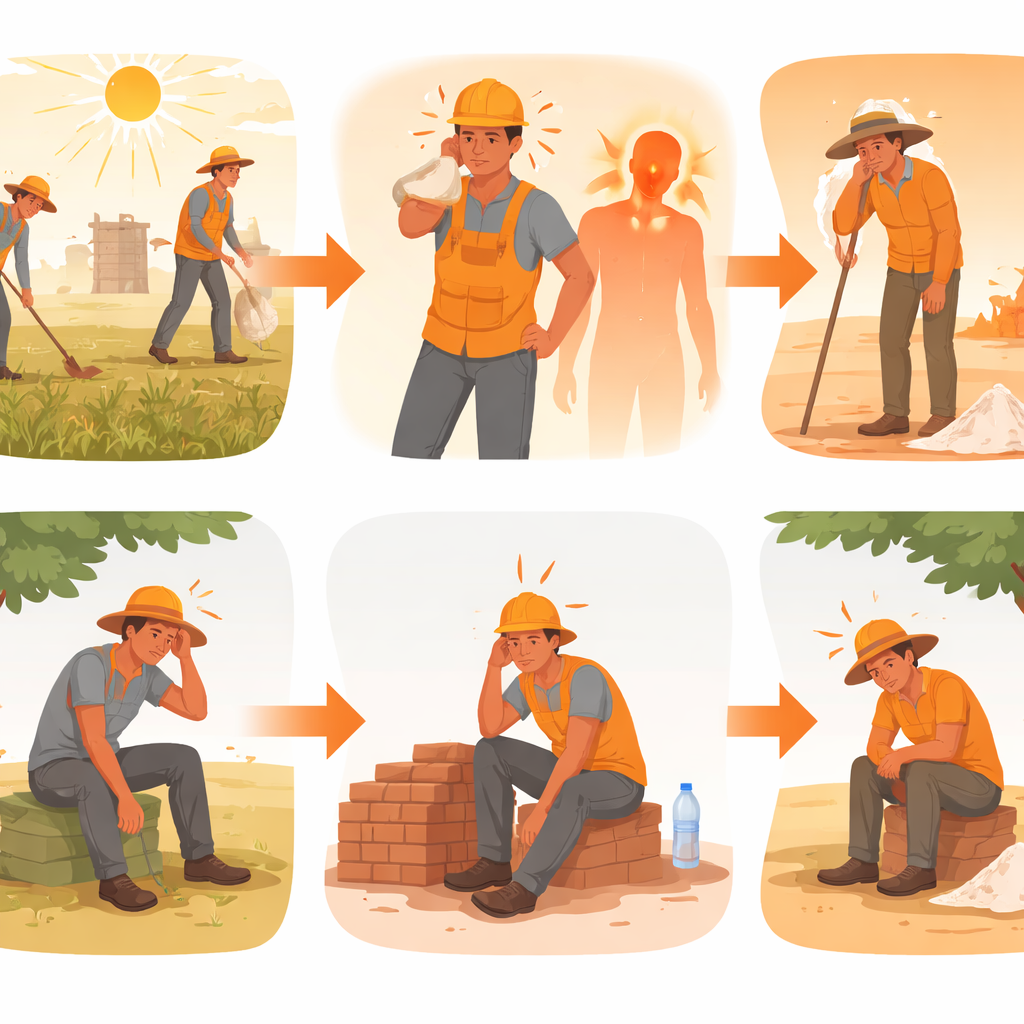
The findings show that heat is already well above what is considered safe in many outdoor workplaces. In summer, average WBGT values were close to 30 °C, and nearly nine in ten monitored workers were exposed to heat levels above recommended limits; even in winter, over four in ten were above these thresholds. Heavy manual work made things worse—those with the toughest jobs were significantly more likely to face dangerous heat. Workers exposed to higher WBGT levels were about 1.4 times more likely to report productivity loss, even after accounting for age, education, and other factors. Older workers, those doing heavy labor, and those who reported drinking alcohol were at greater risk. Many described needing extra time to finish tasks, skipping work because of exhaustion, or losing wages and paying for medical care after heat-related illness.
Health toll and economic ripple effects
Heat did not just make workers uncomfortable; it pushed many into measurable physical strain. Nearly half of those tested exceeded at least one strain indicator, such as a rise in core body temperature, very high sweat rates, or signs of dehydration. People who reported symptoms like headaches, dizziness, or severe tiredness were much more likely to also report that their productivity dropped. Follow-up surveys with a subset of workers across both hot and cooler seasons showed that in summer they lost more working hours, suffered more health complaints, and reported about twice the risk of productivity loss compared with winter. Given that most of Tamil Nadu’s workforce is informal and already economically vulnerable, these losses—reduced output, lost wages, and medical expenses—add up to a serious threat to livelihoods and to the wider regional economy.
What this means for workers and the future
The study concludes that climate-driven heat is already eroding the work capacity of outdoor laborers in southern India and that this problem will intensify as temperatures continue to rise. Importantly, the results show that even today’s “normal” seasonal conditions are unsafe in many places, not only during extreme heat waves. For a layperson, the takeaway is simple: as the climate warms, many of the people who grow food, build houses, and make basic goods will struggle to work safely and efficiently unless changes are made. The authors call for practical protections such as shaded rest areas, access to cool drinking water, lighter clothing, and scheduled breaks during the hottest hours, along with stronger labor standards and heat-awareness training. Such measures can help safeguard both health and income for millions of outdoor workers in India and other hot, low- and middle-income regions.
Citation: Venugopal, V., Latha, P.K. & Shanmugam, R. Quantifying the impact of heat stress on labour productivity in outdoor workplaces in Southern India amid a changing climate. Sci Rep 16, 14228 (2026). https://doi.org/10.1038/s41598-026-41807-6
Keywords: heat stress, outdoor workers, labour productivity, climate change, Tamil Nadu