Clear Sky Science · en
A study on the efficacy and safety of fecal microbiota transplantation as an adjunctive therapy for treating depressive episodes
Why Your Gut Might Matter to Your Mood
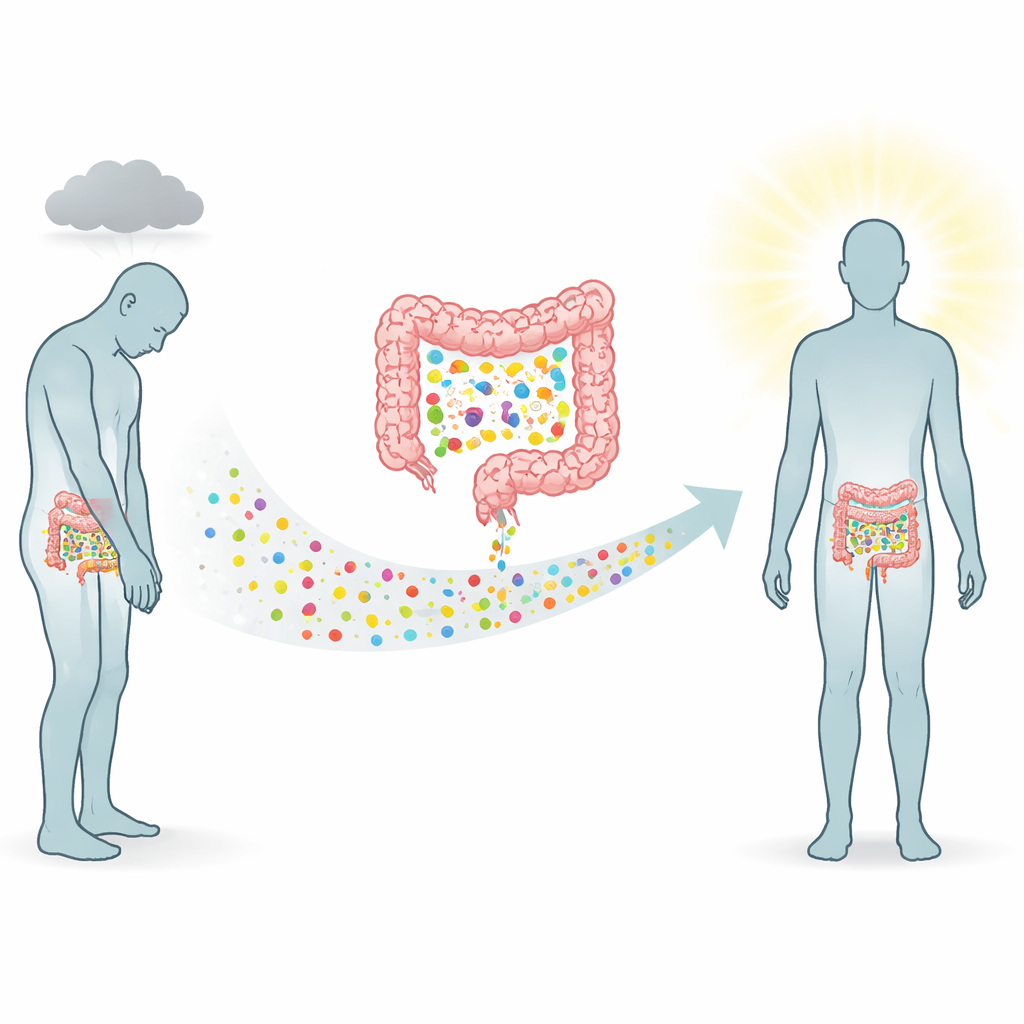
Depression is often thought of as a problem in the brain, but growing evidence suggests that the communities of microbes living in our intestines may also play a role in how we feel. This study asked a bold question: if doctors deliberately reset a person’s gut bacteria using stool from a healthy donor—a procedure called fecal microbiota transplantation, or FMT—could it help ease depressive episodes when added to standard antidepressant treatment? The researchers also examined whether this approach is safe and which gut bacteria seem most closely linked to changes in mood.
How the Study Was Set Up
The research team enrolled 46 adults aged 18 to 65 who were experiencing a depressive episode and met international diagnostic criteria for depression. Everyone received the commonly prescribed antidepressant escitalopram. Half of the participants were randomly assigned to also receive FMT over three days through a tube that delivered donor stool, processed into a liquid, directly into the small intestine. The other half took only the antidepressant. Before treatment and again after two weeks, the team measured depression severity using a standard 24-item rating scale and took stool samples to analyze ten major types of gut bacteria. They also ran blood tests, heart checks, and other safety assessments to track any side effects.
What Changed in Mood and Symptoms
Both groups improved over two weeks, but those who received FMT plus medication improved more. On average, depression scores dropped in both groups, yet the size of the drop and the percentage improvement were significantly greater in the FMT group. About 71% of people who received FMT achieved at least a 50% reduction in symptom scores, compared with 35% in the medication-only group. Importantly, side effects such as nausea, mild abdominal discomfort, headaches, or nasopharyngeal irritation were generally mild and short-lived, and occurred at similar rates in both groups. No serious adverse events were reported, and blood tests, immune markers, thyroid function, and heart tracings remained stable, suggesting that the combined treatment was safe over the short term.
What Happened Inside the Gut
To understand why mood might have changed, the researchers zoomed in on the bacteria themselves. After FMT, levels of several microbes often considered "friendly"—including Lactobacillus, Bifidobacterium, and Clostridium butyricum—increased markedly. Overall, this suggested a shift toward a more beneficial gut environment. One genus, Enterococcus, rose especially sharply and stood out in a statistical analysis as the only microbe whose relative abundance clearly increased after transplantation. Before FMT, higher levels of certain species such as Faecalibacterium prausnitzii, C. butyricum, and Eubacterium rectale were linked to fewer depressive symptoms. These bacteria are known to produce short-chain fatty acids that nourish the gut lining, reduce inflammation, and help maintain the barrier between the intestine and the bloodstream.
Clues to a Gut–Brain Conversation
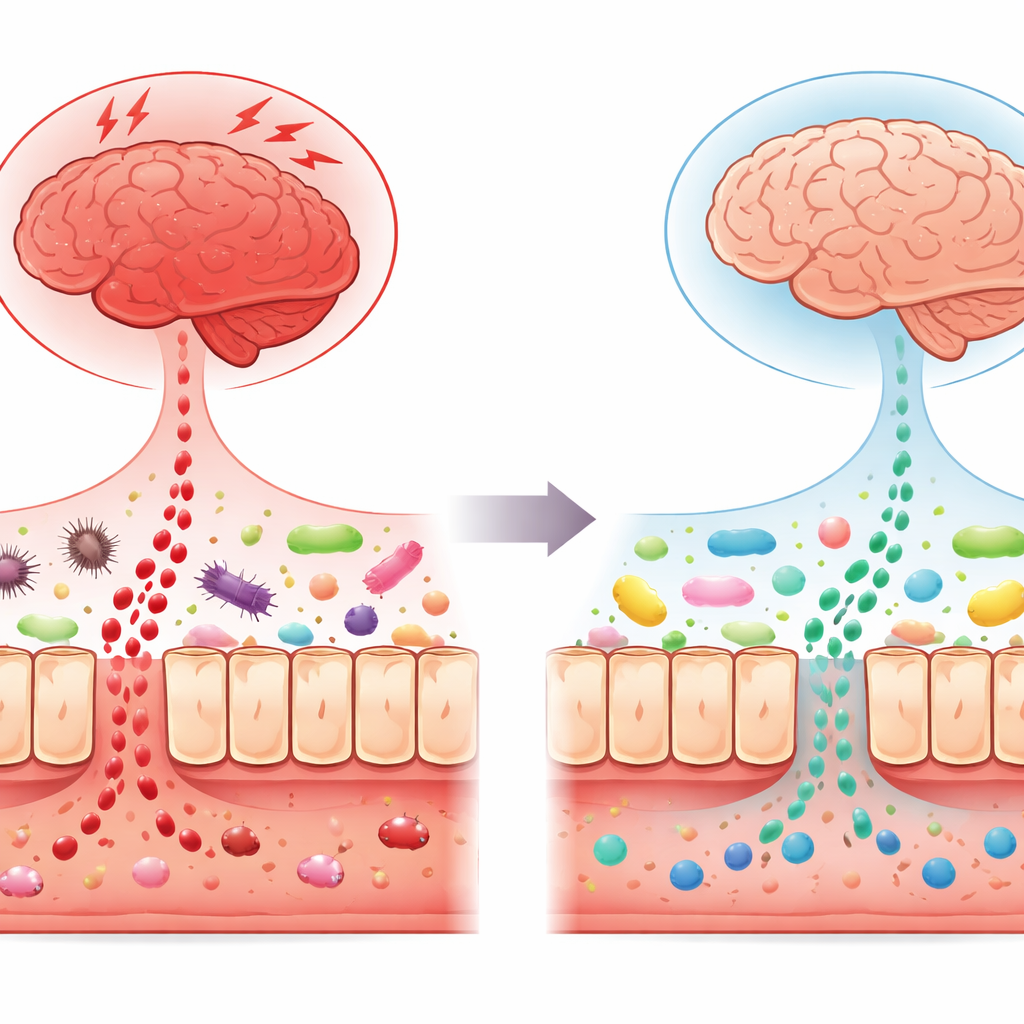
The study supports the idea of a "gut–brain" conversation in depression. When the gut barrier is leaky or its microbial residents are out of balance, inflammatory molecules and bacterial fragments may slip into the blood and ultimately influence the brain, potentially worsening mood. Short-chain fatty acids produced by beneficial bacteria, in contrast, help strengthen the gut wall and calm inflammation. In this trial, the rise in helpful species after FMT may have improved the gut environment enough to amplify the benefits of antidepressant medication, at least in the first two weeks. Interestingly, although Enterococcus increased the most, higher post-treatment levels of this genus were associated with more severe depression scores, highlighting that not all microbes that grow after FMT are necessarily helpful and that individual strains may differ in their impact.
What This Means for Patients and the Future
For people living with depression, especially those who do not respond fully to medications, this study offers cautious optimism. Adding fecal microbiota transplantation to a standard antidepressant produced greater short-term improvement in symptoms without introducing serious safety concerns, and it boosted several gut bacteria that are thought to protect the intestinal lining and dampen inflammation. However, the study was relatively small, followed patients for only two weeks, and examined only a limited set of microbes. Larger, longer trials across diverse populations, using more detailed genetic methods to profile gut bacteria, are needed before FMT could be recommended broadly. Still, these results add weight to the idea that targeting the gut ecosystem—whether through FMT, probiotics, or other strategies—may one day become an important tool alongside traditional treatments for depressive episodes.
Citation: Wang, L., Zhang, S., Liu, Y. et al. A study on the efficacy and safety of fecal microbiota transplantation as an adjunctive therapy for treating depressive episodes. Sci Rep 16, 13417 (2026). https://doi.org/10.1038/s41598-026-41801-y
Keywords: depression, gut microbiota, fecal microbiota transplantation, microbiome–gut–brain axis, adjunctive therapy