Clear Sky Science · en
Changing landscapes drive dietary diversification in Asian elephants
Why elephant diets matter to people
Asian elephants are giant gardeners of tropical forests, shaping the plants that grow by what they choose to eat and where they wander. In Malaysia, their home ranges now overlap busy highways, oil palm estates and logging sites. This study asks a deceptively simple question with big conservation consequences: how does this human-made patchwork of forests, farms and construction zones change what wild elephants actually eat, and what does that mean for conflict with people who share the same land?
Two very different elephant neighborhoods
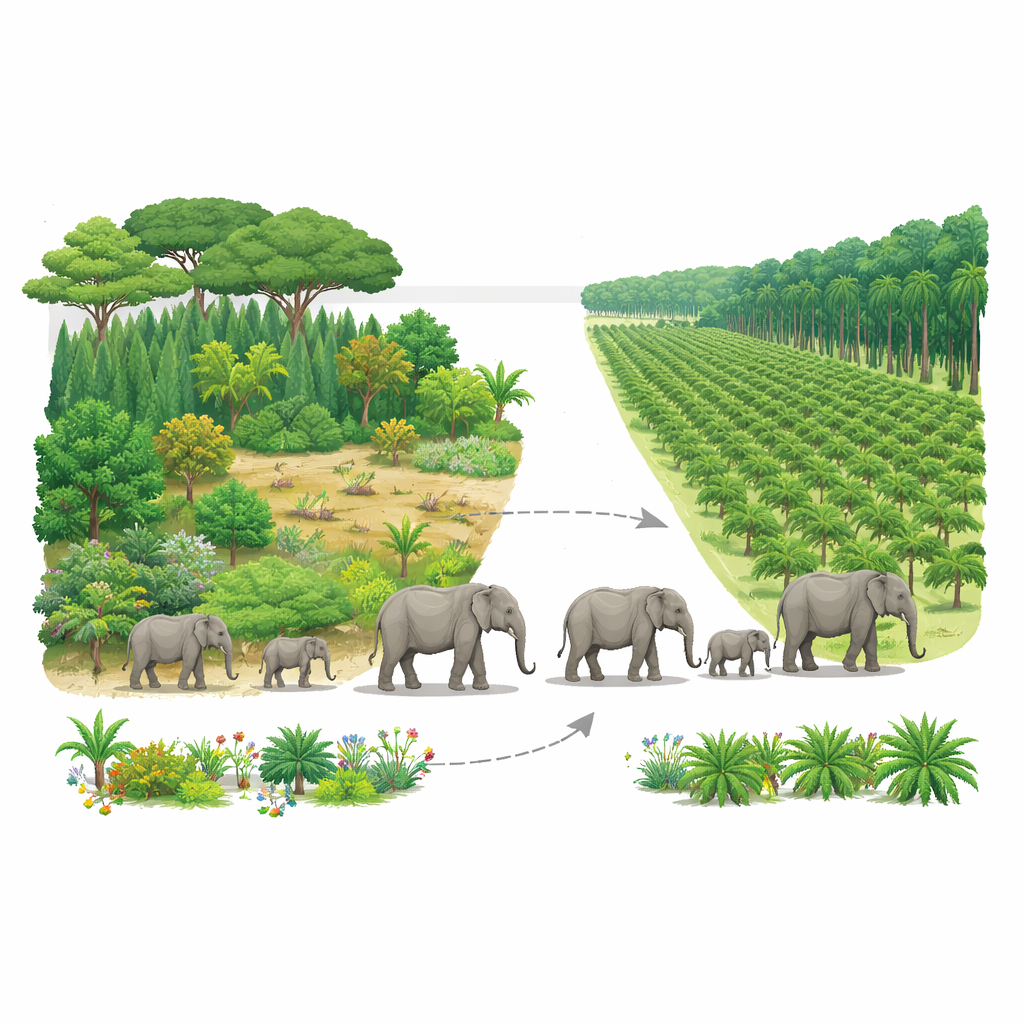
The researchers focused on two contrasting regions of Peninsular Malaysia. In the northeast, the development–logging landscape is a busy construction zone for a large hydroelectric dam, surrounded by active logging and a mosaic of primary forest, regrowing forest and open patches. Far to the south lies an oil palm–forest landscape where most natural forest was cleared decades ago and replaced by vast plantations, leaving only a narrow forest strip that elephants use as a refuge. These two places offer sharply different menus: one a mixed buffet of wild plants, the other dominated by a few cultivated species.
Reading elephant meals from dung
To see what elephants were really eating, the team collected 86 fresh dung piles and used a technique called DNA metabarcoding. Instead of visually guessing which leaves and fruits were present, they ground the droppings, extracted tiny fragments of plant DNA and sequenced them using high-throughput machines. By matching these DNA barcodes to online genetic databases and local plant lists, they could identify scores of plant species in each sample. They then calculated how often each plant appeared and how abundant it was in the diet, building a detailed picture of feeding habits in each landscape.
Wild buffet versus plantation menu
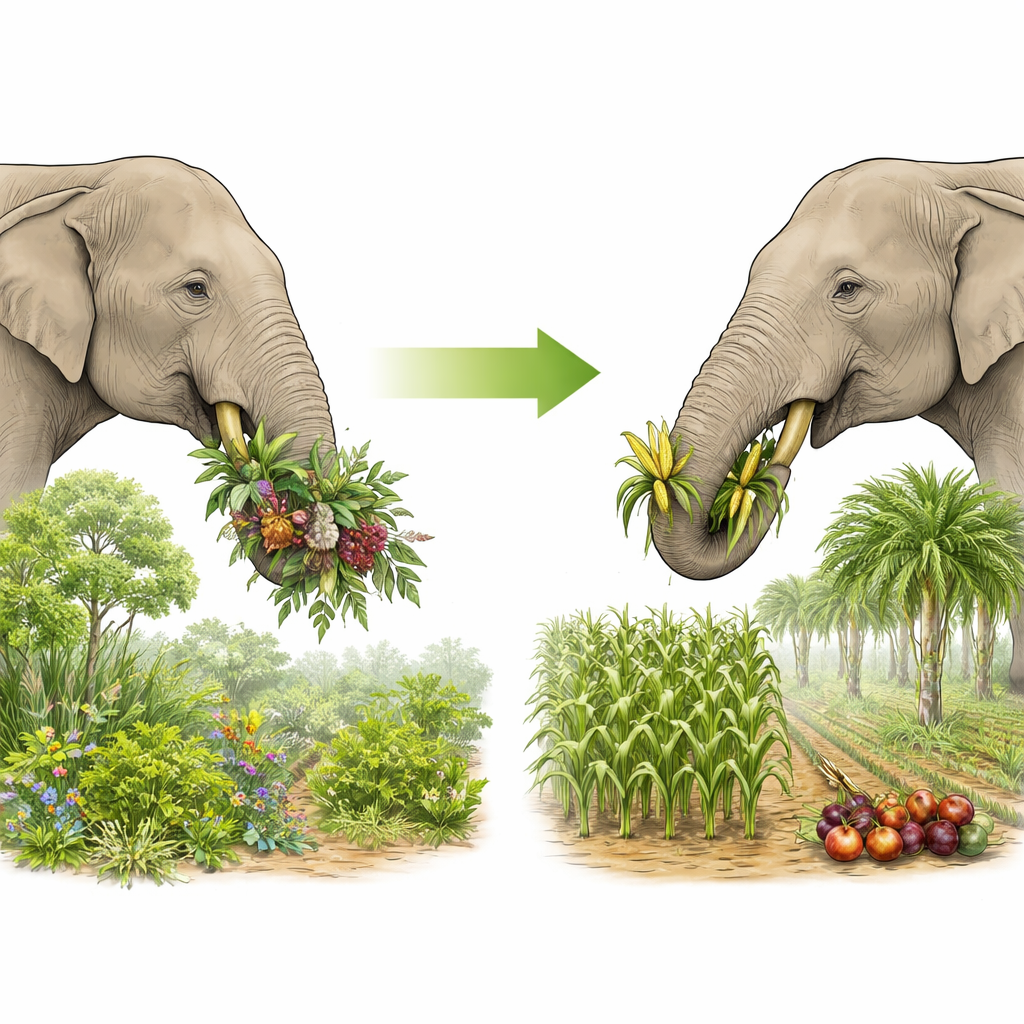
The DNA results showed that elephants living in the development–logging landscape had a richer and more varied diet than those in the oil palm–forest region. In the disturbed, logged area, elephants consumed over 100 plant species from 50 families, including many forest trees, vines, grasses and pioneer plants that thrive in gaps and edges. Figs and wild bananas stood out as important foods there, along with tall grasses and climbing legumes in regenerating clearings. In contrast, elephants in the oil palm–forest landscape relied on only 69 plant species from 38 families, with their diet skewed toward a smaller set of grasses, herbs and trees commonly found at forest edges and inside plantations.
Adapting to change, but at a cost
These patterns suggest that elephants are remarkably flexible eaters. Where logging and construction have broken up the forest, they appear to roam widely across a patchwork of habitats and broaden their diet to include whatever edible plants they can find. Statistical analyses confirmed that this landscape supported higher dietary diversity and more unique plant species in elephant diets. In the oil palm–dominated region, however, elephants seem to have settled into a narrower, more predictable menu that includes many cultivated crops such as oil palm, maize and fruit trees. These energy-rich, easy-to-reach foods may be attractive, but they draw elephants into fields and plantations, setting the stage for frequent damage and human–elephant conflict.
What this means for living with elephants
The study concludes that the way we arrange forests, farms and infrastructure strongly shapes what elephants eat and where they move. Elephants can adjust their diet to cope with fast-changing, logged landscapes, but this flexibility can also push them into risky, human-dominated areas. In more stable plantation regions, their growing dependence on crops makes clashes with people more likely and more persistent. The authors argue that smart land-use planning—restoring habitat, maintaining ecological corridors with suitable wild forage, and steering elephants away from high-value crops—is essential for reducing conflict. By understanding their diets in detail, managers can design landscapes where people, plantations and these endangered giants have a better chance of coexisting.
Citation: Batrisyia, N., Arazmi, N.F.N., Jamaluddin, M.I.M. et al. Changing landscapes drive dietary diversification in Asian elephants. Sci Rep 16, 13316 (2026). https://doi.org/10.1038/s41598-026-41675-0
Keywords: Asian elephants, land-use change, wildlife diet, human–elephant conflict, tropical conservation