Clear Sky Science · en
Oxycodone self-administration and genetic background exert community-specific effects in the gut microbiome
Why Your Gut Might Care About Pain Pills
Prescription painkillers like oxycodone are widely used, but their effects are not limited to easing pain or risking addiction—they also reach deep into the gut. This study asks a deceptively simple question with big implications: how do our genes and opioid use together reshape the trillions of microbes living in our intestines? By testing two distinct rat strains that self-administered oxycodone, the researchers show that both genetic makeup and drug use leave clear, yet community-specific, fingerprints on the gut microbiome. 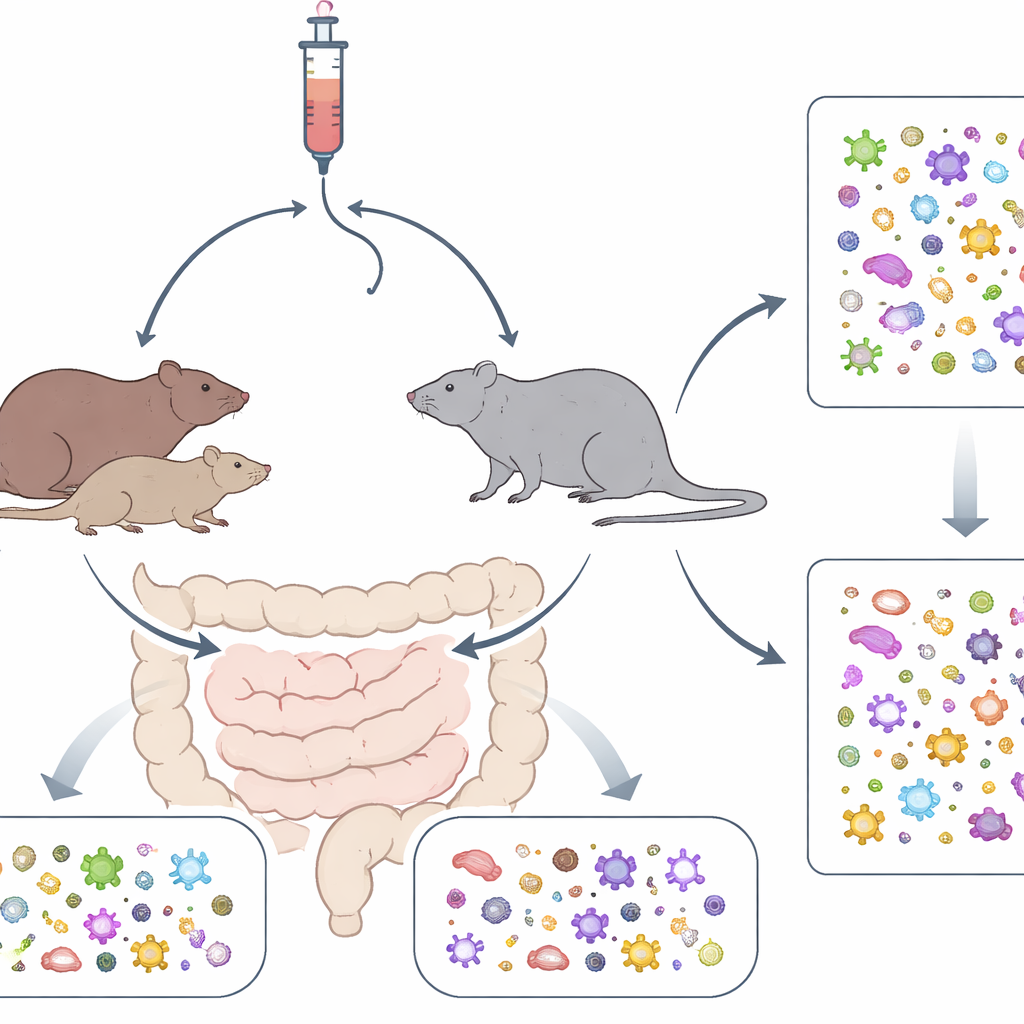
Two Kinds of Rats, One Powerful Drug
The team worked with two inbred rat strains that are genetically quite different. Both male and female rats were trained to press a lever to give themselves intravenous oxycodone or a harmless saline solution, mimicking voluntary drug taking in humans. Across weeks, the animals first had short access and then much longer sessions, allowing their intake to escalate. One strain, called M520/N, consistently took more oxycodone than the ACI/EurMcwi strain, highlighting that genetic background can strongly influence how much of a drug an individual chooses to consume. Even when the lever only delivered saline, strain and sex still mattered: M520/N females pressed the lever more than any other group, suggesting that inborn traits can shape not only drug seeking but also general attraction to stimulation.
Tracking Weight and Gut Health Along the Way
The researchers monitored body weight as a simple readout of overall health during this demanding regimen. During the long-access phase, rats that self-administered oxycodone tended to lose weight compared with their saline counterparts, and males lost more than females. Because diet and weight shifts are known to alter gut bacteria, these changes likely interact with the direct effects of oxycodone on the gut, adding another layer of complexity to how the drug reshapes the microbiome. After the final drug sessions, the team collected samples from two key gut regions—feces (reflecting the colon) and the cecum, a pouch where microbes are especially dense—to see how each community had changed.
Genes and Sex Shape Microbial Diversity
To understand how rich and varied the microbial communities were, the scientists measured different forms of diversity within each sample. In both fecal and cecal communities, genetic background and sex had strong effects. Overall, ACI/EurMcwi rats and females tended to host more diverse bacterial communities than M520/N rats and males. Interestingly, simply taking oxycodone did not reduce this within-sample diversity, meaning the total number and evolutionary spread of microbes stayed broadly similar. However, when the researchers compared which bacteria were present and how abundant they were across animals, they saw clear separation by strain and by whether rats had received oxycodone or saline. This shows that while the gut may remain broadly “busy,” the specific players and their balance are strongly shaped by both genes and drug exposure. 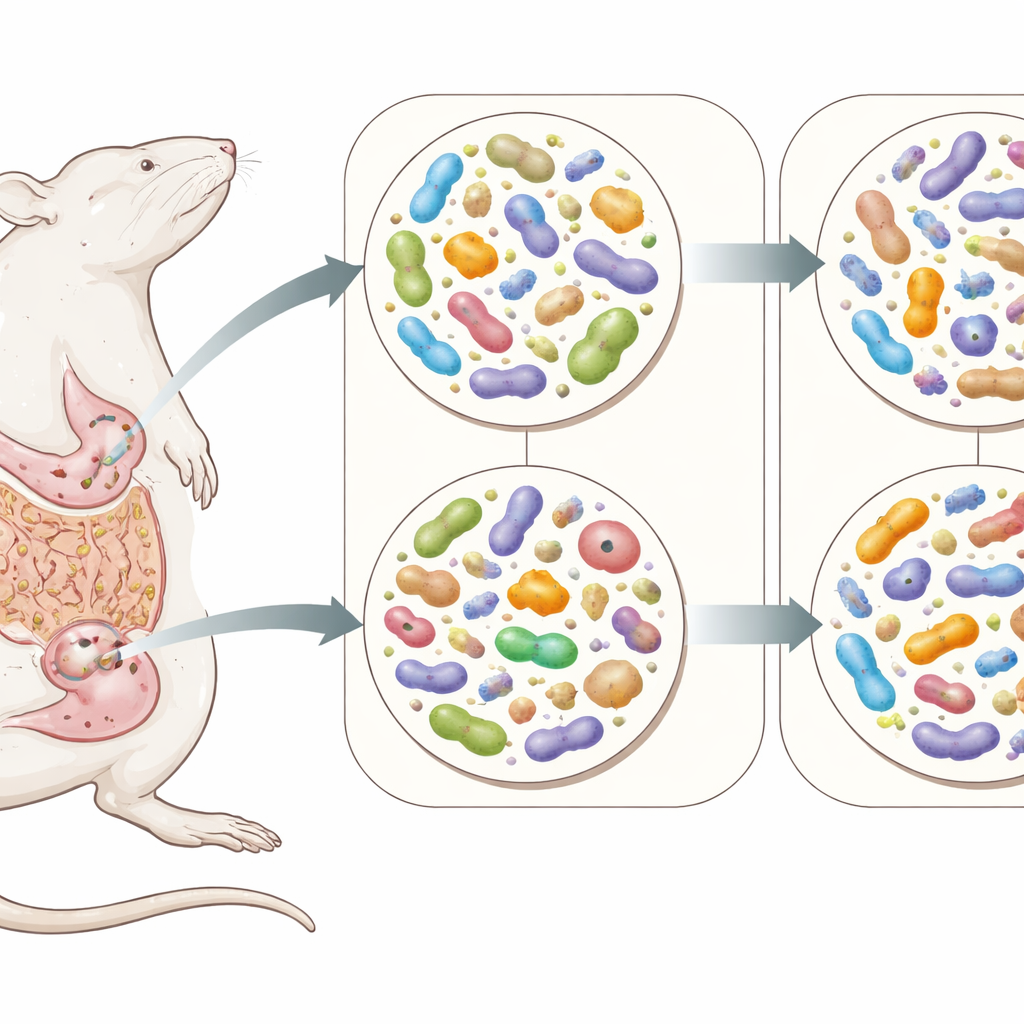
Community-Specific Shifts in Gut Bacteria
Digging deeper, the team identified particular groups of bacteria that changed with oxycodone or differed between strains. Overall, 15 bacterial groups distinguished oxycodone-taking rats from saline controls, and 51 differed between the two strains. Some patterns were shared across gut regions—for example, certain genera such as Blautia, Prevotella, and Rodentibacter became more common in oxycodone users in both fecal and cecal samples. Other changes were highly community-specific: a bacterial phylum called Patescibacteria decreased in the cecum after oxycodone, but not in feces, and many taxa shifted in opposite directions in the two regions. The way bacteria tended to co-occur and form interaction networks also changed with both strain and drug, suggesting that oxycodone and genetics do not just alter which microbes are present, but also how they relate to one another.
What This Means for People and Pain Medicine
Taken together, the study shows that our genetic makeup and exposure to opioids can jointly remodel the gut ecosystem in subtle but widespread ways, and that these effects differ between gut regions. Genetic background influenced how much oxycodone rats chose to take, and it also strongly shaped which microbes flourished in their intestines. Oxycodone use then layered on additional, community-specific shifts in microbial composition and microbial networks, even without large drops in overall diversity. For people, this suggests that two individuals prescribed the same pain medication may experience very different gut and possibly brain consequences depending on their genes and preexisting microbiome. Understanding these gene–microbe–drug interactions could help explain why some patients are more vulnerable to opioid use disorder or gastrointestinal side effects, and may eventually guide more personalized treatments that protect or even harness the gut microbiome.
Citation: Duffy, E.P., Sterrett, J.D., Hale, L.H. et al. Oxycodone self-administration and genetic background exert community-specific effects in the gut microbiome. Sci Rep 16, 13276 (2026). https://doi.org/10.1038/s41598-026-41666-1
Keywords: opioid use disorder, gut microbiome, oxycodone, genetic background, rat self-administration