Clear Sky Science · en
Comparative evaluation of Bacillus subtilis delivery forms reveals their effects on biogenic element excretion in pigs
Why Pig Feed Matters for the Planet
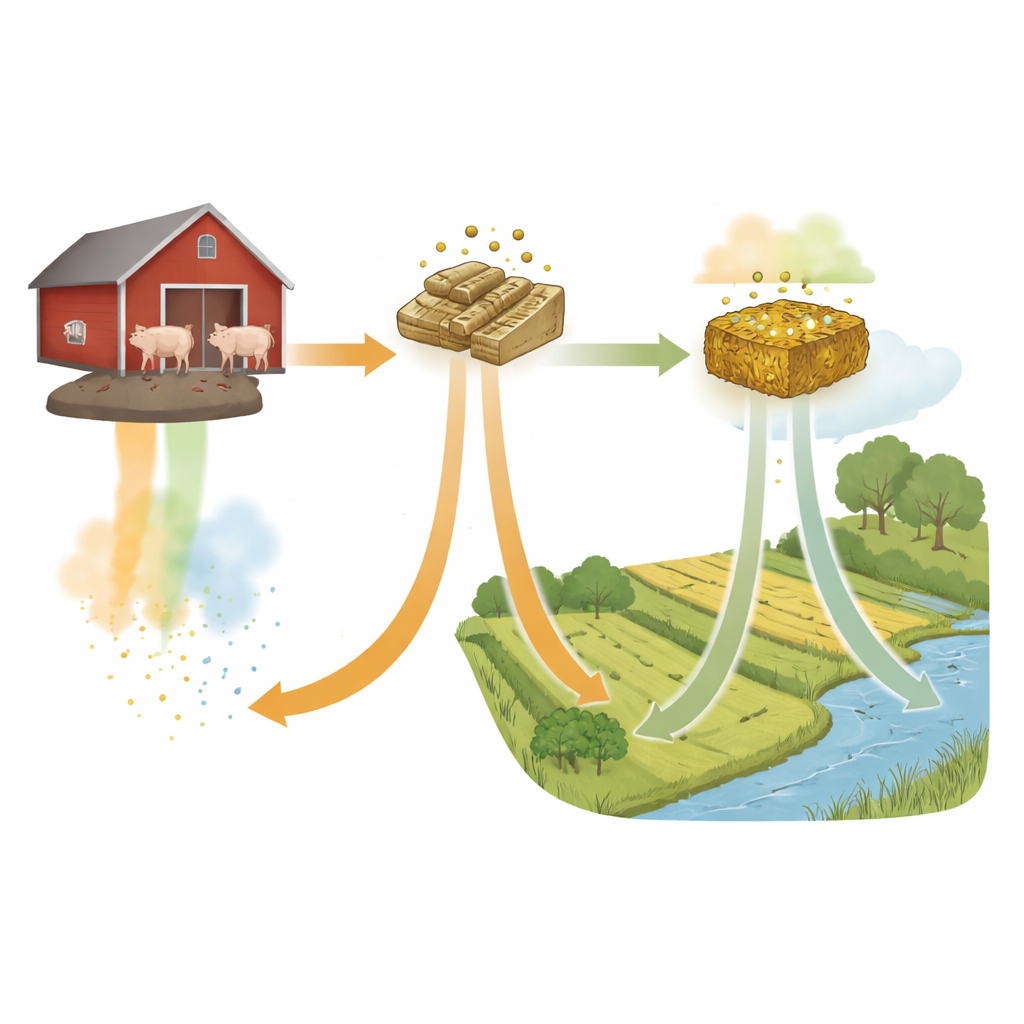
Modern pig farms face a hidden pollution problem: the nutrients that animals fail to absorb do not simply disappear. Instead, excess nitrogen, phosphorus, and metals like copper and zinc wash out of manure into nearby soil and waterways, driving algal blooms and long-term soil damage. This study explores whether a common farm bacterium, Bacillus subtilis, can be delivered in smarter ways so piglets use more of the minerals in their feed and send fewer into the environment.
Helpful Bacteria in Everyday Feed
Bacillus subtilis is a hardy, spore-forming bacterium already used as a probiotic in animals. It produces a toolbox of enzymes that break down difficult components in grain-based feeds, freeing nutrients that would otherwise pass through undigested. The researchers asked whether the way this bacterium is added to the diet matters for both pig health and pollution. They compared four diets for nearly 400 weaned piglets: a standard "fully supplemented" feed; the same feed with no additives; the additive-free feed plus free Bacillus spores; and the additive-free feed in which part of the soybean meal was replaced by rapeseed meal that had been pre-fermented with Bacillus subtilis.
Two Different Ways to Deliver the Same Ally
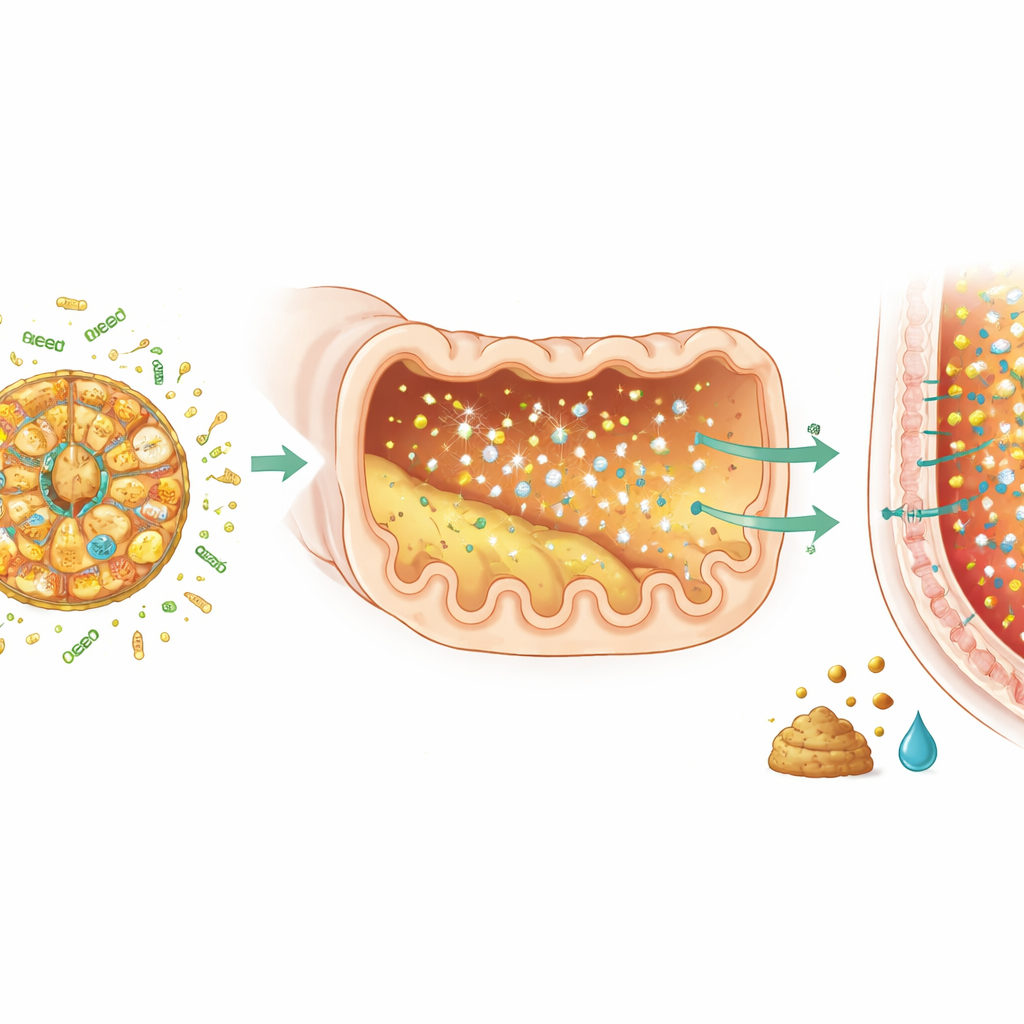
The key comparison was between feeding spores directly and feeding a fermented ingredient that acts as a living delivery package. In the fermented rapeseed meal, Bacillus had already grown and built a network of proteins and polysaccharides. This structure helps lock in enzymes like phytase and proteases and protects bacterial spores as they travel through the stomach. It also contains fermentation by-products such as organic acids and a prebiotic fiber called levan, which can nurture other beneficial microbes in the gut. In contrast, the free-spore diet supplies the same strain without this protective and prebiotic matrix, relying on the spores to germinate once they reach the small intestine.
Less Waste in Manure, More Nutrients in the Body
The results showed that both Bacillus-based feeds helped piglets retain more minerals, but the fermented rapeseed meal gave the strongest gains. Pigs eating this diet excreted about one-third less nitrogen in feces and urine combined than pigs on the additive-free control. Phosphorus losses dropped by almost 40 percent, and calcium retention nearly tripled. Losses of trace metals were also sharply reduced: fecal zinc fell by more than 60 percent and copper by nearly 40 percent. Measurements taken along the gut confirmed that the apparent digestibility of phosphorus and magnesium jumped by more than 20 percentage points with the fermented feed, while the spore-only diet produced smaller, but still meaningful, improvements.
What Happens Inside the Gut
These changes were not just visible in the manure; they also showed up in the animals’ blood. Piglets receiving either form of Bacillus had higher blood levels of phosphorus, calcium, zinc, copper, and iron, all within healthy ranges. The study suggests several overlapping reasons. Protected enzymes in the fermented meal survive longer and more effectively cut apart plant molecules that otherwise trap minerals. Fermentation acids lower the gut’s pH, keeping released minerals dissolved and easier to absorb. Prebiotic levan and other fermentation products support a more helpful microbial community, which can further aid mineral uptake. Free spores, although less potent overall, still germinate in the intestine and locally produce enzymes and signaling molecules that improve absorption.
Cleaner Farms and Smarter Feeding
From a practical standpoint, the findings imply that simply changing how a probiotic is delivered can make pig farming cleaner. The fermented rapeseed meal not only turns a local oilseed by-product into a valuable feed ingredient, reducing reliance on imported soy, but also cuts nutrient runoff from manure. The authors estimate that for every 1,000 piglets, their synbiotic feed strategy could prevent roughly 26 kilograms of nitrogen and 3.6 kilograms of phosphorus from leaving the farm over a typical nursery period. In plain terms, by pairing a robust bacterium with a thoughtfully fermented feed ingredient, farmers can raise healthy pigs while easing the pressure their operations place on rivers, soils, and climate targets.
Citation: Czech, A., Wlazło, Ł., Łukaszewicz, M. et al. Comparative evaluation of Bacillus subtilis delivery forms reveals their effects on biogenic element excretion in pigs. Sci Rep 16, 13158 (2026). https://doi.org/10.1038/s41598-026-41542-y
Keywords: probiotic pig feed, Bacillus subtilis, fermented rapeseed meal, nutrient runoff, sustainable pig farming