Clear Sky Science · en
Primary dysmenorrhea and associated factors among female adolescents in Jinka town, Southern Ethiopia, 2024
Painful Periods That Disrupt Daily Life
Many teenage girls around the world quietly endure menstrual cramps so intense that they miss school, struggle to concentrate, or withdraw from friends. This study, carried out in the small town of Jinka in Southern Ethiopia, looks closely at how common these painful periods are and what everyday habits or life experiences might make them worse. By focusing on basic issues like sleep, breakfast, and harmful traditional practices, the research offers practical clues for families, schools, and health workers who want to ease girls’ suffering and protect their education.
What Painful Periods Really Mean
Doctors use the term “primary dysmenorrhea” for menstrual pain that is not caused by another diagnosed disease. It usually appears a year or so after a girl’s first period, when her cycles become regular. The pain often centers in the lower belly but can spread to the back, pelvis, or thighs, and may be accompanied by fatigue, headache, nausea, or skin changes. Although such pain is frequently dismissed as a normal part of growing up, it can seriously damage a young person’s quality of life, leading to missed classes, anxiety, and reduced productivity. Understanding how widespread this problem is in specific communities is essential for designing support and prevention strategies.
Taking a Closer Look in One Ethiopian Town
In Jinka, researchers visited households rather than just schools so they could reach all adolescent girls aged 10 to 19 who had menstruated for at least three consecutive months. From a list of eligible girls, they randomly selected 562 participants and ultimately interviewed 557 of them using a structured questionnaire in the local language. The questions covered family background, sleeping and eating habits, physical activity, and details about menstrual cycles, including age at first period, length, flow, and symptoms before and during menstruation. The team then used statistical techniques to compare girls who reported menstrual pain with those who did not, looking for patterns that remained even after accounting for other differences between them. 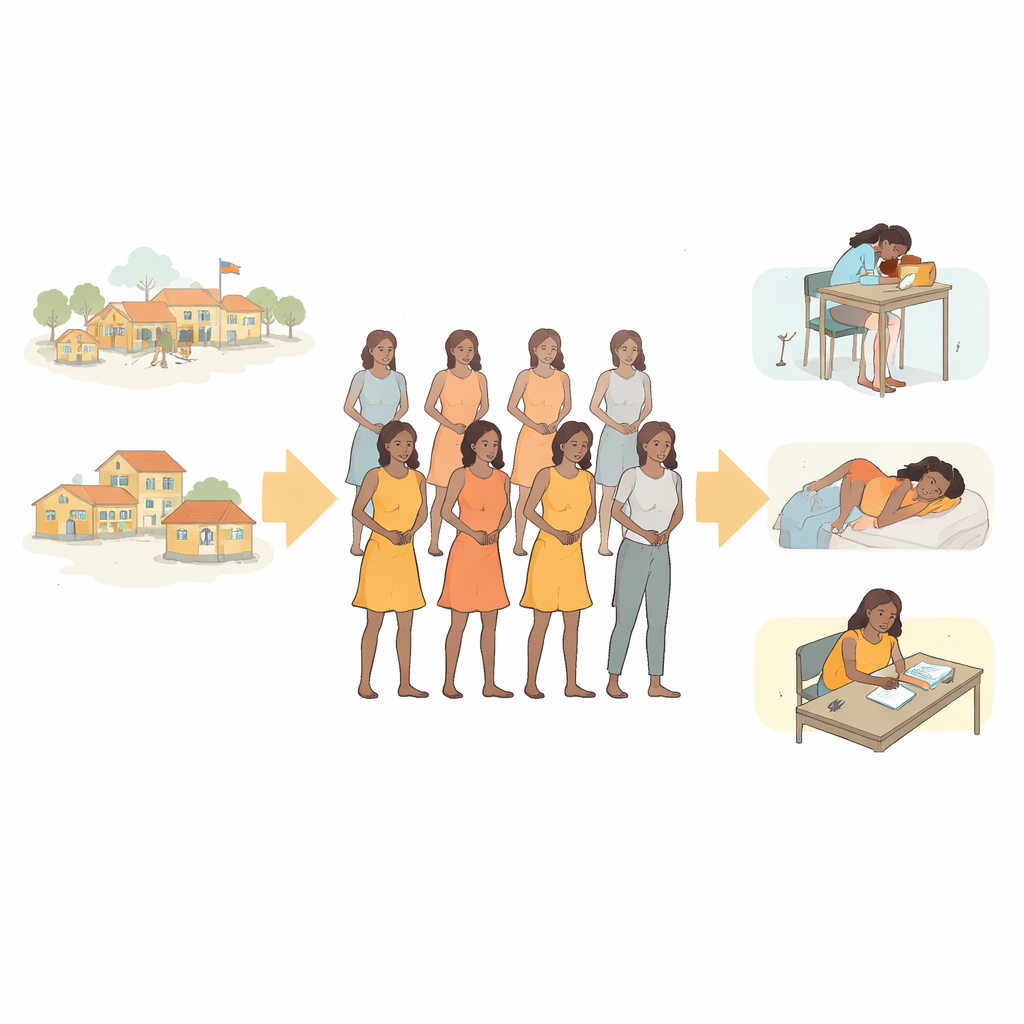
How Common and How Severe Was the Pain?
The results revealed that painful periods were the norm rather than the exception: about seven in ten girls (71.5%) reported primary dysmenorrhea in the previous three months. Among those affected, nearly half described their pain as mild, one-third as moderate, and more than one in five as severe. Lower abdominal pain was the most frequent complaint, often occurring together with back and pelvic pain. Many girls said their pain began just as bleeding started, while others felt it one or two days beforehand and it commonly lasted up to several days. Fatigue topped the list of accompanying complaints, with headaches and acne also frequently mentioned. These findings underscore that menstrual pain in this community is not a rare inconvenience but a widespread and often intense problem.
Everyday Habits and Harmful Practices
Beyond simply counting cases, the study identified several factors that made menstrual pain more likely. Girls whose mothers or close female relatives also suffered painful periods were more prone to it themselves, suggesting a mix of inherited tendencies and shared attitudes toward pain. Having noticeable physical or mood symptoms in the days before menstruation – often called premenstrual symptoms – was strongly tied to painful periods. Short sleep stood out as another risk: girls who slept six hours or less per night were more likely to experience pain than those who slept longer. Skipping breakfast, whether occasionally or daily, was also linked to higher chances of painful periods, hinting at the importance of steady nutrition for hormonal balance. Heavy menstrual bleeding, reflected by the need to change many absorbent pads per day, was associated with stronger pain. Most strikingly, girls who had undergone female genital mutilation were much more likely to report painful periods, likely due to scarring, narrowed openings, and long-lasting psychological trauma. 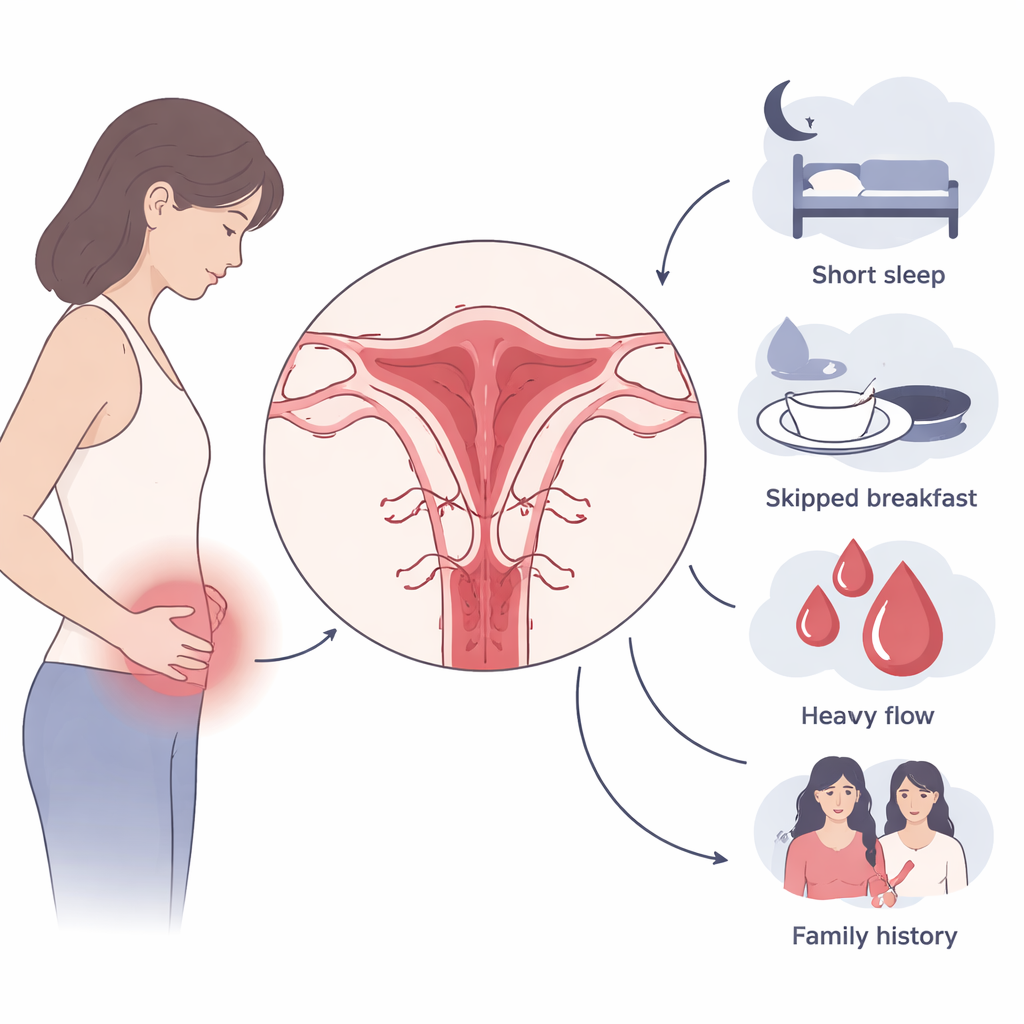
What These Findings Mean for Girls and Their Communities
Together, these results paint a clear and actionable picture. While some influences on menstrual pain, such as family background, cannot be changed, others are within the reach of families, schools, and health systems. Encouraging regular meals, especially breakfast, promoting adequate sleep, and tackling heavy bleeding with proper medical care can all help reduce suffering. The strong link between painful periods and female genital mutilation adds yet another urgent health reason to prevent this practice and to provide comprehensive care for those already affected. For girls in Jinka and similar communities, addressing menstrual pain is not just about comfort; it is about safeguarding their education, mental well-being, and future opportunities.
Citation: Wondmagegn, H., Nigusu, K., Bezie, H.E. et al. Primary dysmenorrhea and associated factors among female adolescents in Jinka town, Southern Ethiopia, 2024. Sci Rep 16, 12541 (2026). https://doi.org/10.1038/s41598-026-41090-5
Keywords: menstrual pain, adolescent girls, Ethiopia, lifestyle factors, female genital mutilation