Clear Sky Science · en
Association between betamimetics tocolysis duration and maternal adverse events: a national real-world data analysis from Japan
Why this matters for mothers and babies
Going into labour too early is one of the biggest threats to newborn health worldwide. Doctors often use medicines called tocolytics to calm contractions and buy time for the baby to grow and for the mother to receive steroids that protect the baby’s lungs. One such drug, ritodrine, has been used for decades, but it can also harm the mother. This study from Japan asks a question many parents and clinicians care about: does keeping this drip going for days make it more dangerous, or are the main risks packed into the first few days of treatment?
How doctors try to delay early labour
When labour starts too soon, doctors may give ritodrine through a drip to relax the womb and delay birth. International advice says this should usually last no longer than 48 hours, enough time to give steroids and, if needed, move the mother to a specialist hospital. In Japan, however, many hospitals have traditionally continued ritodrine for weeks in an effort to prolong pregnancy. Regulators in Europe have warned that long use of this kind of drug can trigger serious heart and lung problems in mothers, but real-world data in Japanese women were limited.
A nationwide look at nearly 100,000 pregnancies
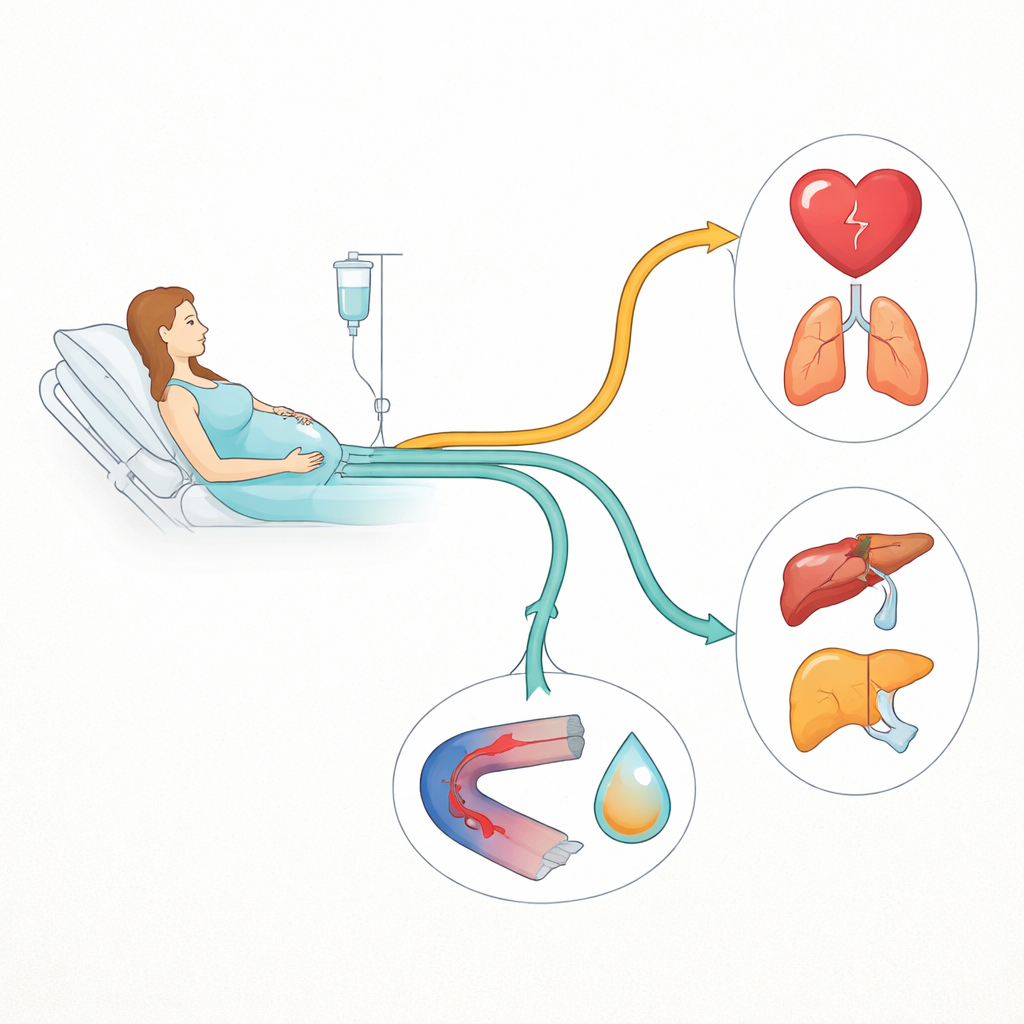
The researchers used a large national hospital database covering more than half of all acute-care beds in Japan. They identified 96,991 women who received ritodrine during a hospital stay for threatened preterm labour between 2012 and 2023 and who later gave birth in the same hospital. To compare clearly different patterns of use, they split women into two groups: an acute group who received the drug for two days or less, and a maintenance group who received it for four days or more. They then examined how often mothers in each group experienced serious problems, including blood clots, pregnancy-onset diabetes, liver injury, heart failure, and fluid buildup in the lungs.
Different treatment lengths, different kinds of risks
The maintenance group made up almost four out of five patients, reflecting Japan’s frequent use of long-term drips. These women tended to be admitted earlier in pregnancy and stayed in hospital much longer than those in the short-course group. After accounting for age, body size, pregnancy complications, and other treatments, the team found that longer ritodrine courses were strongly linked to blood clots in the veins, new-onset gestational diabetes, and liver problems. For example, the odds of pregnancy-related blood clots were about 70% higher, and diabetes and liver injury were roughly three times more common, in women on prolonged infusions. These results fit with what is known about the drug: it raises blood sugar, is processed by the liver, and prolonged bed rest for an ongoing drip can worsen sluggish blood flow in the legs.
Shorter treatment is not automatically safer
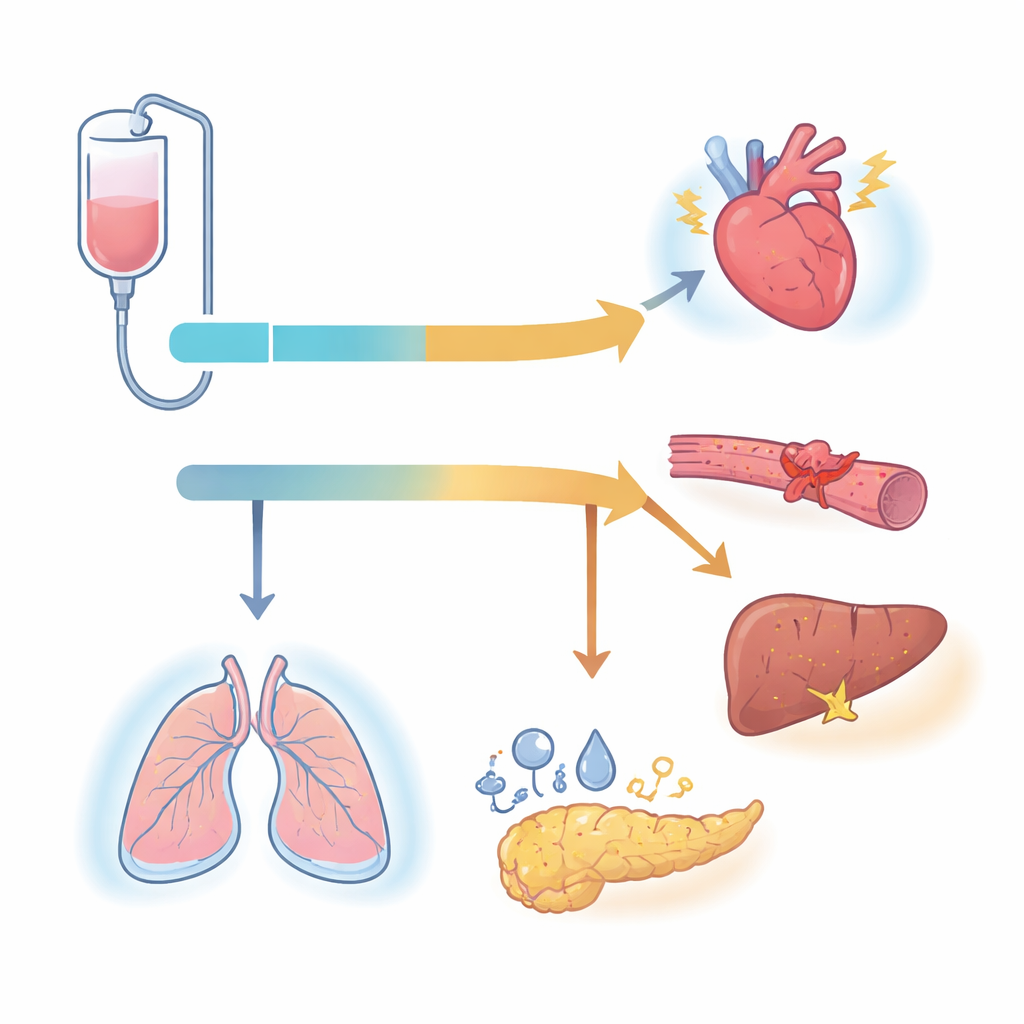
Surprisingly, the pattern was reversed for some heart and lung complications. Heart failure and pulmonary oedema—sudden fluid overload in the lungs that can cause severe breathlessness—were more closely linked to short-course treatment than to long-term infusion. The authors suggest that the heart and blood vessels may be most sensitive to ritodrine early on, before the body adapts. Because the drug speeds up the heart and expands blood vessels, it can abruptly increase the workload on an already stressed circulation, especially when combined with other drugs such as magnesium and steroids that also affect fluid balance and heart function. Some women in the short-course group may have had treatment stopped early precisely because they developed these problems, which could strengthen this apparent link.
What this means for care in the clinic
For families and clinicians, the key message is that both brief and prolonged ritodrine use carry distinct dangers. Keeping the drip running for many days raises the chances of blood clots, diabetes, and liver injury, while even a recommended short 48-hour course does not remove the risk of acute heart and lung events. The authors argue that monitoring should match the stage of treatment: from the moment ritodrine is started, mothers need close checks of breathing, heart function, and fluid status, and during extended therapy, extra attention should be paid to signs of clots, rising blood sugar, and liver strain. These findings support more careful, shared decision-making about whether to start or continue this drug and encourage consideration of safer alternatives when possible.
Citation: Toba, M., Moriwaki, M., Kakehashi, M. et al. Association between betamimetics tocolysis duration and maternal adverse events: a national real-world data analysis from Japan. Sci Rep 16, 10039 (2026). https://doi.org/10.1038/s41598-026-40956-y
Keywords: preterm labour, ritodrine, maternal safety, tocolysis, pregnancy complications