Clear Sky Science · en
AI prediction models based on time-lapse imaging for good embryos with implantation potential and euploidy
Why this matters for hopeful parents
For people going through in vitro fertilization (IVF), choosing which embryo to transfer can mean the difference between another heartbreaking setback and a successful pregnancy. Today, decisions often rely on how embryos look under a microscope or on invasive genetic testing that involves taking cells from the embryo. This study explores a different path: using artificial intelligence (AI) to watch embryos grow over time and quietly estimate which ones are most likely to implant and which are most likely to have the right number of chromosomes—all without touching the embryo.
From snapshots to moving pictures
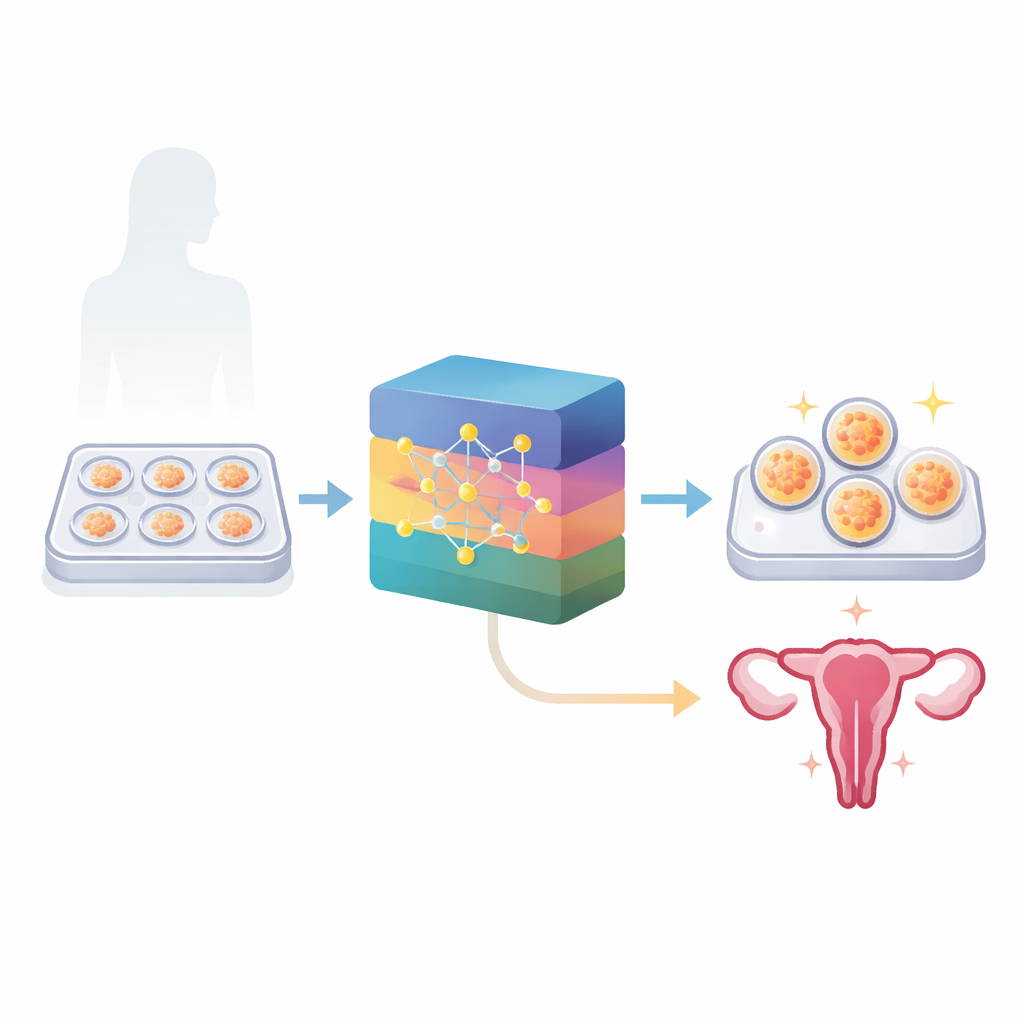
Traditionally, embryologists grade embryos based on a few still images, judging features such as shape and cell arrangement. These grades are subjective and do not reliably reveal whether an embryo has the correct chromosome count, a key factor in miscarriage. Genetic tests can answer that question but require removing cells from the embryo. In this work, researchers instead used continuous time-lapse videos captured in special incubators. These videos show subtle changes in cell division and development over the first few days after fertilization, including details too fine or too fast for the human eye to track consistently.
Training AI to read early life on film
The team built two AI models that learned directly from these embryo movies plus the mother’s age. One model estimated the chance that a transferred embryo would lead to a clinical pregnancy (confirmed by ultrasound). The other estimated whether an embryo was likely to be “euploid,” meaning it has the correct number of chromosomes, based on results from standard genetic testing done on some embryos. Together, the datasets included over 2,400 embryos for pregnancy prediction and more than 1,600 for chromosome status. Instead of relying on human-chosen markers, the AI examined the full video stream, capturing the timing and pattern of development frame by frame.
How well the models performed
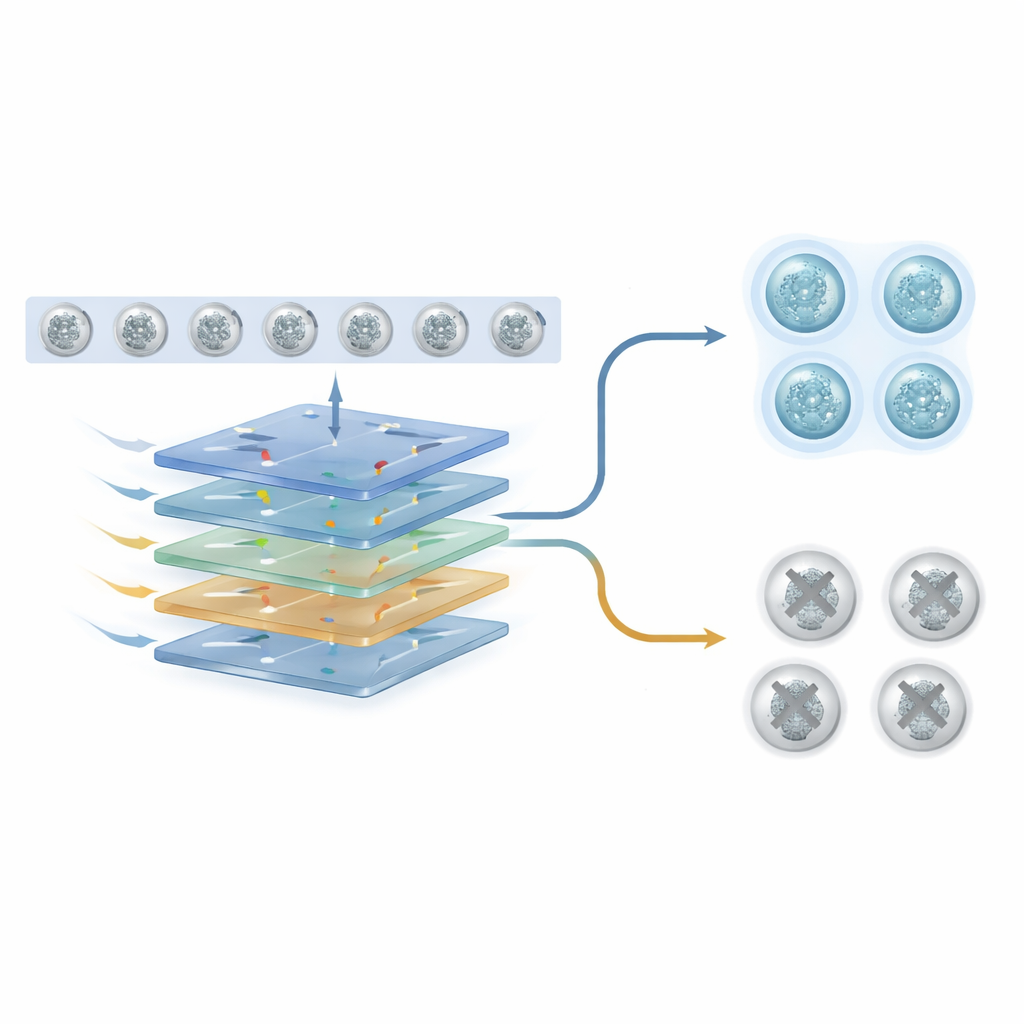
To test reliability, the researchers trained an ensemble—ten separate versions—of each model and combined their outputs so that no single model dominated the decision. They evaluated performance in three independent groups: a validation set, an internal test set, and an external test set from different IVF clinics. Both models showed good ability to separate embryos with better outcomes from those with worse ones. For pregnancy prediction, the model’s accuracy was highest when it focused on the first 20 to 50 hours of development, suggesting that very early cell divisions carry powerful clues about later success. For chromosome status, performance stayed strong across the entire culture period, meaning that useful signals are present throughout the embryo’s early growth.
What the scores could mean in the clinic
In real IVF practice, doctors must decide which embryos to transfer or test further, not just rank them. The researchers therefore chose practical score cutoffs using the validation data and applied them unchanged to the test clinics, mimicking real-world deployment. For pregnancy prediction, the chosen threshold kept most embryos that ultimately led to pregnancy while discarding many that did not implant. For chromosome prediction, the threshold retained a large share of embryos that testing showed were chromosomally normal and set aside many likely to be abnormal. The authors emphasize that these tools are meant to support, not replace, clinical judgment—helping to prioritize embryos, reduce the need for invasive testing when it is not feasible, and potentially shorten the time to a successful pregnancy.
Looking ahead to gentler embryo selection
To a non-specialist, the main message is that computers can now learn from short movies of embryos to provide non-invasive hints about which ones are most promising. By watching how embryos divide and change from the very start, AI can capture information that human eyes and one-time snapshots might miss. While further testing in more diverse clinics and patient groups is needed, this approach points toward IVF treatments where embryo choice is more objective, safer, and less dependent on biopsies—offering a gentler route to building a family.
Citation: Maekawa, R., Kiritani, T., Abe, T. et al. AI prediction models based on time-lapse imaging for good embryos with implantation potential and euploidy. Sci Rep 16, 9864 (2026). https://doi.org/10.1038/s41598-026-40917-5
Keywords: IVF, embryo selection, time-lapse imaging, artificial intelligence, non-invasive testing