Clear Sky Science · en
Understanding consumers’ adoption of new energy vehicles in the transition to sustainable transportation
Why the Cars We Choose Matter
What we drive affects the air we breathe and the planet we share. New energy vehicles (NEVs) – such as battery electric cars – promise cleaner city air and lower carbon emissions. Yet even in China, the world’s largest NEV market, these cars still make up only a small slice of all vehicles on the road. This study asks a simple but crucial question: beyond technology and subsidies, what really drives ordinary people to say “yes” or “no” to a new energy car?
From Tech Features to Human Feelings
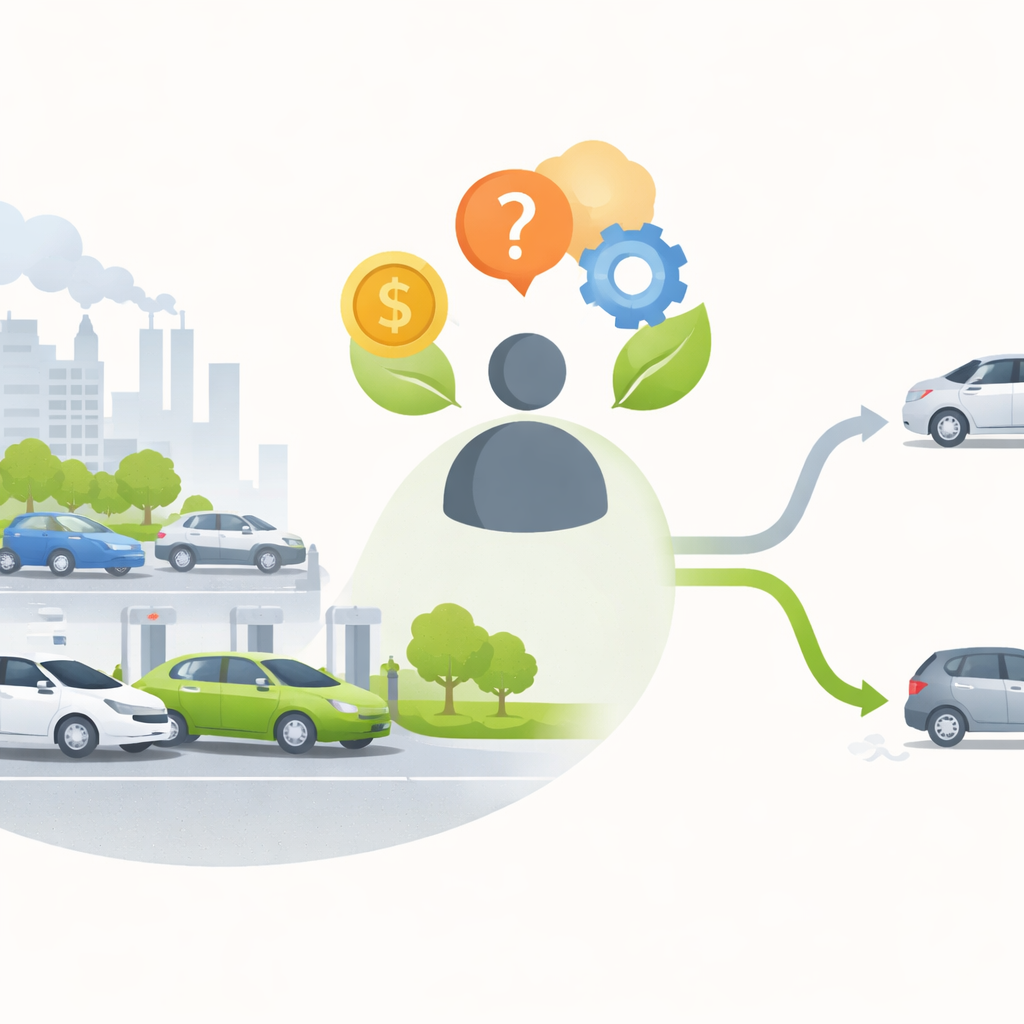
Most earlier research on NEVs has focused on technical aspects like driving range, charging networks, and government incentives. The authors argue that this misses a big piece of the puzzle: the everyday psychology and cultural values of car buyers. To explore this, they extend a well-known framework called the Technology Acceptance Model, which usually looks at how useful and easy a new technology seems to users. The new framework adds three extra ingredients: how sensitive people are to price, how strongly they dislike uncertainty, and how aware they are of environmental problems. Together, these factors form a web of influences that shape attitudes toward NEVs and, ultimately, the intention to buy one.
How the Study Was Carried Out
The researchers surveyed 406 adults across China using an online questionnaire. Respondents rated statements about their views on NEVs, such as whether these cars feel safe, seem too expensive, are easy to use, or truly help the environment. They also answered questions that captured deeper tendencies, like their preference for clear rules and stability (uncertainty avoidance) and their level of concern about environmental damage. The team then used two complementary analytical tools. One, called structural equation modeling, measures how strongly each factor pushes intentions up or down on average. The other, a configuration method known as fuzzy set qualitative comparative analysis, looks at how different combinations of factors can lead to the same outcome, such as a strong intention to buy an NEV.
Price Worries, Comfort of Use, and Cultural Caution
The results reveal that three forces stand out. First, price consciousness directly weakens people’s willingness to buy NEVs and raises their sense of financial and performance risk. Higher up-front costs and concerns about long-term value, including resale price, weigh heavily on budget-conscious buyers. Second, perceived ease of use – the feeling that NEVs are simple, comfortable, and convenient to drive and charge – boosts both positive attitudes and purchase intentions. When people imagine NEVs fitting smoothly into daily life, they are more inclined to consider them seriously. Third, uncertainty avoidance, which is rooted in long-standing cultural traditions emphasizing stability and moderation, nudges attitudes in a negative direction and increases perceived risk. People who strongly dislike ambiguity are more troubled by doubts about battery life, safety, maintenance, and charging access.
When Green Concerns Tip the Balance
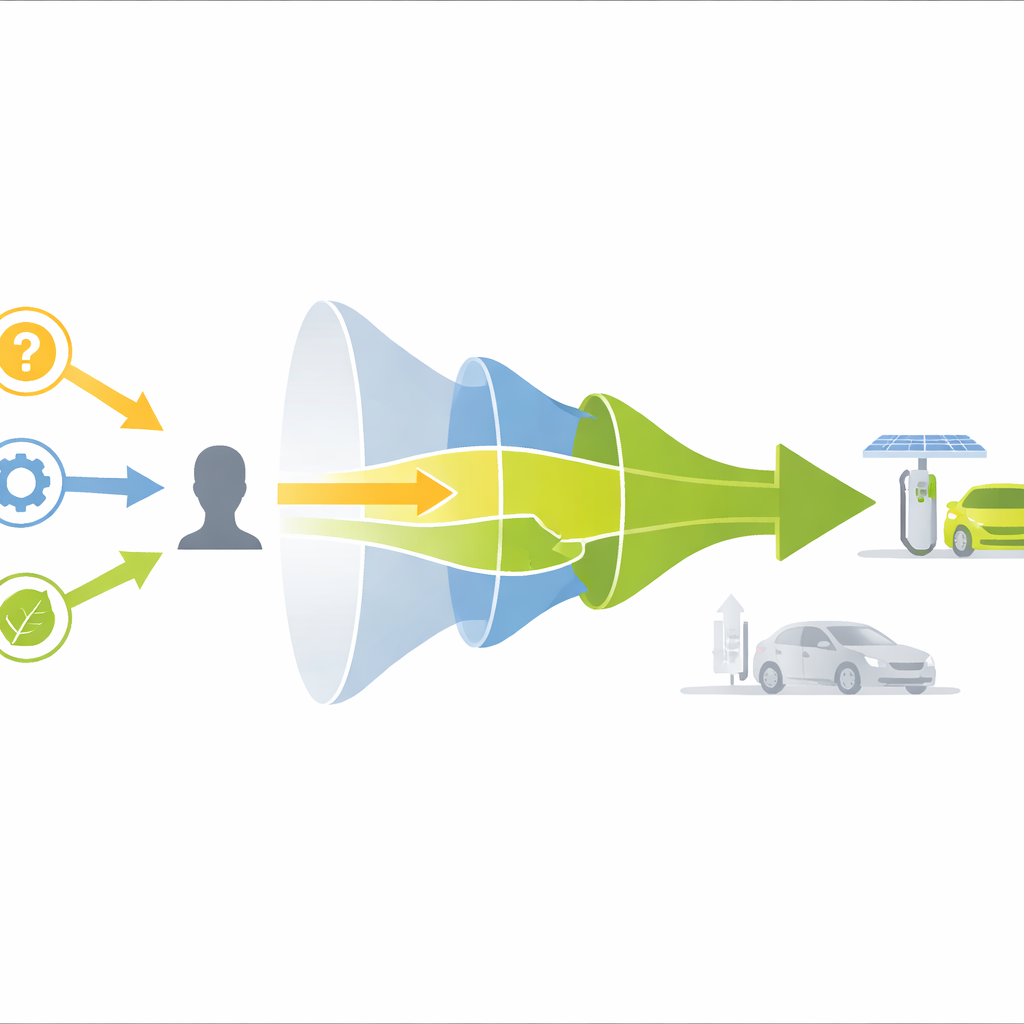
The study also examines how environmental awareness interacts with these factors. Surprisingly, simply caring about the environment does not consistently amplify or dampen the effects of price, risk, usefulness, or general attitudes. However, it does strengthen the link between ease of use and purchase intention: for people who are both environmentally aware and convinced that NEVs are easy to live with, the pull toward choosing an NEV becomes particularly strong. The configuration analysis further shows that there is no single “must-have” factor. Instead, several different combinations can lead to high purchase intention – for example, low price sensitivity and low perceived risk, or a relaxed attitude toward uncertainty combined with a generally positive view of NEVs.
What This Means for Everyday Choices
For a layperson, the message is clear: deciding whether to buy a new energy car is not just about battery range or how many charging stations are nearby. It is also about your wallet, your comfort with new technology, your tolerance for uncertainty, and how much you value cleaner air. The study concludes that making NEVs more affordable, easier to experience, and less mysterious is just as important as improving the technology itself. If governments, carmakers, and dealers can address price worries, simplify the user experience, and reassure cautious buyers, more people are likely to see NEVs not as a risky experiment, but as a practical and responsible choice for everyday travel.
Citation: Zhang, Yy., Li, Wj. & Cham, TH. Understanding consumers’ adoption of new energy vehicles in the transition to sustainable transportation. Sci Rep 16, 11050 (2026). https://doi.org/10.1038/s41598-026-40779-x
Keywords: electric vehicles, consumer behavior, price sensitivity, environmental awareness, sustainable transportation