Clear Sky Science · en
Proof of concept of noninvasive detection of norepinephrine induced stroke volume changes using perfusion index in cardiac surgery
Why this matters in the operating room
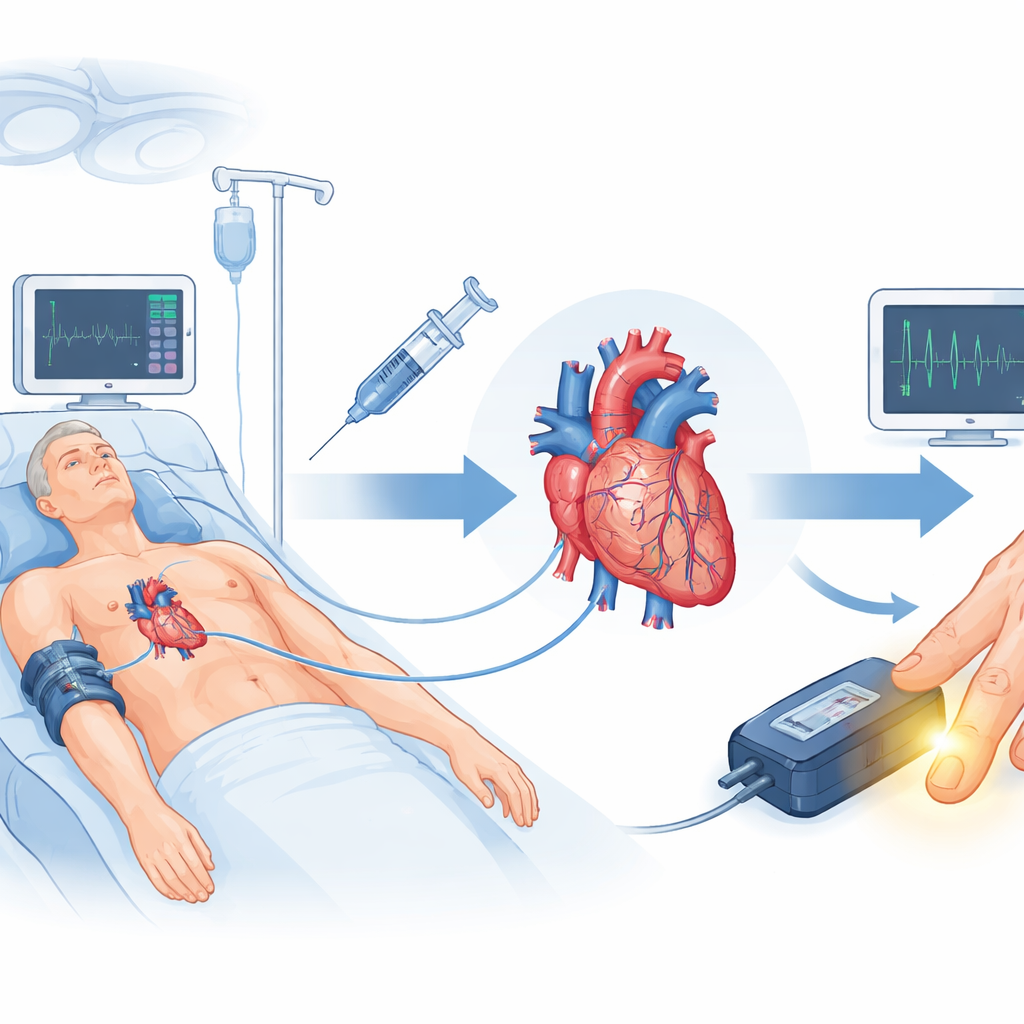
When people undergo heart surgery, doctors must keep blood pressure high enough to protect the brain, kidneys, and other organs. A common drug for boosting pressure, norepinephrine, does not act the same way in every patient: in some, it may quietly reduce the amount of blood the heart actually pumps with each beat. This study asks whether a simple, noninvasive signal that many hospitals already measure—the pulse oximeter reading on a fingertip—can reveal these hidden changes in heart pumping in real time.
A common blood pressure drug with uncommon effects
Low blood pressure during surgery is linked to strokes, heart injury, and kidney damage. Anesthesiologists often give norepinephrine to tighten blood vessels and restore pressure. On average this raises blood flow, but previous work has shown that individual patients can react very differently, especially after heart surgery or in people with valve disease or weakened hearts. In some, the extra squeeze on the arteries may make it harder for the heart to eject blood, so the volume of blood pushed out with each heartbeat—called stroke volume—actually falls, even as the blood pressure number on the monitor looks reassuring.
A fingertip signal as a possible early warning
Modern pulse oximeters, clipped to a finger to track oxygen levels, also provide a "perfusion index" that reflects how strongly blood pulses through the small vessels of the finger. This index is influenced by both the strength of the heartbeat and the tightness of the blood vessels. Because norepinephrine changes both heart pumping and vessel tone, the authors wondered whether shifts in perfusion index after a drug bolus could reliably flag patients whose stroke volume drops—without needing invasive catheters or expert ultrasound at every moment.
How the study was done in real surgeries
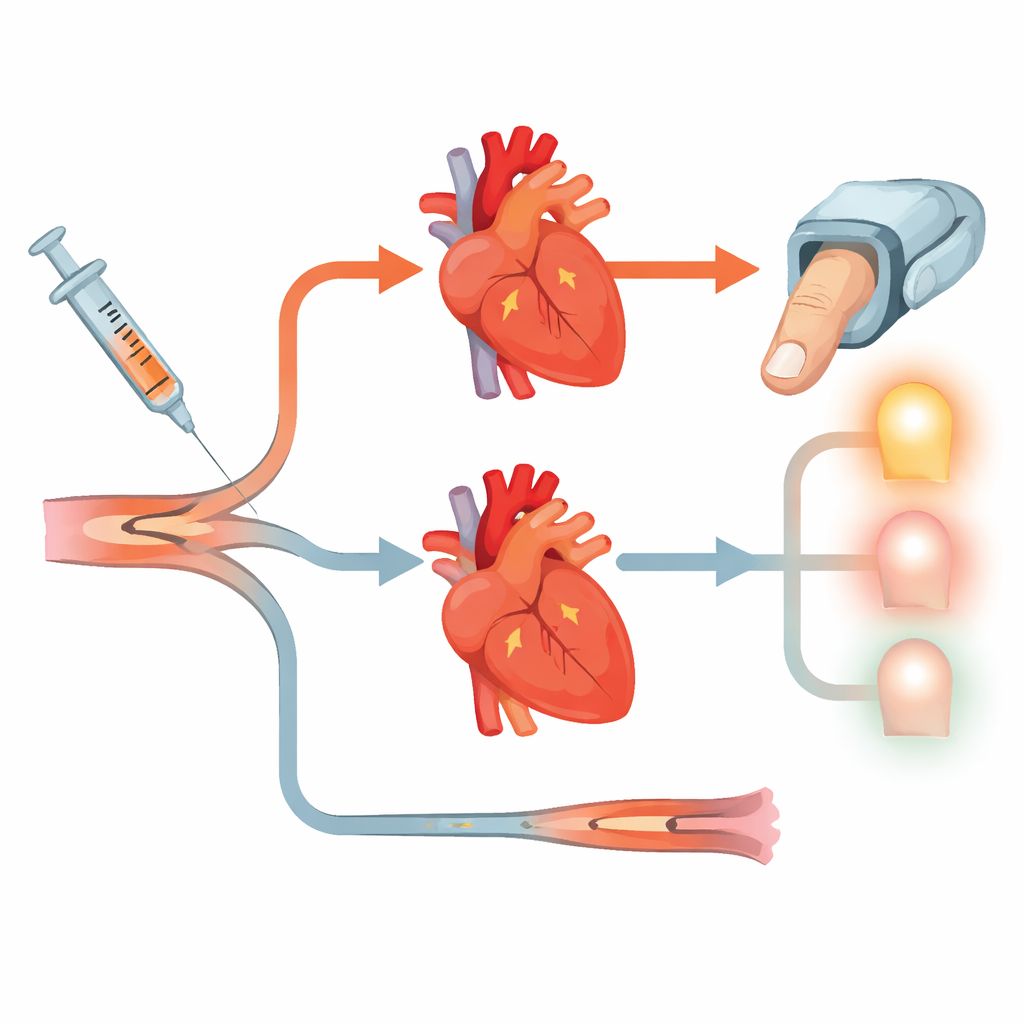
The team followed 27 adults undergoing heart surgery with a heart-lung machine. During the period after anesthesia was started but before the machine was connected, some patients developed low blood pressure that the anesthesiologist treated with a small norepinephrine bolus. For each of 31 such episodes, the researchers recorded blood pressure, heart rate, and perfusion index from the fingertip sensor, and measured stroke volume using a specialized ultrasound probe in the esophagus. They compared values just before the norepinephrine bolus and at the moment when blood pressure peaked about one minute later.
What the fingertip revealed
Norepinephrine raised mean arterial pressure by almost 30 percent on average, but the heart’s stroke volume responded very unevenly across patients, ranging from a one‑third drop to a similar‑sized increase. In nearly half of episodes, stroke volume fell by more than 10 percent despite the higher pressure. Routine numbers such as heart rate and various blood pressure measures did not reliably distinguish these cases. In contrast, changes in perfusion index closely tracked changes in stroke volume: episodes where stroke volume fell tended to show a fall in perfusion index, and episodes with improved stroke volume often showed a rise. Statistically, the link between the percentage change in perfusion index and stroke volume was strong, and a simple drop in perfusion index after norepinephrine identified most episodes with a meaningful stroke volume decrease.
What this could mean for patients
The study is small and focused on a specific heart surgery setting, so it cannot yet change practice on its own. Still, it offers a proof of concept that an inexpensive, widely available signal from a fingertip monitor might warn doctors when norepinephrine is helping blood pressure but harming the heart’s actual output. Used as an extra "red flag" rather than a stand‑alone monitor, perfusion index trends after a norepinephrine dose could prompt anesthesiologists to reconsider the cause of low blood pressure, adjust drug choices, or use more advanced heart monitoring—potentially preventing hidden drops in blood flow to vital organs.
Citation: Premachandra, A., Monnier, B., Ion, I. et al. Proof of concept of noninvasive detection of norepinephrine induced stroke volume changes using perfusion index in cardiac surgery. Sci Rep 16, 9839 (2026). https://doi.org/10.1038/s41598-026-40687-0
Keywords: cardiac surgery, intraoperative hypotension, norepinephrine, perfusion index, stroke volume