Clear Sky Science · en
The association between women’s empowerment in agriculture and child stunting in Malawi
Why this matters for families
In many rural communities, mothers grow much of the food their families eat, yet they often have limited say over land, money, and household decisions. This study from Malawi asks a simple but urgent question: when women farmers have more power and resources, do their young children grow better and avoid being too short for their age, a sign of long-term undernutrition known as stunting? The answers help governments and aid groups design programs that truly protect children’s growth, rather than assuming that any form of empowerment automatically leads to better nutrition.
Growing up strong or falling behind
Stunting affects millions of children worldwide and is especially common in sub-Saharan Africa. Children who are stunted in early life are more likely to struggle in school, get sick more often, and earn less as adults. Malawi has made progress over the past decades, but more than one in three children under five is still too short for their age. At the same time, women provide much of the farm labor and care for children, so improving their position in farming and in the household has been promoted as a way to curb malnutrition. Yet, until now, there was little direct evidence from Malawi on how different aspects of women’s empowerment relate to children’s growth.
How the study was carried out
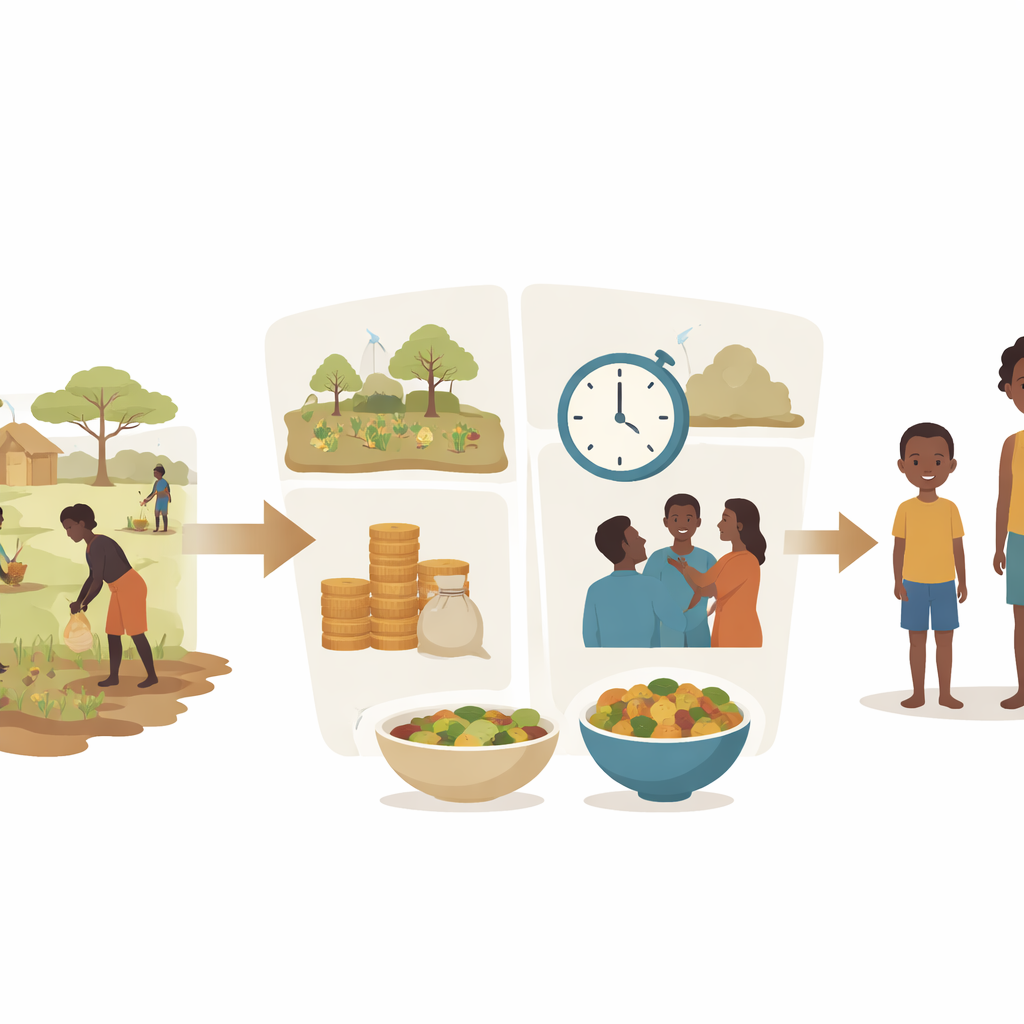
The researchers worked in three rural districts that differ in climate, crops, and history of nutrition programs, but all rely heavily on small-scale farming. They measured 847 children aged 6 to 59 months and interviewed their mothers. Using a standard international tool called the project-level Women’s Empowerment in Agriculture Index, they captured several dimensions of a woman’s power: her confidence and beliefs about herself, her say over farming and income, her ownership of land and other assets, her access to credit and groups, how she uses her time, and her ability to move around to markets and services. They then compared children who were stunted with those who were growing normally, using statistical models that also took into account the mother’s age, schooling, marital status, and the child’s age and sex.
What helped children grow—and what did not
Two main patterns stood out. First, mothers who owned land or other productive assets had children who were much less likely to be stunted—about 15 percentage points lower risk than mothers without such ownership. Land and assets can act like a safety net, making it easier to secure diverse, nutritious food and giving women more weight in household decisions about spending and feeding. Second, older children were more likely to be stunted, reflecting the common pattern of growth faltering after the breastfeeding period when young children are exposed to infections and rely on family foods. Mothers who were married and those with more years of schooling also had children with lower chances of stunting, suggesting that social support and education improve care, health-seeking, and feeding practices.
A surprising twist about confidence
One unexpected finding was that mothers who scored higher on self-efficacy—their confidence in handling tasks and challenges—actually had a slightly higher probability of having a stunted child. This goes against the usual assumption that more confidence is always good for child nutrition. The authors suggest several possible explanations. Some mothers of growth-challenged children may gain confidence after navigating clinics and support services, boosting their self-ratings even while their children remain stunted. Others may be using their agency to pursue income-generating or community activities that leave less time and energy for demanding child-care tasks, especially in settings where water, health care, and safe food are hard to secure. In these situations, confidence without supporting conditions like safe water, health services, and fair sharing of work may not translate into better growth.
What this means for real-world programs
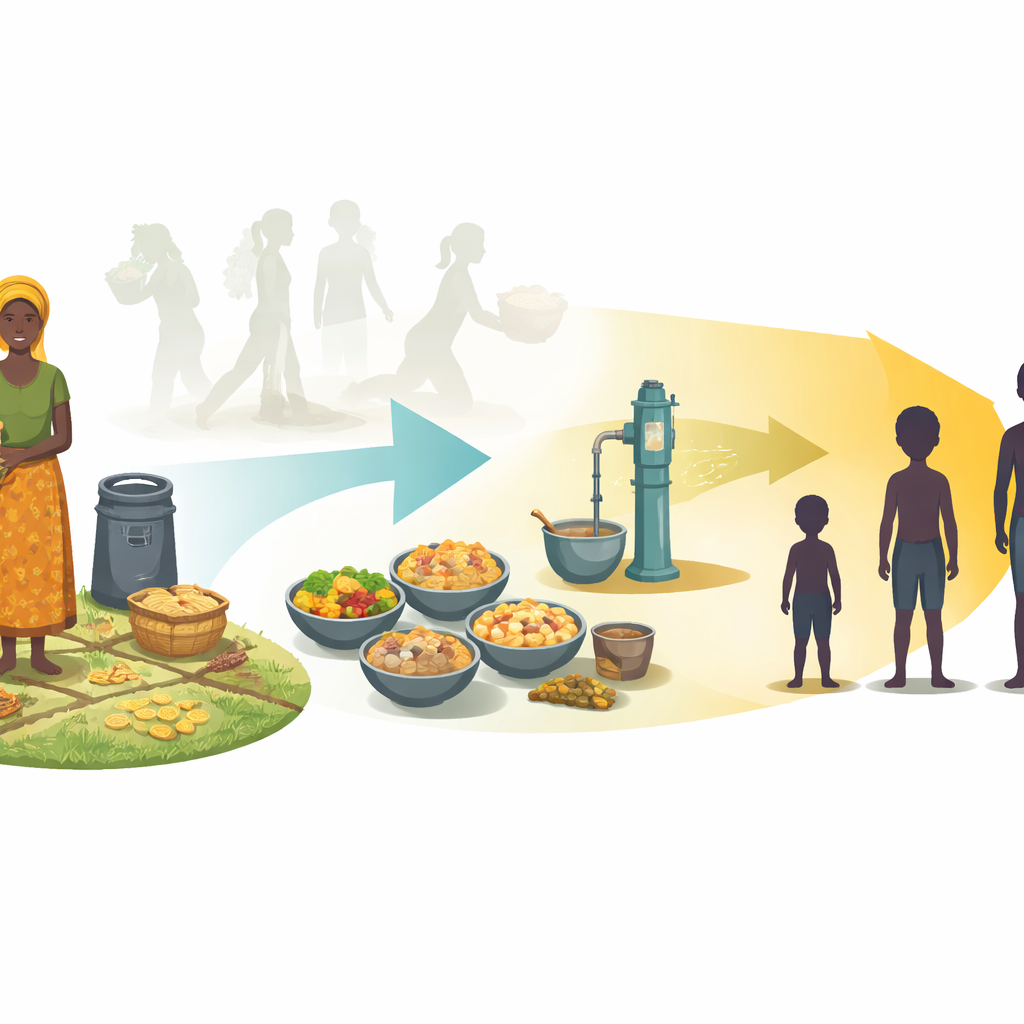
For families and policymakers, the study’s message is nuanced but clear. Empowering women farmers is vital, yet not all forms of empowerment affect child growth in the same way. Strengthening women’s rights to land and other assets, supporting girls’ education, and ensuring that mothers have partners or social support are strongly linked with better child height. But boosts to women’s confidence or control over money must be paired with practical supports—such as lighter workloads, access to health and nutrition services, safe water, and guidance on child feeding and hygiene—if they are to improve children’s nutrition. In other words, helping women stand taller in agriculture is essential, but to help their children grow taller too, empowerment needs to be coupled with the time, resources, and services that make healthy care and feeding possible.
Citation: Nchanji, E.B., Kamunye, K.K., Ageyo, O.C. et al. The association between women’s empowerment in agriculture and child stunting in Malawi. Sci Rep 16, 10183 (2026). https://doi.org/10.1038/s41598-026-40495-6
Keywords: women’s empowerment, child stunting, Malawi, agriculture, child nutrition