Clear Sky Science · en
Heavy metal pollution and health risk assessment in surface waters impacted by pharmaceutical effluents in Gazipur and Narayanganj, Bangladesh
Why this matters for everyday life
Rivers in Bangladesh are lifelines for drinking, cooking, bathing, farming, and fishing. This study asks a simple but urgent question: what happens when growing clusters of drug factories dump metal-laden wastewater into those same rivers? Focusing on two industrial hotspots near Dhaka, the researchers show how invisible traces of metals like lead and mercury can turn common river water into a hidden threat, especially for children.
Rivers under pressure
Bangladesh is crisscrossed by more than 700 rivers, which support crops, jobs, and daily life. Yet rapid urban growth and industry around Dhaka now strain these waters. Pharmaceutical plants are among the heavy users of water: they take in large volumes and often release what remains with little treatment. That leftover water can carry a mixture of active drug ingredients, solvents, and heavy metals. Two rivers, the Turag near Gazipur and the Shitalakshya near Narayanganj, receive these discharges every day alongside wastes from textile and chemical factories. 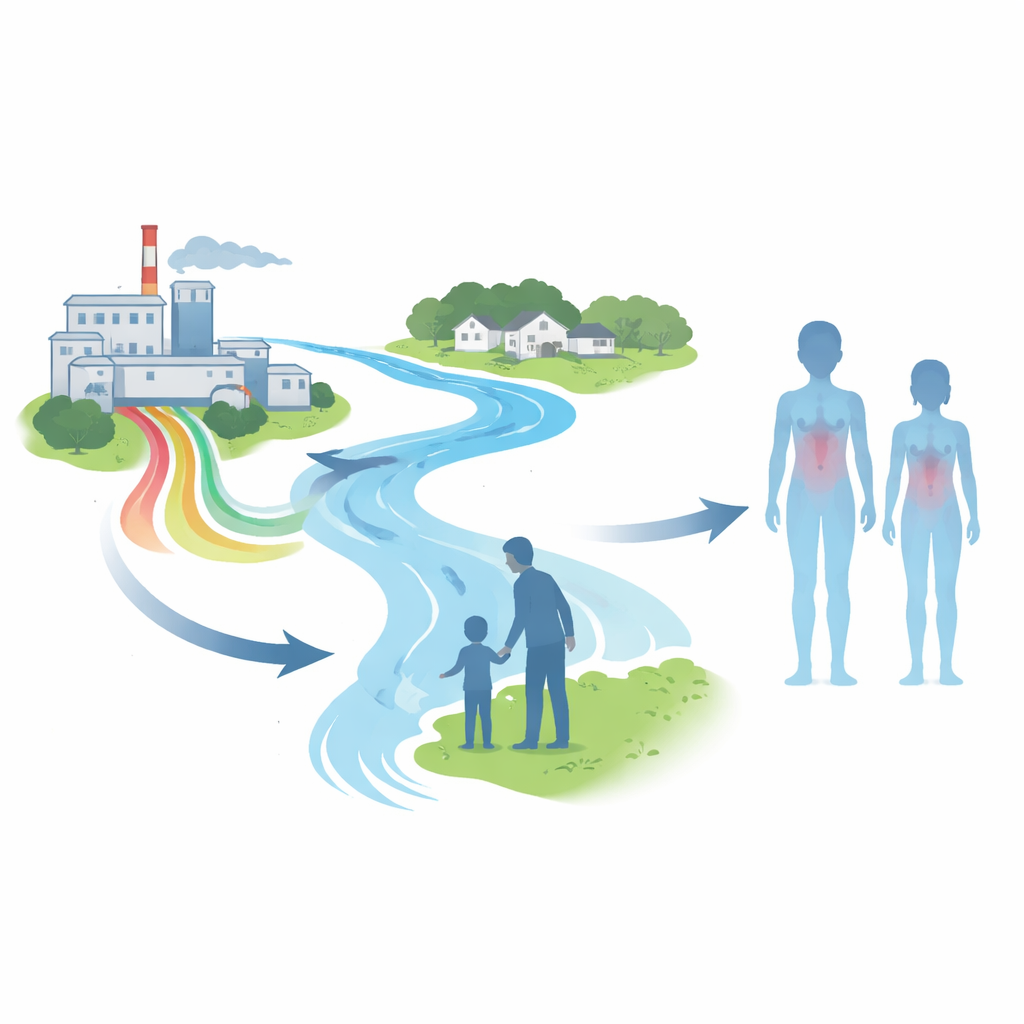
Testing the river water
The team collected surface-water samples from twelve spots along the two rivers, moving from points near factory outlets downstream to more distant areas. In the lab, they measured ten metals, including arsenic, lead, cadmium, chromium, nickel, copper, zinc, mercury, iron, and manganese, using a highly sensitive mass spectrometry technique. To move beyond simple comparisons with World Health Organization limits, they combined several pollution indices that rate how dirty water is, along with health-risk calculations that estimate how much metal people might absorb by drinking or skin contact.
What they found in the water
Some metals were especially troubling. Average levels of lead, iron, and mercury exceeded WHO guideline values at most sites. Several locations showed index scores so high that the water is considered unsuitable for drinking. Lead was classified as heavily polluting, iron as lightly polluting, and mercury as slightly polluting when judged one metal at a time. When all metals were considered together, many sites fell into the medium to high contamination categories. A toxicity index that weights metals by how harmful they are flagged four sites as having particularly worrisome combined metal loads.
Tracing the sources
To understand where the metals came from, the researchers used statistical tools that look for patterns among elements that rise and fall together. Lead, zinc, chromium, nickel, cadmium, and iron tended to cluster, pointing to shared industrial origins such as metal processing and pharmaceutical production. Copper and mercury formed another group linked to more specialized industrial uses. Manganese behaved differently, reflecting more natural geologic sources and river-bottom chemistry. Together with the location of the sampling sites near factory outlets, these patterns strongly suggest that pharmaceutical and mixed industrial effluents are the main contributors, with natural background inputs playing a smaller role. 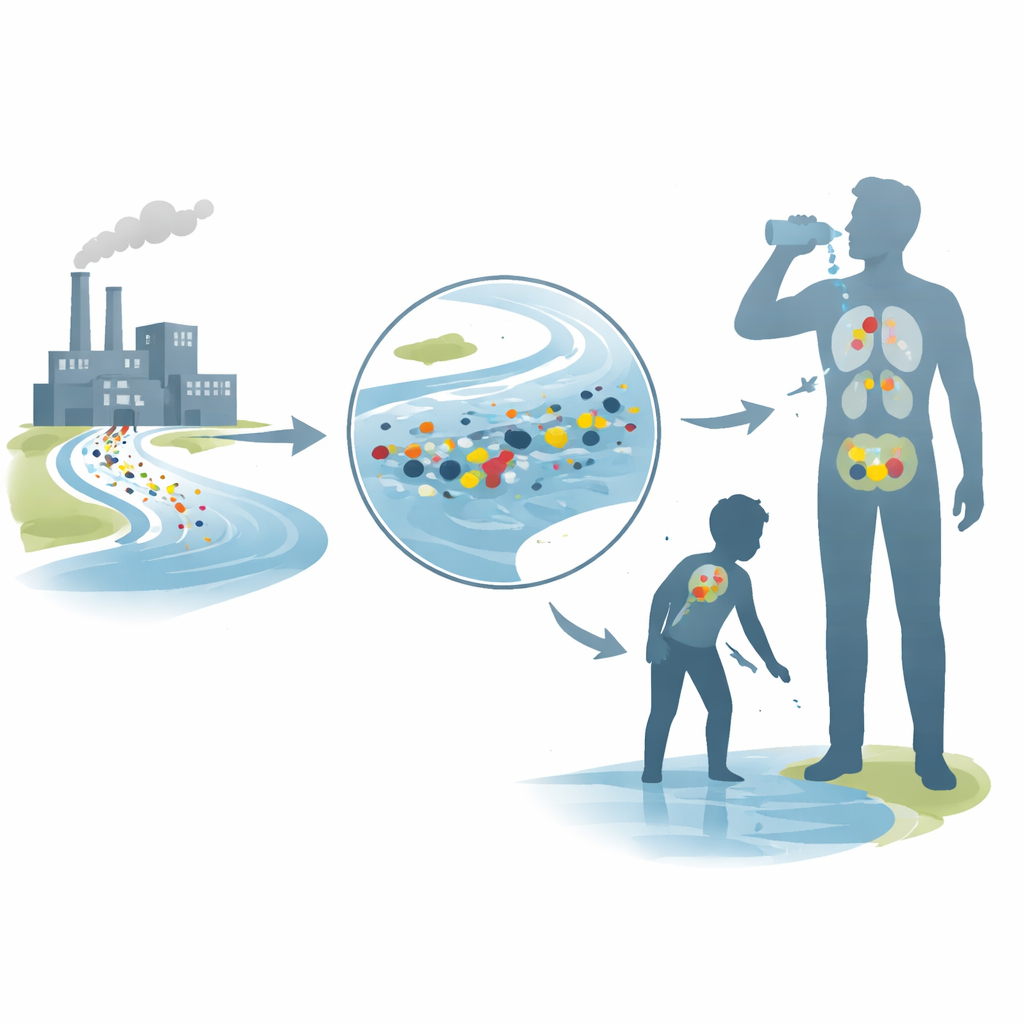
Health risks, especially for children
The study then translated metal levels into potential health effects. For non-cancer problems, a metric called the hazard quotient compares actual exposure to a level considered safe. Values above one indicate concern. For adults, total hazard quotients from drinking the water often hovered around or above this threshold; for children, they were several times higher. Lead and cadmium were the key drivers of non-cancer risk in children. For cancer risk, arsenic and chromium stood out. Their estimated lifetime cancer risks from drinking river water were higher than the commonly accepted range, particularly for children, while risks from skin contact alone remained relatively low. Importantly, these figures only account for water exposure, not additional intake from fish or vegetables grown with polluted water, so the real-world risk is likely higher.
What this means going forward
In clear terms, the study shows that some stretches of the Turag and Shitalakshya rivers are dangerously contaminated with heavy metals, and that children living nearby face the greatest potential harm. The work also demonstrates that modern pollution indices and pattern-finding tools can pinpoint industrial sources and highlight priority hotspots. For people along these rivers, safer water will require stricter enforcement of discharge standards, better treatment of pharmaceutical wastewater, and ongoing monitoring that includes river life and local food as well as water. Without these steps, the very rivers that sustain communities in Bangladesh risk becoming long-term channels of toxic exposure.
Citation: Neelotpol, S., Raj, A., Nabila, A.A. et al. Heavy metal pollution and health risk assessment in surface waters impacted by pharmaceutical effluents in Gazipur and Narayanganj, Bangladesh. Sci Rep 16, 11972 (2026). https://doi.org/10.1038/s41598-026-39794-9
Keywords: heavy metal pollution, pharmaceutical effluents, Bangladesh rivers, water health risk, industrial wastewater