Clear Sky Science · en
Prioritizing neglected food species in nutritional studies using expert-knowledge and explainable AI
Hidden Foods All Around Us
Most of us picture the same familiar items when we think about food: rice, beans, bread, meat, and a handful of fruits and vegetables. Yet nature offers a far richer menu, filled with mushrooms, wild plants, insects, algae, and little-known animals that rarely reach our plates. This paper explores how these “forgotten” foods in Brazil could improve health and support more sustainable food systems—and how experts and artificial intelligence can work together to decide which species should be studied first.
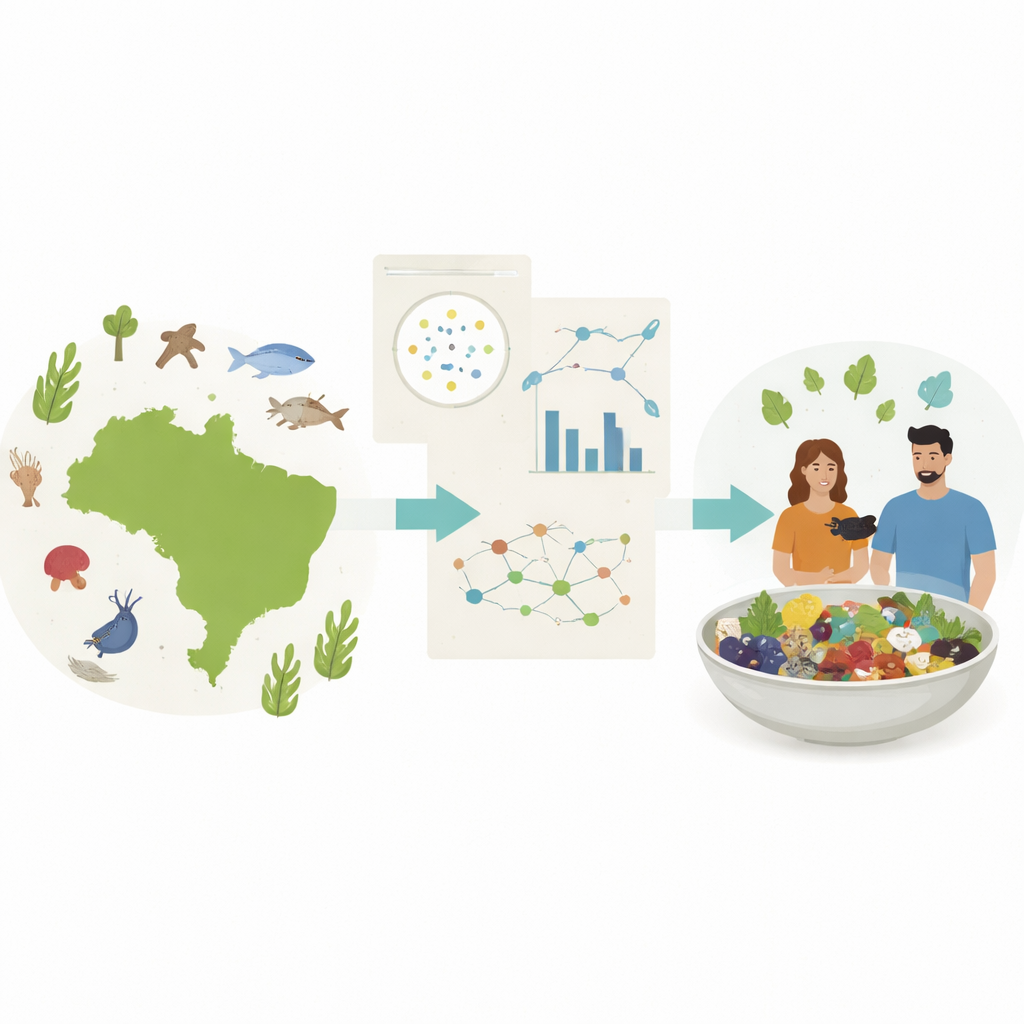
Why Overlooked Foods Matter
Food biodiversity is the variety of plants, animals, and other organisms that can be eaten, whether wild or cultivated. Diets that draw on many different species tend to supply more vitamins and minerals and are linked to lower risk of death over time. Diverse diets also reduce the danger of relying too heavily on a single crop and help support a healthier gut microbiome. Despite this, most research and official nutrition tables focus on a narrow set of crops and livestock, leaving hundreds of potentially valuable foods in the shadows—especially in tropical countries like Brazil, which is one of the most biodiverse places on Earth.
Taking Stock of Neglected Species
The researchers assembled a national team of nutrition and environmental specialists to build an inventory of neglected food species in Brazil. They identified 369 different species, including plants, mushrooms, algae, insects, fish and other aquatic animals, and wild terrestrial vertebrates. Most of these species are native, and many are already used locally in traditional recipes. However, the team found striking information gaps: only about one-third of the species had any nutritional data at all, and for some groups—such as algae and insects—no formal nutritional information existed in Brazilian food tables. At the same time, the team located more than 36,000 recipes that used these species, showing that everyday cooking and official surveys tell very different stories about what Brazilians actually eat.
Letting Experts and AI Rank What to Study First
With the inventory in hand, the next challenge was choosing which species to study in more detail. A second group of experts, drawn from nutrition and environmental sciences, scored each species on how important it would be to analyze its nutritional composition and its role in people’s diets. To understand what drove these scores, the authors used a machine learning method called LightGBM together with an explanation tool known as SHAP. This approach acts like a transparent decision aid: it looks at many features of each species—such as how widely it occurs, whether it is cultivated, how many recipes use it, and what is known about its conservation status—and reveals which of these factors are most influential in experts’ priorities.
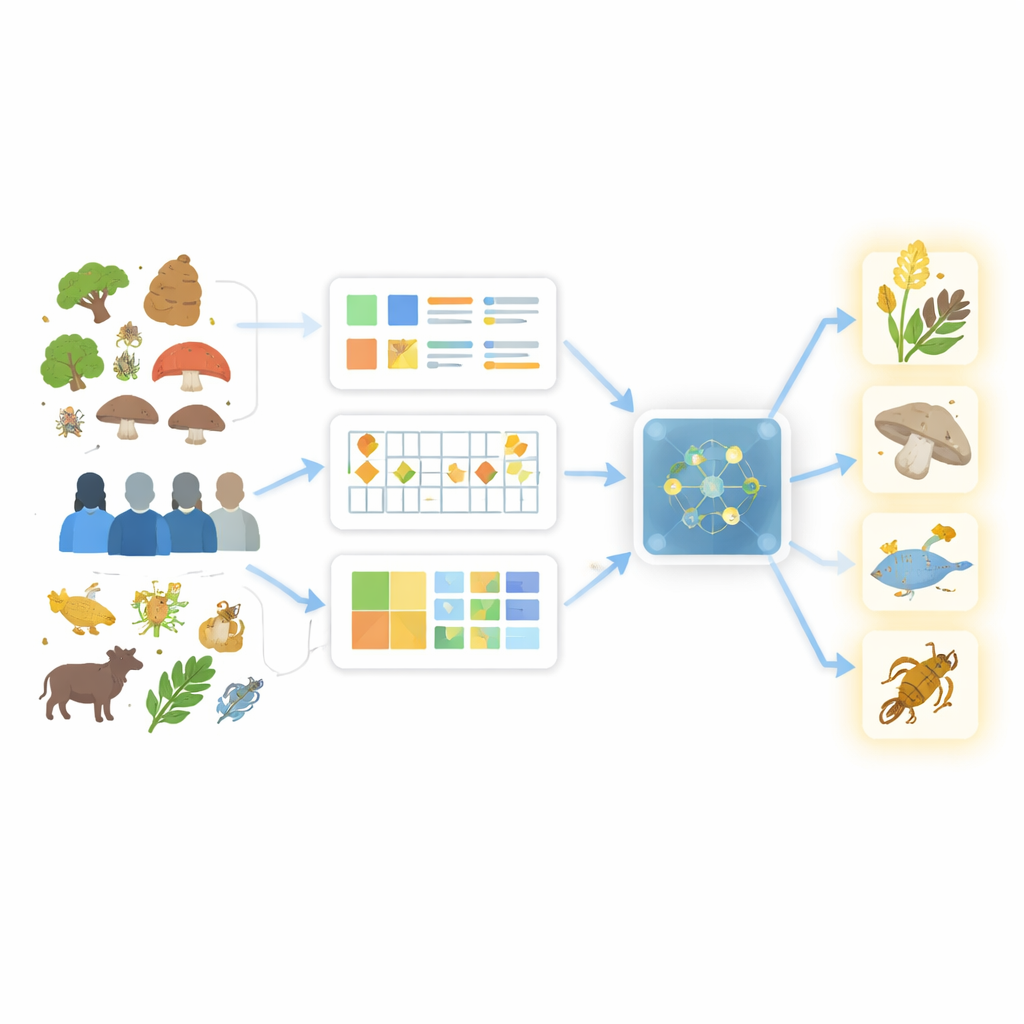
What Really Shapes Research Priorities
The analysis showed that two simple factors rose above all others. First, species that appeared in many recipes tended to be ranked higher, reflecting their cultural importance and practical cooking uses. Second, species found across many Brazilian states were also favored, since they are more accessible to different communities. In contrast, conservation status and membership in certain groups, such as insects or algae, had much less influence on prioritization. Nutritionists tended to give more weight to recipe counts, while environmental scientists leaned more on geographic spread, but overall, both groups used similar cues. This pattern suggests that immediate usefulness and familiarity strongly drive which species get attention from researchers.
Toward Food Systems That Respect Nature and Culture
The authors caution that focusing mainly on popular or widely distributed species can leave out foods that are ecologically important, culturally significant for specific communities, or at risk of disappearing. They argue that Brazil—and other tropical countries—needs a more balanced strategy that values traditional knowledge, collects better data on threatened species, and invests in studying underused groups such as algae, wild mushrooms, and insects. By combining expert insight, modern AI tools, and evidence from real-world cooking practices, the framework presented in this paper offers a practical roadmap for deciding which neglected foods to study first. In everyday terms, it brings us closer to a future where the full richness of nature’s pantry supports both human health and the long-term health of ecosystems.
Citation: Jacob, M.C.M., de Carvalho, A.M., Batista, Â.G. et al. Prioritizing neglected food species in nutritional studies using expert-knowledge and explainable AI. Sci Rep 16, 11766 (2026). https://doi.org/10.1038/s41598-026-39484-6
Keywords: food biodiversity, neglected food species, sustainable diets, Brazil nutrition, artificial intelligence in nutrition