Clear Sky Science · en
Household perspectives and predictors of human–carnivore conflict in Nepal’s Annapurna Conservation Area
Why big cats and village life matter here
Nepal’s Annapurna region is famous for dramatic mountain treks, but it is also home to families who depend on fields, herds, and guesthouses for a living. These households share the high valleys with snow leopards and wolves that sometimes prey on their goats, yaks, and cattle. This study asks a simple but pressing question: as tourism grows and the climate warms, how are local people feeling about these predators and the officials who manage conservation—and what does that mean for the future of both wildlife and village livelihoods?
Life between fields, herds, and trekking trails
Researchers surveyed 93 households across 11 villages in the Nyesyang Valley of the Annapurna Conservation Area. Most families mix several income sources at once: farming, livestock, and tourism-related work such as lodges or guiding. Many residents have seen their income rise thanks to tourism, though others suffered losses during the COVID-19 collapse in visitors or from growing competition between hotels. Women’s roles have shifted strongly: they now carry much of the work of livestock care and are increasingly involved in tourism and education, with less time spent on heavy field labor. Parents commonly hope their children will seek schooling and easier careers, often away from the valley, even as they worry that out‑migration may weaken traditional care for land and wildlife.
Herds shrinking, risks rising
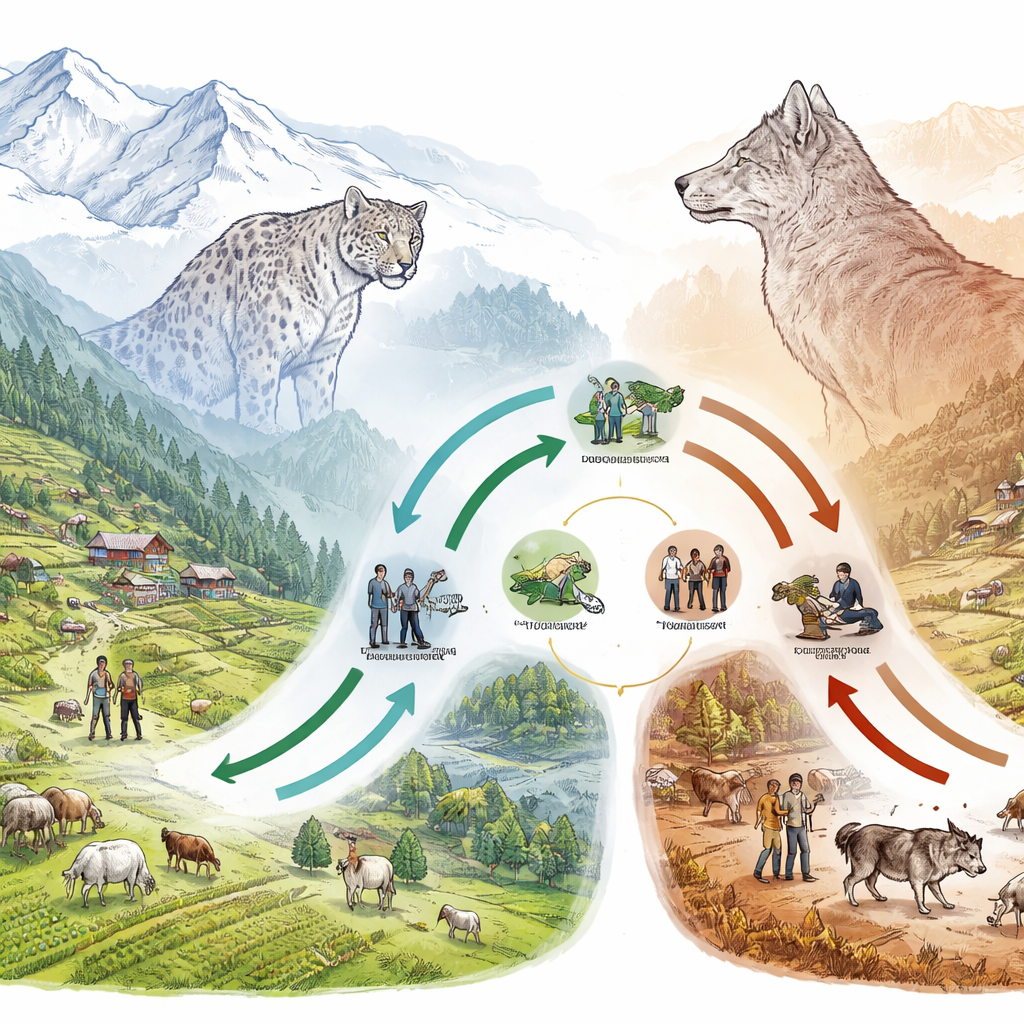
Almost all surveyed households keep livestock, but herd sizes and types are changing. Goats and yaks are held in larger groups and often growing, driven by rising demand for meat, while small herds of cattle and horses are declining as road access improves and agriculture loses ground. Across species, people most often blamed herd decline on attacks by carnivores and on having too few family members left to watch animals on the pasture. Large losses during single attacks by snow leopards can be devastating for a family budget, and high‑altitude herds, especially yaks, face extra danger from both predators and harsh weather. These pressures make traditional herding less attractive just as tourism offers new cash income.
Snow leopards gaining friends, wolves gaining enemies
Attitudes toward snow leopards have changed dramatically over three decades. In the early 1990s, nearly all surveyed residents in this region disliked the cats; now a slight majority express positive feelings about having them nearby, and only one‑third are negative. People who earn money from tourism are especially likely to favor snow leopards, viewing them as a symbol that attracts visitors. Even a basic level of schooling is linked with more supportive views, suggesting that conservation lessons in local schools and broader education are having an effect. Still, those who have lost animals to snow leopards often remain fearful and resentful, showing that better feelings do not erase the sting of financial loss.
Why wolves are still unwelcome
Wolves tell a very different story. Over half of respondents hold negative views of their presence, and only about one‑fifth are positive. Residents describe wolf attacks as especially brutal and harder to document, since carcasses may be dragged away, complicating any attempt to claim compensation. Unlike snow leopards, wolves are not seen as an asset for tourism and receive little attention in conservation education. Statistical analyses found no clear social or economic factor that reliably predicts attitudes toward wolves, suggesting that deep‑seated cultural fears and recent memories of their return to the valley may be driving these strong dislikes.
Trust, rules, and a changing climate
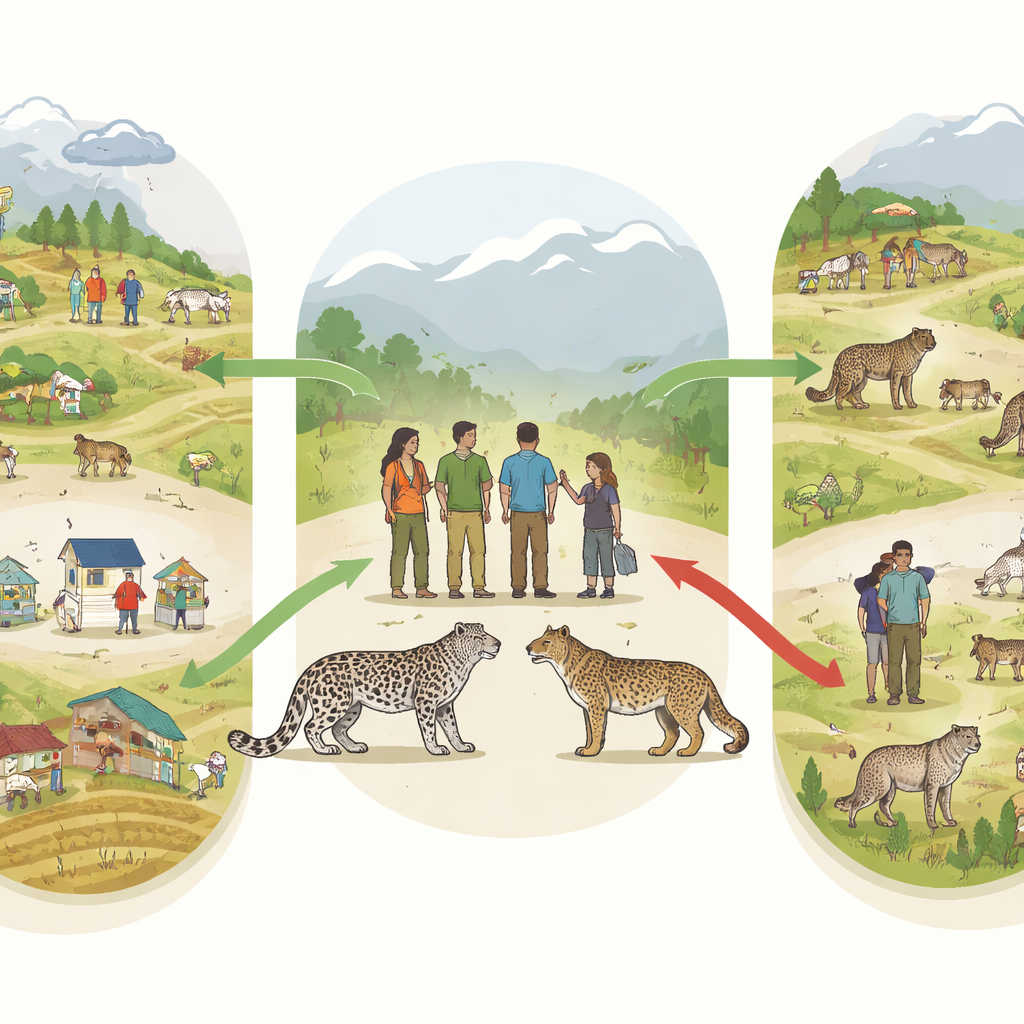
People’s views of the organizations that manage the conservation area are mixed. Many agree that the Annapurna Conservation Area does help protect wildlife and sets generally fair rules on resources such as timber and medicinal plants. At the same time, fewer believe that higher‑level managers truly represent pastoralists, and local committees are seen as only somewhat better. A major sore point is compensation for livestock killed by predators: herders report that payments are slow, complicated to obtain, and too small compared with market prices. Climate change adds another layer of strain, bringing less reliable snow and rain, shrinking water supplies for irrigation, and greater worry about the futures of both farming and herding.
What this means for people and predators
For a general reader, the main message is that saving big cats cannot be separated from how families make a living. In Annapurna, tourism and education have helped turn snow leopards from hated raiders into valued neighbors, even though attacks on livestock have not decreased. Yet wolves remain widely feared, and many herders feel that present relief schemes and support for herding do not match the risks they bear. The authors warn that relying too heavily on tourism while neglecting pastoral livelihoods could erode today’s fragile goodwill. Strengthening fair, accessible compensation and practical measures like secure corrals, while involving women and other community members in decisions, will be key to keeping both wildlife and village life thriving on the slopes of Annapurna.
Citation: McLinda, L.S., Marston, K.H., Lama, R.P. et al. Household perspectives and predictors of human–carnivore conflict in Nepal’s Annapurna Conservation Area. Sci Rep 16, 9877 (2026). https://doi.org/10.1038/s41598-026-39224-w
Keywords: human wildlife conflict, snow leopard, Himalayan pastoralism, community based conservation, Nepal tourism