Clear Sky Science · en
Mainstreaming traditional varieties and on-farm conservation of crop diversity for sustainable finger millet cultivation in Odisha, India
Why Old Grains Matter Today
As the world faces rising temperatures, erratic rains, and stubborn malnutrition, hardy traditional crops are getting a fresh look. This study focuses on finger millet, a small-seeded grain long grown by tribal farmers in Odisha, India. Rich in calcium, iron, and other nutrients, finger millet can thrive on poor soils and limited water. The researchers worked directly with these farmers to test and promote their own time‑honored varieties, showing how local knowledge and modern science together can protect biodiversity, improve harvests, and strengthen both diets and livelihoods.
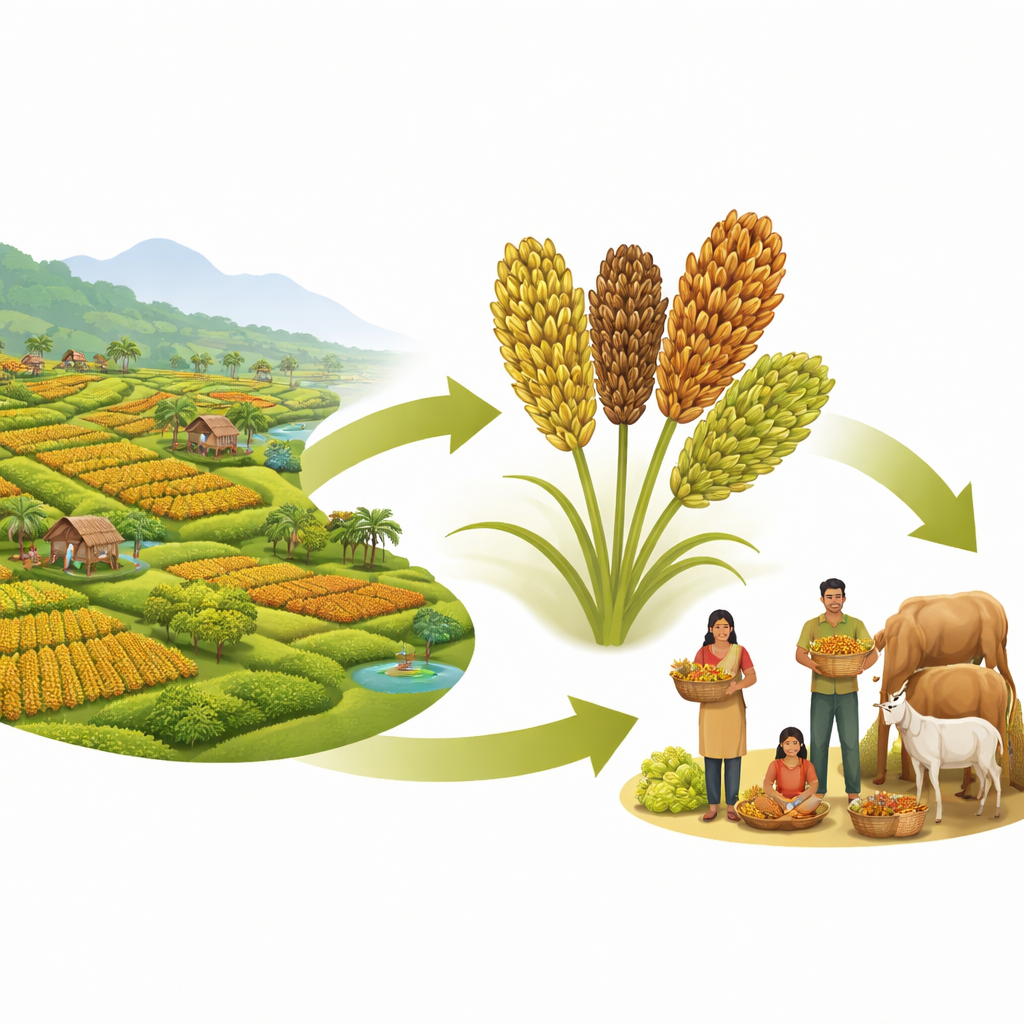
A Landscape of Many Millets
In the tribal hill districts of Odisha—especially Koraput, Malkangiri, Mayurbhanj, and Rayagada—farmers still grow a remarkable range of finger millet types. These traditional varieties differ in plant color, grain shape, maturity time, and resistance to diseases. Instead of being stored only in seed banks, they are conserved right in farmers’ fields, where they continue to adapt to changing weather and pests. Koraput has been recognized by the UN Food and Agriculture Organization as a Globally Important Agricultural Heritage System, underlining how vital this living diversity is for the future of agriculture.
Working With Farmers, Not Just Fields
Under the Odisha Millets Mission (now called Shree Anna Abhiyan), researchers and local organizations collected 46 cherished finger millet varieties from eight districts. With farmers’ help, they narrowed these to 13 favorites based on traits like sturdy stems, compact grain heads, and resistance to blast disease. These 13 were then grown in carefully designed field trials, side by side with seven official improved varieties, across the four major millet zones. Importantly, the trials followed traditional low‑input practices—using cow dung, fermented biofertilizers, and natural disease remedies—so that performance would reflect real farm conditions rather than ideal laboratory settings.
Finding Strong, Nutritious Performers
The team measured plant growth, grain and fodder yields, and key nutrients such as protein, iron, zinc, and calcium. They found large differences between locations, showing how strongly local climate and soils shape results. Even so, some traditional varieties proved impressively reliable. Four in particular—Kundra Bati, Laxmipur Kalia, Malyabant Mami, and Gupteswar Bharathi—consistently produced good grain yields under tough conditions, while also supplying abundant straw for livestock. Their grains were rich in minerals, with especially high calcium and meaningful levels of iron and zinc. Interestingly, Koraput-grown samples often had about 20% more protein and micronutrients than those from other districts, hinting that certain environments can naturally boost nutritional quality.
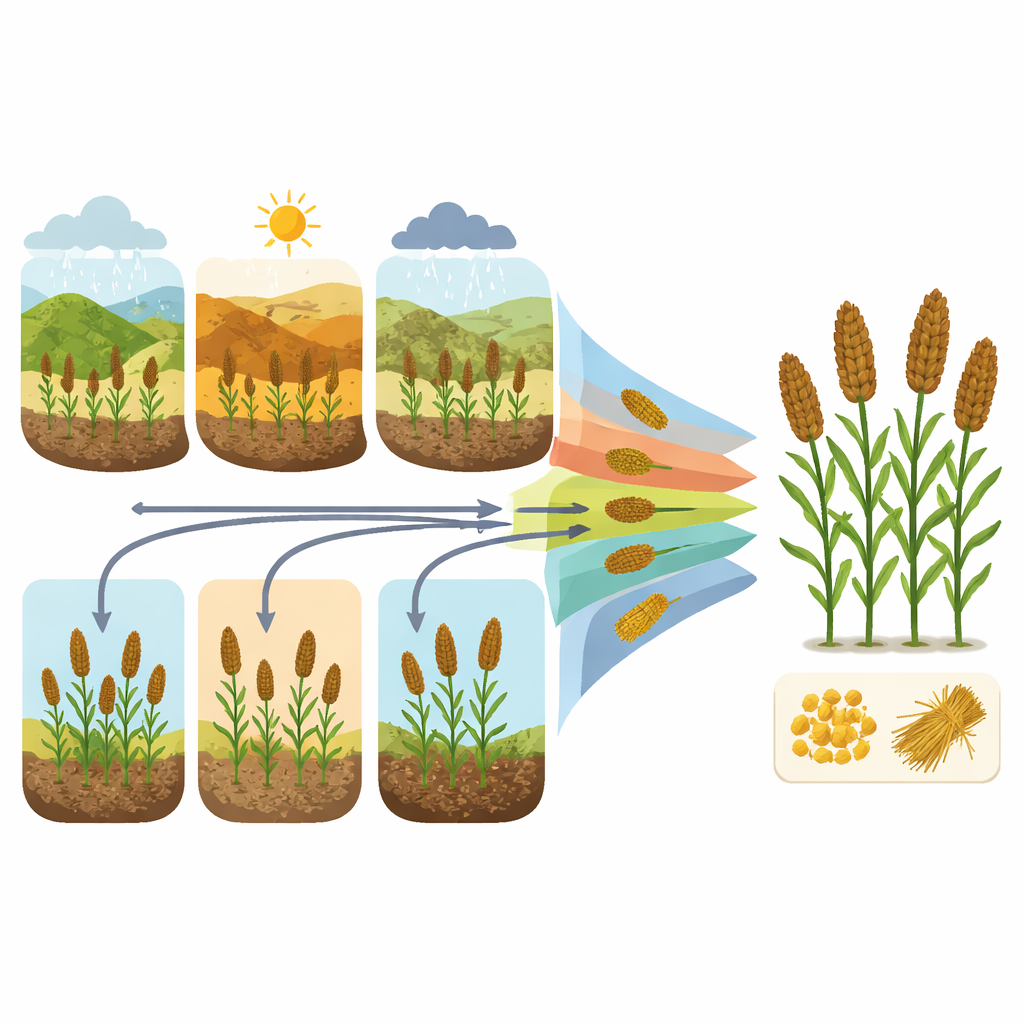
Stability Across Changing Weather
Because farmers need crops that perform year after year, not just in one lucky season, the researchers examined how stable each variety was across locations. Using statistical tools, they looked for varieties that combined higher average yield with low fluctuation. Several traditional types—especially the Bati, Kalia, Mami, and Bharathi lines—stood out as both productive and steady for grain and fodder, and some also showed stable nutrient levels. While modern check varieties sometimes out‑yielded them in the most favorable sites, the traditional types often matched or surpassed them in more challenging conditions, reflecting their deep adaptation to local stresses.
From Heritage Seeds to Official Status
On the strength of both farmer preference and scientific data, the state government formally notified Kundra Bati, Laxmipur Kalia, Malyabant Mami, and Gupteswar Bharathi for large‑scale cultivation in Koraput and Malkangiri. New guidelines now support seed production, diversity blocks, and community seed banks so these landraces can move from scattered heritage plots into the heart of the farming system. For a layperson, the bottom line is clear: by protecting and improving traditional millets where they evolved, Odisha is securing more reliable harvests, better nutrition, healthier livestock, and a richer agricultural heritage—offering a hopeful model for other regions seeking resilient, climate‑smart food systems.
Citation: Padhee, A.K., Varaprasad, K.S., Chellapilla, T.S. et al. Mainstreaming traditional varieties and on-farm conservation of crop diversity for sustainable finger millet cultivation in Odisha, India. Sci Rep 16, 14297 (2026). https://doi.org/10.1038/s41598-026-38703-4
Keywords: finger millet, traditional varieties, on-farm conservation, nutritious crops, Odisha India