Clear Sky Science · en
Rethinking therapsid phylogeny through Bayesian and cladistic approaches
A Hidden Chapter in Our Family Tree
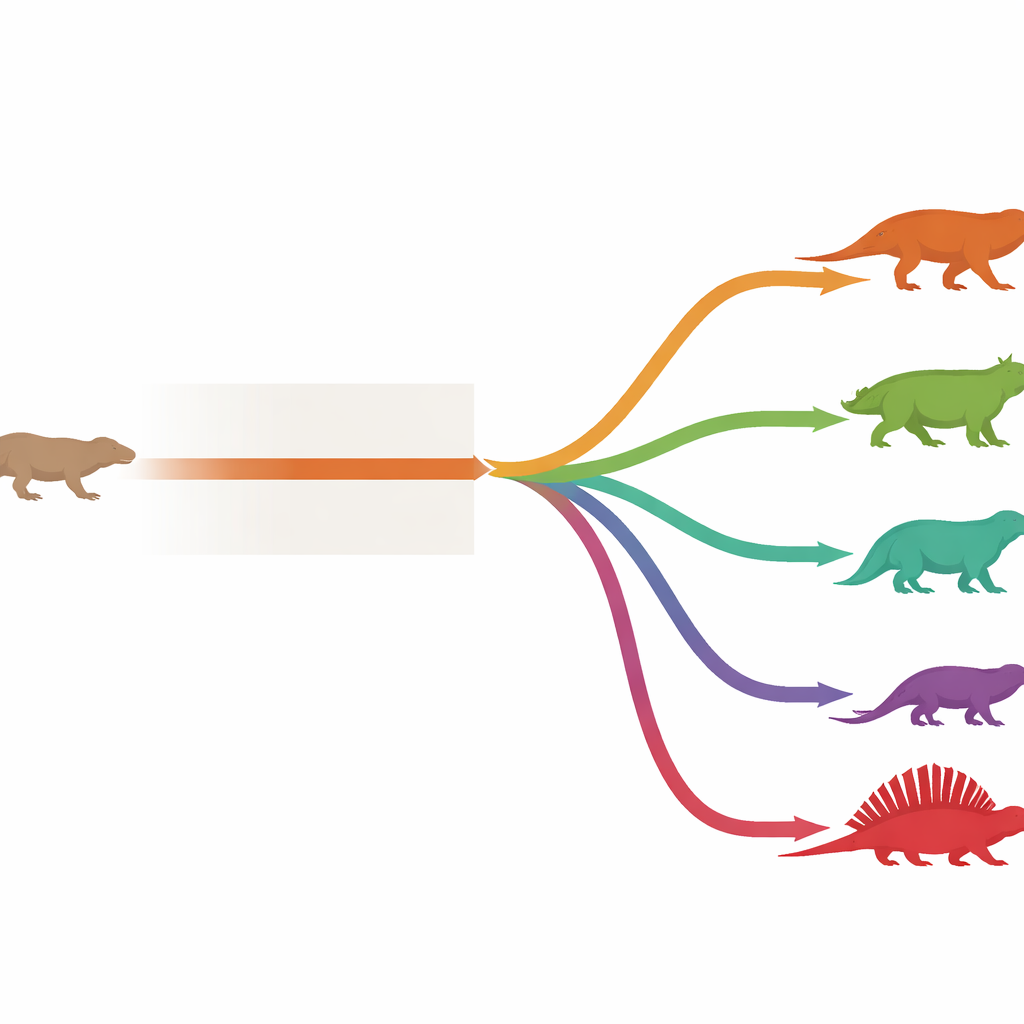
Mammals, including humans, trace their roots back to a group of ancient "mammal‑like reptiles" called therapsids that roamed Earth long before dinosaurs. Yet a crucial stretch of their early history is missing from the fossil record, leaving big questions about when and how these animals first diversified. This study revisits that mystery using modern statistical tools, showing that therapsids likely arose earlier than their fossils suggest and rapidly branched into the main lineages that would eventually lead to mammals.
Ancient Relatives in a Patchy Fossil Record
Therapsids were dominant land vertebrates during the Permian period, roughly 300–250 million years ago. They include several major groups, some of which would ultimately give rise to true mammals. But in the rocks that should record their early evolution, there is a puzzling interval with very few fossils, known as Olson’s Gap. Before the gap, the world is filled with more primitive relatives; after it, fully formed therapsid groups suddenly appear in many parts of the world. That sharp jump has made it difficult to work out how these groups are related and how fast they evolved.
Bringing New Math to Old Bones
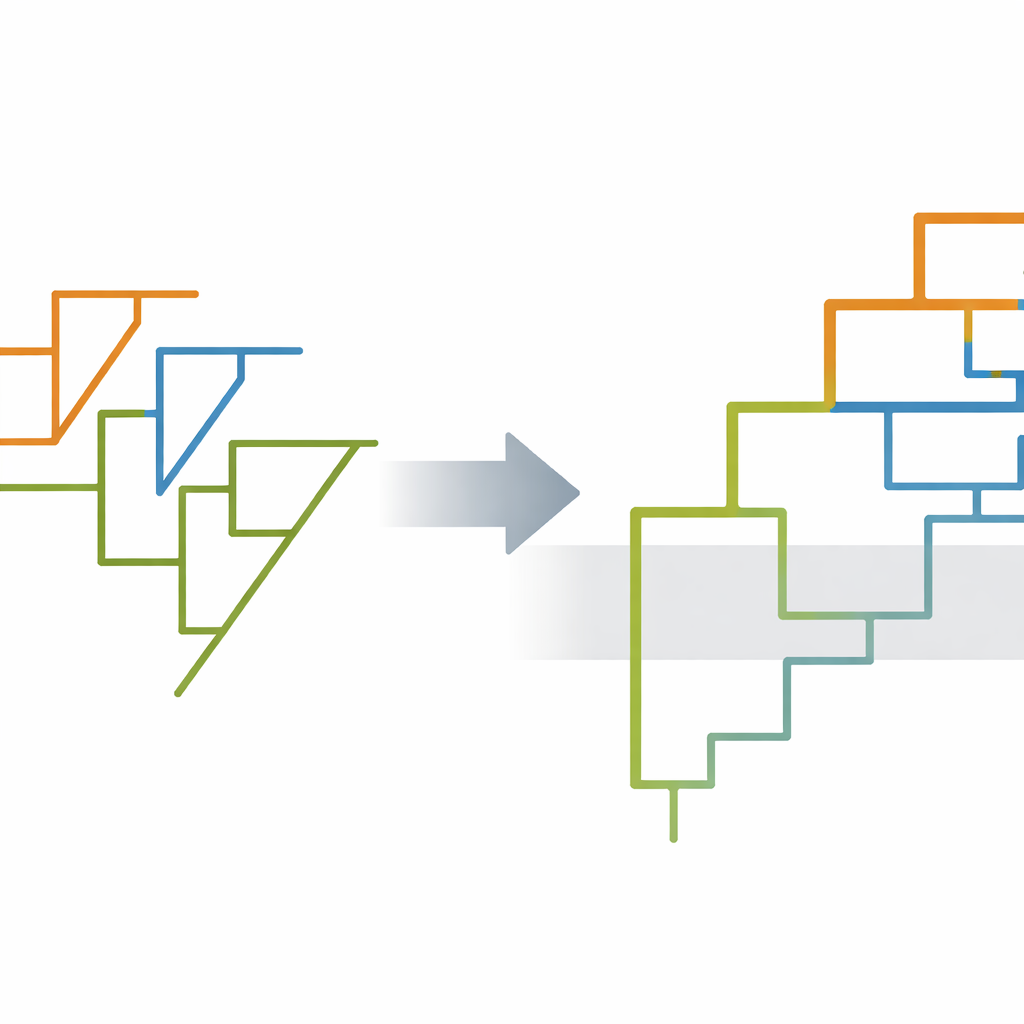
Most earlier studies tried to reconstruct therapsid relationships using a traditional method called parsimony, which looks for the simplest possible evolutionary tree. The authors of this paper instead built a new dataset focused on skull features from 42 early therapsid species and their closest non‑therapsid relatives, scoring 99 anatomical traits. They then applied Bayesian approaches—probabilistic methods that can explicitly model uncertainty and estimate the timing of evolutionary splits—implemented in two software packages, MrBayes and RevBayes. These analyses used models that combine fossil ages with "birth‑death" processes, which describe branching (speciation), extinction, and fossilization through time.
Rearranging the Therapsid Family Tree
The Bayesian trees are more fully resolved than the parsimony results and overturn some long‑standing assumptions. They support a large subgroup called Neotherapsida, in which the plant‑eating anomodonts are the closest relatives of the mostly meat‑eating theriodonts. Within theriodonts, the saber‑toothed gorgonopsians emerge as sister to the group that includes therocephalians and cynodonts, the latter eventually leading to mammals. The study also finds evidence that two major groups, Biarmosuchia and Dinocephalia, form a single broader branch, a relationship hinted at in older descriptive work but not strongly supported by earlier computer analyses. Several famous Chinese species from the Dashankou fauna—Raranimus, Biseridens, and Sinophoneus—shift to new positions near the base of the tree, weakening earlier claims that some of them belong to well‑defined later lineages.
Filling the Gap in Time
By combining anatomy with the fossil ages and a fossilized birth‑death model, the authors estimated when the main therapsid groups split from one another. Their results point to an origin of the therapsid lineage in the early Permian, before the onset of Olson’s Gap, even though clear fossils from this time are missing. Most of the currently known major groups—such as Biarmosuchia, Dinocephalia, Anomodontia, Gorgonopsia, and Eutheriodontia—appear to diversify rapidly between about 281 and 272 million years ago, straddling the gap itself. Additional modeling suggests there were pulses of elevated extinction, including one during Olson’s Gap, but fossilization rates stayed relatively steady. This pattern fits a scenario in which an earlier extinction pruned older lineages while opening ecological space for therapsids to diversify.
What This Means for the Rise of Mammals
To a non‑specialist, the key message is that our mammal ancestors did not simply burst onto the scene fully formed, nor did they creep forward in complete obscurity. Instead, this work supports a two‑step story: a poorly recorded early phase in which therapsids gradually split from more reptile‑like forebears, followed by a rapid burst of diversification around the time of Olson’s Gap. The new Bayesian analyses reorganize the branches of the therapsid family tree and suggest that some groups thought to be distinct may actually form broader lineages, and that cynodonts—the direct forerunners of mammals—likely arose from within therocephalian‑grade animals. As new fossils are discovered, especially from rocks that span Olson’s Gap, this refined framework will help paleontologists place them more accurately and further clarify how and when our distant ancestors took their first steps toward becoming mammals.
Citation: Duhamel, A., Wynd, B., Wright, A.M. et al. Rethinking therapsid phylogeny through Bayesian and cladistic approaches. Sci Rep 16, 13171 (2026). https://doi.org/10.1038/s41598-026-38195-2
Keywords: therapsids, Permian fossils, phylogeny, Bayesian evolution, Olson’s Gap