Clear Sky Science · en
Accounting carbon emission and proposals for their reduction at a university campus in China
Why Campus Emissions Matter to Everyday Life
Universities are small cities where tens of thousands of people live, study, eat, and travel every day. All of these activities quietly add up to a large climate footprint. This study looks closely at one such “mini-city” — the south campus of Henan Polytechnic University in China — to find out where its carbon emissions really come from and how they can be cut nearly in half. The answers matter not only for students and staff, but for anyone interested in how schools, offices, and neighborhoods can move toward a climate‑friendly future.
Taking Stock of a Campus Carbon Footprint
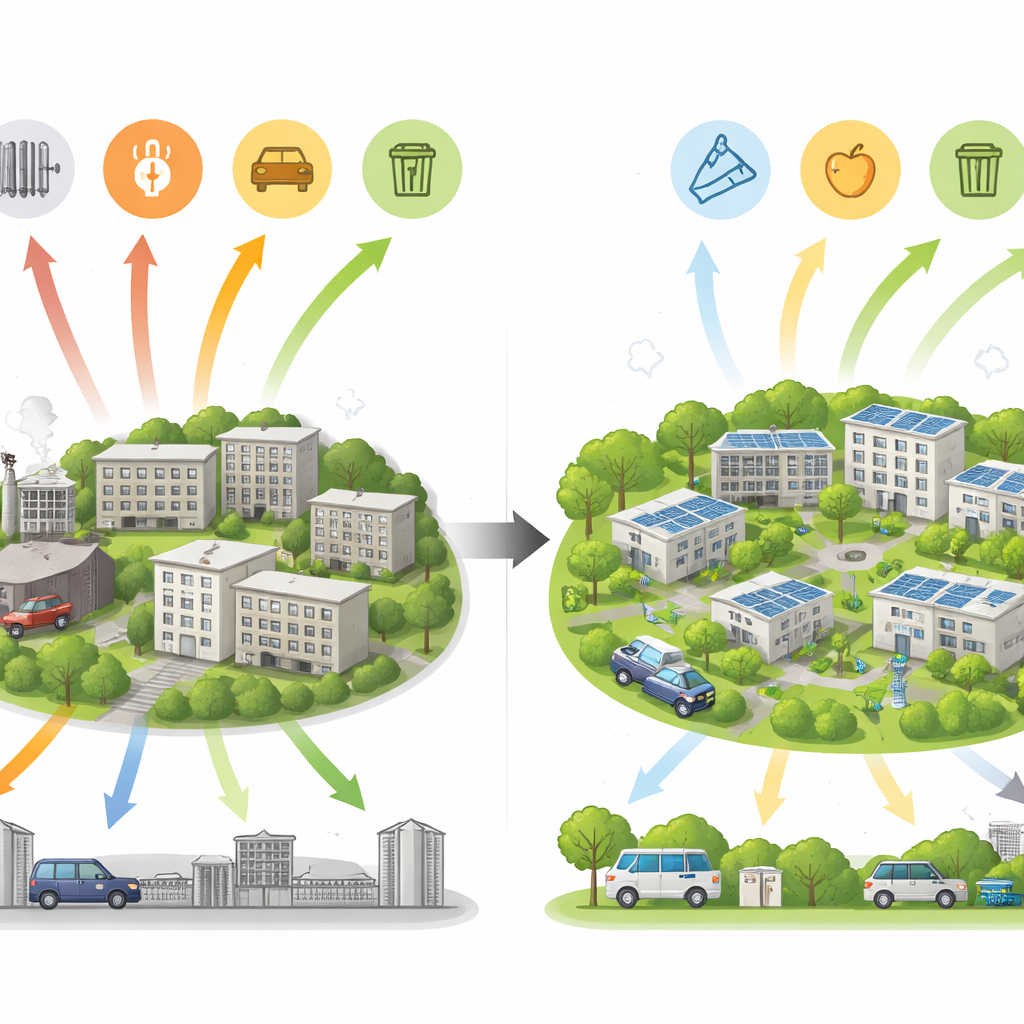
The researchers began by treating the campus like a complete living system. They counted emissions from energy used in buildings, travel by students and staff, and everyday purchases such as food, clothing, paper, water, and online shopping. Using an international standard called the Greenhouse Gas Protocol, they grouped these sources into three categories: direct fuel burned on site, electricity and heating bought from outside, and everything else tied to campus life, such as commuting and waste disposal. For 2019, they found total emissions of about 65,000 tons of carbon dioxide, or roughly 1.5 tons per person — much less than the average for China as a whole, but still a substantial climate burden.
Where the Pollution Really Comes From
The detailed breakdown revealed that warmth and power are the main culprits. More than 40 percent of emissions came from district heating that keeps classrooms and dormitories comfortable through cold winters. Electricity use — for lighting, cooling, computers, and lab equipment — accounted for another large share. Canteens, libraries, and engineering labs were especially power‑hungry because they run equipment for long hours. Travel added another significant slice: together, on‑campus traffic and trips home or on business produced over 7,000 tons of emissions. Food, clothing, paper, and garbage contributed smaller but still important amounts, with meat and dairy dominating the food‑related footprint even though people ate much more plant‑based food by weight.
A Hidden Shift from Roads to Buildings
One striking finding was a quiet “carbon transfer” between different parts of campus life. As more teachers and students switched to electric vehicles, their travel no longer burned fuel in car engines. Instead, it drew extra electricity from the campus power supply. On paper, this moved some emissions out of the transport category and into the building category, because the electricity used for charging is counted with other building power use. In 2019 this shift amounted to about 1,600 tons of carbon dioxide, and the study suggests that the effect will grow as electric vehicles become more common. The result is a cleaner local air along roads, but also a stronger need for low‑carbon electricity supplying the campus.
Designing a Cleaner Energy System
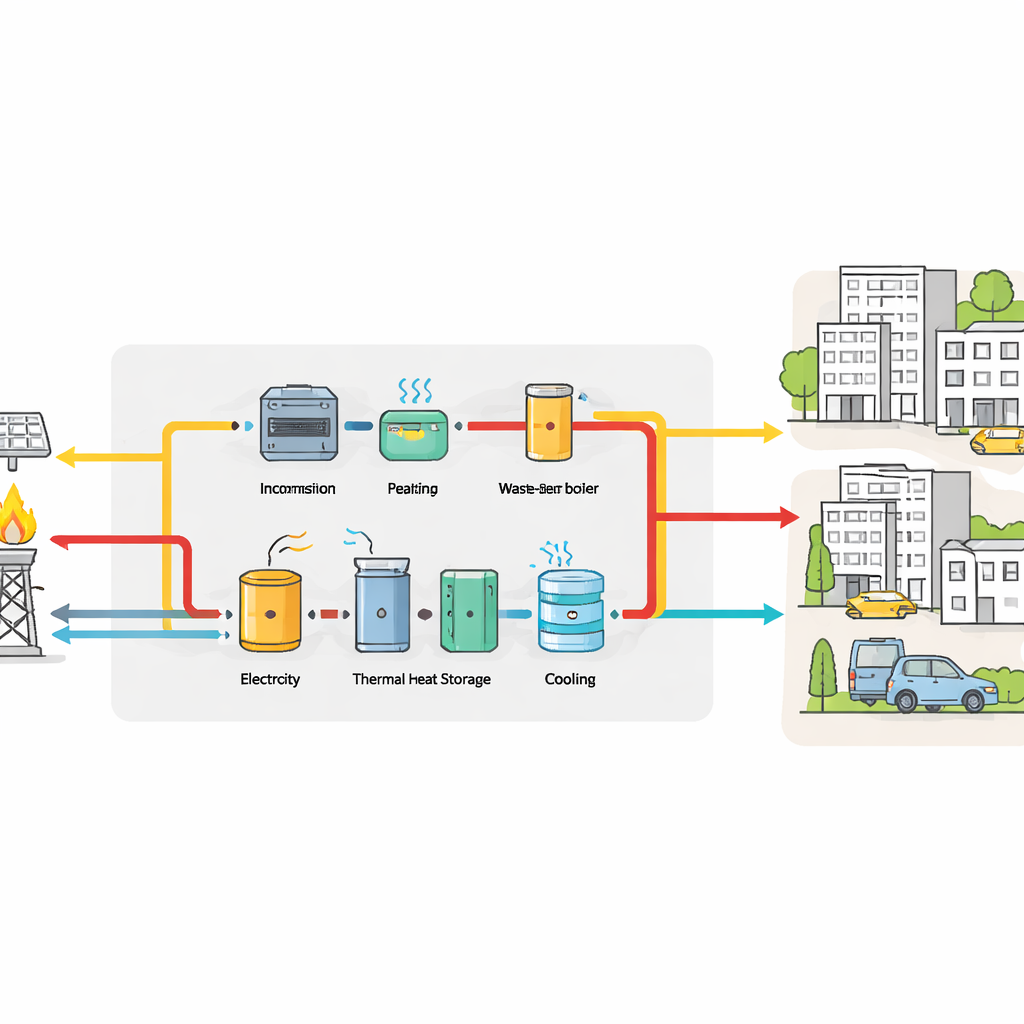
To tackle these emissions, the team designed a customized energy system for the campus that blends several clean technologies. They propose a large field of solar panels on roofs and open areas, ground‑source heat pumps that use the steady temperature underground for heating and cooling, and engines and boilers that capture and reuse waste heat instead of throwing it away. These components would be linked with energy storage so that surplus solar power during the day could run lights and charge electric vehicles at night. Computer models show that this “multi‑energy complementary system” could cut emissions from fuel and purchased electricity by about 50 percent while also saving around 1.7 million US dollars in yearly operating costs.
Everyday Choices and Future Smart Tools
Technology alone is not enough; daily habits matter too. The study outlines practical steps that can be taken right away: better building insulation to reduce heating demand, more efficient lights and appliances, water‑saving and recycling measures, greener travel options, campaigns to avoid food waste, stronger recycling programs, and a push for paper‑light teaching and administration. Looking ahead, the authors see big promise in digital tools. By combining sensors, data networks, and artificial intelligence, campuses could track their emissions in real time, predict energy needs, and test different “what‑if” scenarios in a virtual twin of the campus before changing real‑world systems.
What This Means for People on Campus
In simple terms, the study shows that most of a university’s climate impact comes from keeping buildings warm, cool, and powered — and that smarter energy systems and modest lifestyle changes can cut that impact dramatically. Henan Polytechnic University’s south campus offers a blueprint: by reshaping how it sources and uses energy, and by encouraging low‑carbon behavior, it could halve its emissions while saving money. Because campuses resemble compact cities and educate future leaders, the lessons learned here can ripple outward, helping other universities — and eventually towns and businesses — chart practical paths toward carbon‑neutral living.
Citation: Liu, J., Mao, X. & Wang, H. Accounting carbon emission and proposals for their reduction at a university campus in China. Sci Rep 16, 14546 (2026). https://doi.org/10.1038/s41598-025-23719-z
Keywords: campus carbon footprint, university energy use, low-carbon campuses, multi-energy systems, electric vehicles