Clear Sky Science · en
Implementation of a multifactorial fall intervention model to guide hospital nurses: A quasi-experimental before-and-after study
Why Preventing Falls in Hospitals Matters
Spending a night in the hospital should make people safer, not put them at risk of new injuries. Yet across the world, patients of all ages slip, trip, or collapse on hospital wards every day—sometimes with broken bones, head injuries, or lasting fear of walking again. This study from a large Chinese hospital asks a practical question with direct meaning for patients and families: can reorganizing how nurses prevent and respond to falls, step by step, actually make the hospital a safer place?
A Closer Look at Hospital Falls
Falls are among the most common mishaps reported in hospitals, especially in older adults and people recovering from serious illness. Unfamiliar surroundings, medical treatments, and nighttime trips to the bathroom all raise the risk. Earlier research has produced many checklists and scales to judge who might fall, but real-world results have been mixed. Many efforts focus only on prevention before a fall happens, and often look at one risk factor at a time. The authors of this study argue that falls are usually the result of several things going wrong at once—patient health, medicines, staff workload, and the physical environment—so prevention and follow-up need to be just as multifaceted.
Designing a New Way of Working
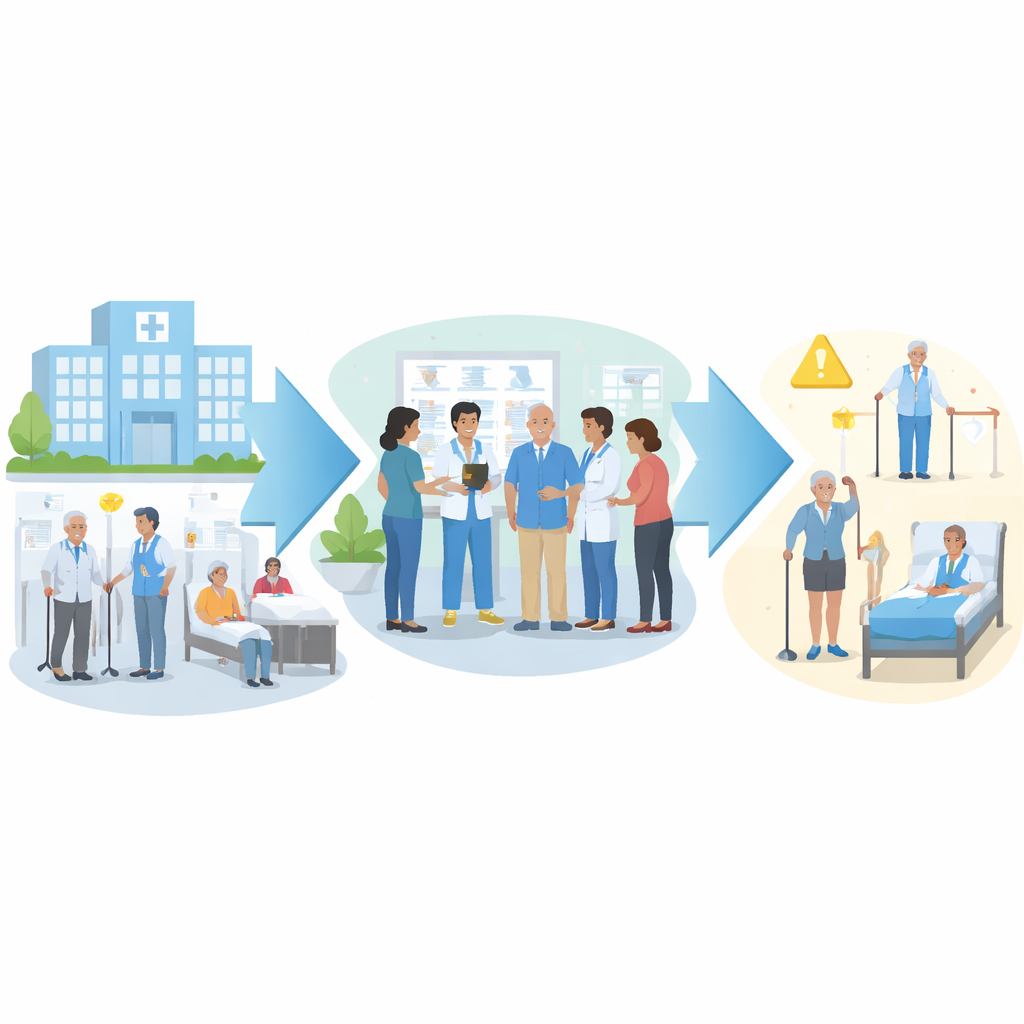
The research team created what they call a Multifactorial Fall Intervention Model, or MFIM, centered on nurses but involving doctors, aides, patients, and families. First, they examined detailed records from more than 150,000 patients hospitalized between 2015 and 2016 to understand who fell, when, where, and under what conditions. Older adults and very young children were overrepresented; common culprits included low strength, dizziness, anemia, and certain blood pressure and blood sugar medicines. Many falls occurred at the bedside or in the bathroom, often during toileting or short walks nearby. Using these insights and prior studies, they redesigned their fall risk assessment form, adding weight to age, specific drugs, and clinical warning signs so that truly high‑risk patients could be flagged more accurately.
From Prevention to Follow-Through
The MFIM goes beyond a one-time checklist. For newly admitted patients, nurses use the revised assessment tool and then choose different levels of action depending on the score. Those at lower risk receive flexible, ongoing monitoring and simple safety steps, such as keeping walkways clear. Patients at moderate or high risk trigger closer follow-up: regular reassessments, tailored education for patients and families, and environmental changes like safer bathrooms or better lighting, coordinated by nursing and care staff. If a fall does happen, there is a clear response pathway: immediate medical checks and treatment, a structured analysis of what went wrong, and formal reporting. Every two months, a hospital nursing team reviews fall cases, inspects wards, and leads further staff training, turning each incident into fuel for system-wide improvement.
What Changed After the New Model
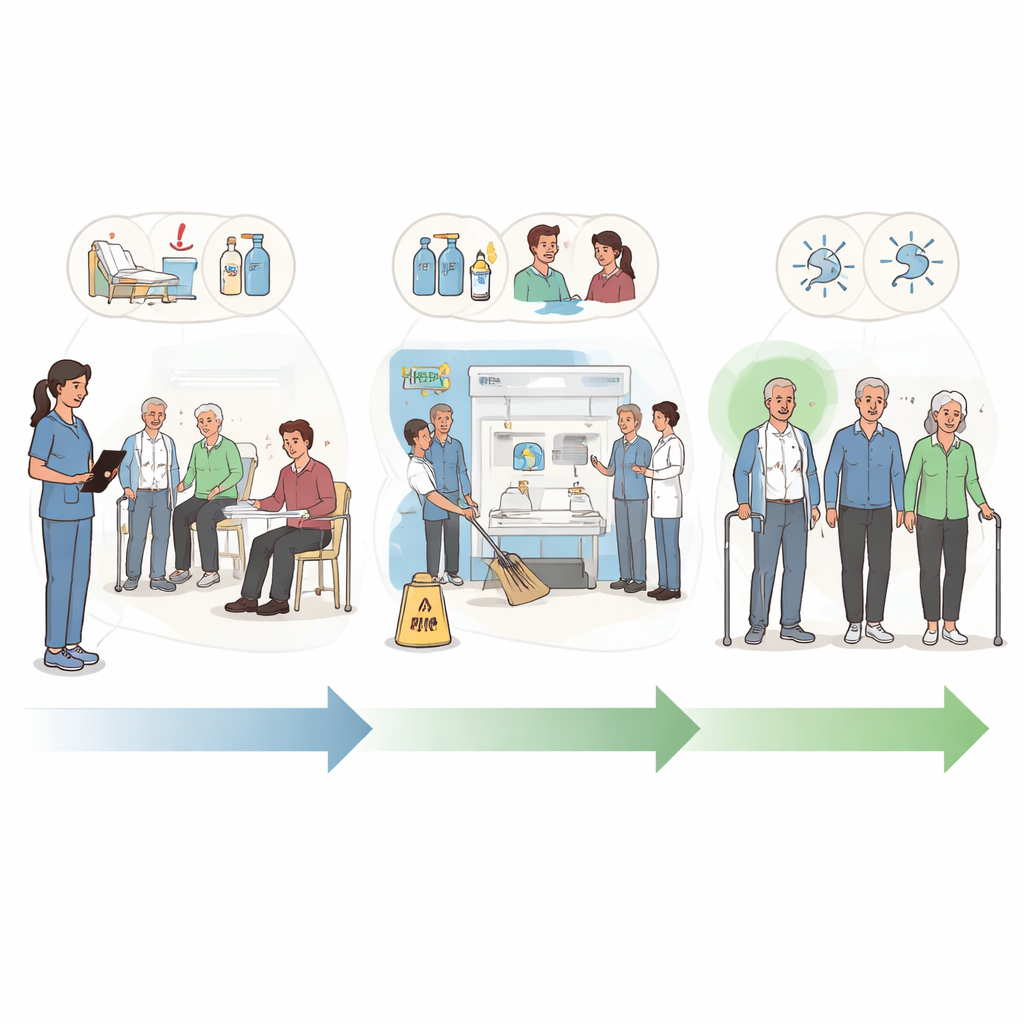
To test the impact of the new approach, the hospital compared two large groups of patients. The first, over 153,000 people treated before the model was introduced, received the usual fall care. The second, more than 171,000 patients treated after the rollout, were managed under the MFIM. Falls dropped from 0.31% of patients to 0.22%, and the rate per 1,000 patient‑days also declined. After accounting for age differences, patients in the new system were roughly 30% less likely to fall. Injuries improved as well: fewer patients who fell were hurt at all, and severe injuries such as fractures became less common. Complaints and financial compensation related to falls also decreased, suggesting benefits not only for health but for trust and costs. The updated risk tool did a better job of separating high‑ and low‑risk patients, allowing staff to focus extra effort where it mattered most.
What This Means for Patients and Nurses
For people entering the hospital and those who care about them, the message is reassuring but clear: falls are not just bad luck, and they can be reduced when teams work in a structured, continuous way. This study shows that when nurses are supported with better tools, clear workflows, and regular reflection, patients are less likely to end up on the floor and more likely to leave the hospital safely. The authors suggest that similar multifaceted models could be adapted to other hospitals and refined through future trials. In everyday terms, their conclusion is simple: paying systematic attention before, during, and after any fall—rather than relying on scattered efforts—can turn the hospital into a steadier place to heal.
Citation: Liao, C., Guo, L., Li, P. et al. Implementation of a multifactorial fall intervention model to guide hospital nurses: A quasi-experimental before-and-after study. Sci Rep 16, 9560 (2026). https://doi.org/10.1038/s41598-025-08096-x
Keywords: hospital falls, patient safety, nursing care, fall prevention, inpatient injuries