Clear Sky Science · en
Global Urban Tree Species (GUTS): Revealing tree species diversity across the world’s urban areas
Why City Trees Matter to Everyone
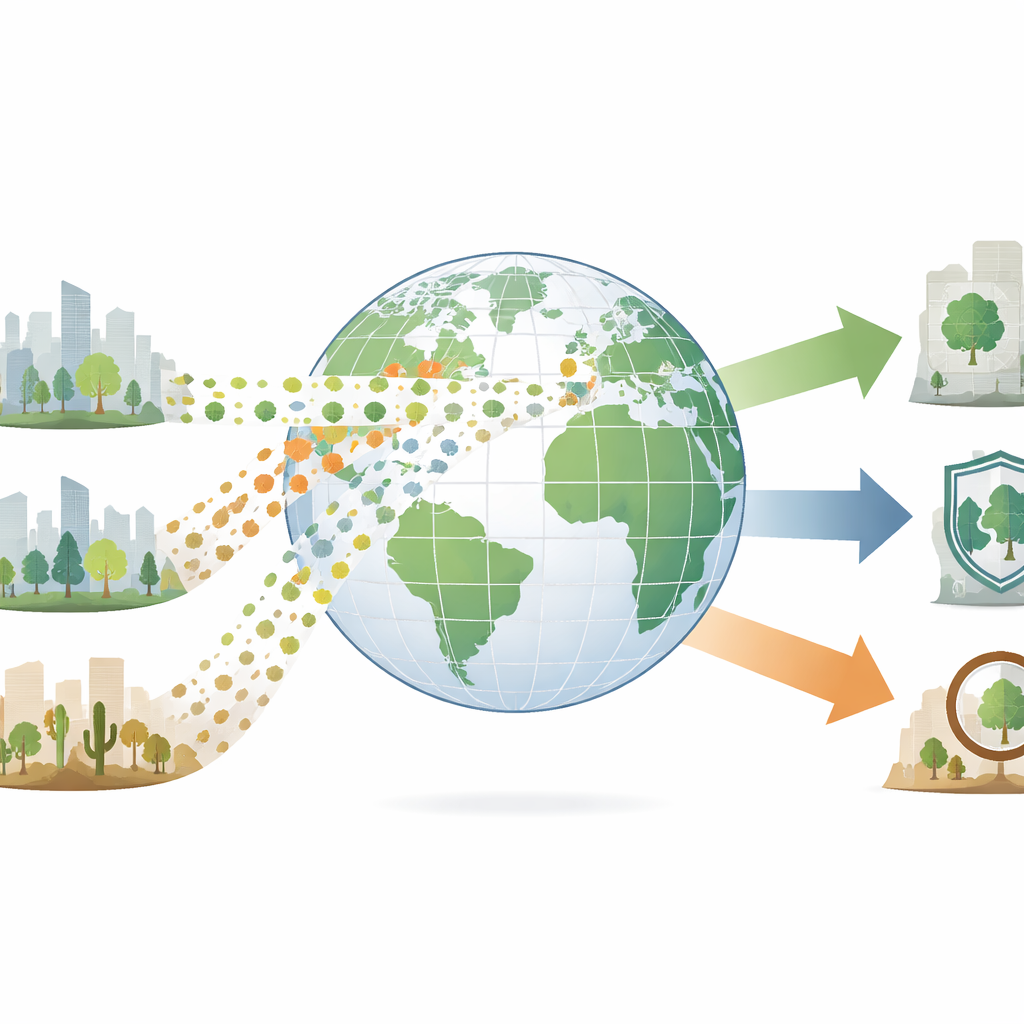
Cities around the world are turning to trees as natural allies against heat, air pollution, flooding, and stress. But until now, no one really knew which kinds of trees were growing in most of the world’s towns and cities, or how that mix differed from place to place. This study introduces the Global Urban Tree Species (GUTS) dataset, the most comprehensive global picture yet of what tree species live in cities—information that can help city planners, ecologists, and residents choose trees that keep urban life cooler, healthier, and more resilient.
A Global Map of City Trees
The researchers pulled together a worldwide catalog of urban trees, tracking not just how many trees cities have, but which species they are and where they come from. GUTS covers 10,094 tree species found in 8,349 cities across 139 countries—representing more than one in ten of all tree species known on Earth. By mapping which species appear in which cities, the dataset reveals how rich or sparse urban tree life is in different regions, and whether city forests rely mainly on local species or on plants imported from elsewhere.
Gathering Clues from Many Sources
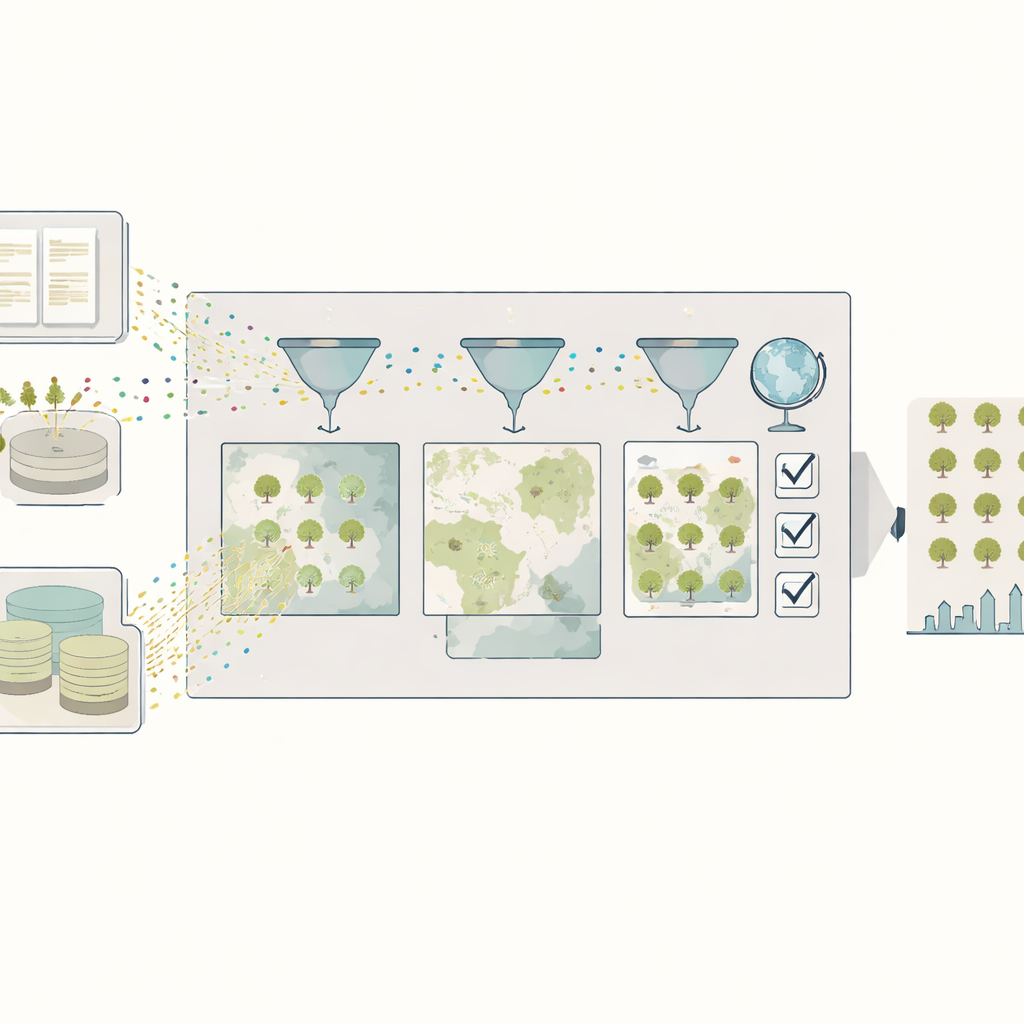
To build this global picture, the team sifted through more than 100,000 scientific publications and tapped eight major biodiversity databases that together hold tens of millions of plant records. From the literature, they kept only studies based on real-world field surveys that covered multiple locations, avoiding lists from single parks or botanic gardens that might not reflect everyday city planting. From online biodiversity databases, they pulled every record that mentioned a tree species, then combined these with the literature data into one massive pool of observations. Each species name was checked and updated against modern plant catalogues to avoid confusion from outdated or duplicate names.
Zooming In on True Urban Trees
Not every tree record in those databases came from a city, so the next step was to identify which trees really grew in urban areas at the time they were recorded. The researchers overlaid each tree’s location on detailed global maps that show land cover and city boundaries over several decades. Only records that clearly fell inside urban zones on multiple independent maps were counted as city trees. They then matched each point to a specific city, corrected misspelled place names, and discarded any records that could not be reliably located. Finally, they classified every species as native or non-native to its country or region, based on global lists of natural and introduced plants.
What the World’s City Forests Look Like
When the dust settled, GUTS contained over 100,000 confirmed records of trees growing in urban areas of 7,020 cities in 115 countries. As in natural forests, the richest city tree communities appear in tropical and subtropical climates, with temperate cities close behind. Some countries—such as Brazil, the United States, China, Australia and Mexico—host particularly high numbers of urban tree species, including many that did not evolve there. In several European countries, the majority of city tree species are non-native, suggesting that human choices have strongly reshaped urban forests and may be making them more similar to one another over time.
Building a Trustworthy Resource
Because planning decisions and scientific studies will rely on these data, the team invested heavily in checking them. Two analysts independently extracted species lists from each paper and resolved disagreements, while experts in plant classification reviewed names. For database records, the team used automated screening tools to catch obvious errors, then applied common-sense rules and additional evidence: for example, a tropical tree would not be accepted as occurring in a polar city unless there were multiple, consistent records backing it up. Questionable records were flagged so that future users can treat them with caution or exclude them entirely.
How This Helps Cities and Citizens
For city residents and decision-makers, the GUTS dataset is like an atlas of the world’s urban forests. It shows which species thrive in climates similar to their own, highlights where non-native trees dominate, and reveals how urban forests contribute to global biodiversity. This knowledge can guide tree planting choices that better withstand climate change, support local wildlife, and reduce the risk of invasive species. By making city tree diversity visible at a global scale for the first time, GUTS lays the groundwork for smarter, greener, and more livable cities worldwide.
Citation: Yang, X., Yan, P., Jin, J. et al. Global Urban Tree Species (GUTS): Revealing tree species diversity across the world’s urban areas. Sci Data 13, 485 (2026). https://doi.org/10.1038/s41597-026-06868-2
Keywords: urban trees, biodiversity, city greening, tree species database, urban ecology