Clear Sky Science · en
Integrated Network Solutions in Government Hiring Trends (INSIGHT+)
Why this matters for everyday work and paychecks
The federal government is one of the largest employers in the United States, with more than two million civilian workers in hundreds of occupations spread across the country. In recent years, this workforce has been jolted by political fights, large proposed staff cuts, and rapid advances in technology such as artificial intelligence. Yet until now, there has been no single, detailed source that shows who the government is trying to hire, where, and under what conditions. This article introduces INSIGHT+, a new public database that pulls scattered information into one coherent picture of federal hiring and jobs from 2018 to 2023.
A new window into how the government hires
INSIGHT+ was created to help people understand the federal civil service as a labor market, much like the private job market but shaped heavily by political decisions, laws, and unique job protections. The database combines information from federal job boards, human resources systems, and official workforce statistics with broader economic and political data. It covers more than 400 job types and over 2.4 million civilian employees, most of whom work outside the Washington, D.C. area. By integrating these sources, the project lets users examine how hiring responds to changes in administrations, budget choices, local economies, and shifting policy priorities such as cybersecurity, health care, or climate and AI.
How the data system is built
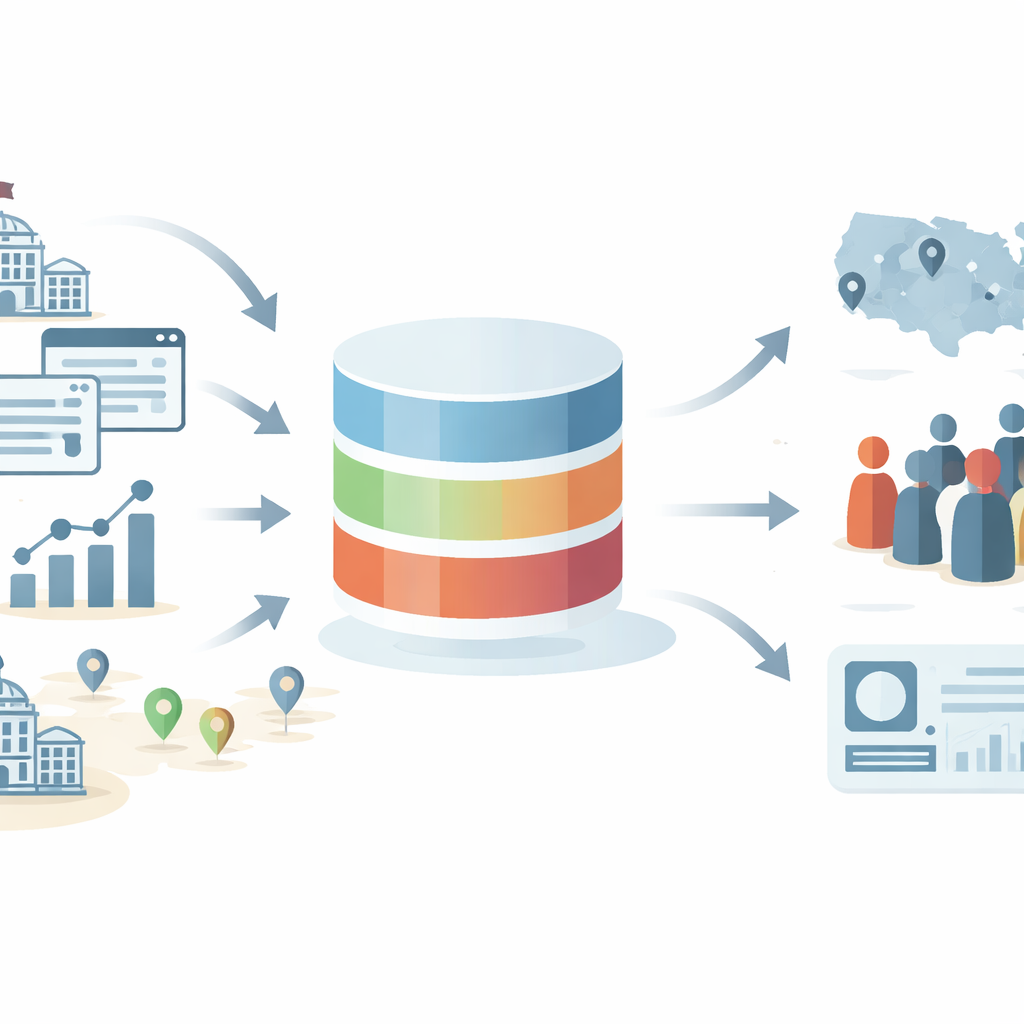
At the heart of INSIGHT+ is a detailed table of job postings, each identified by a unique control number from the government’s main hiring website. For every posting, the database records when the job opened and closed, the pay and grade, job series, title, and who could apply, along with information on assessments used, offers made, and basic applicant statistics. Because a single announcement often advertises multiple job types in multiple locations, a second table breaks each listing into separate rows for every job series and place, adding tags for health and science roles, location codes, and regional groupings. Other tables summarize information about federal agencies themselves, including workforce size, hiring and separations over time, and expert measures of each agency’s political leanings, independence, and public reputation.
Connecting jobs, places, politics, and technology
To show how federal hiring fits within wider labor markets, INSIGHT+ links its job postings and agency data to state-level information from the Bureau of Labor Statistics. This includes the number of workers and typical wages in broad occupational clusters such as health and social welfare, engineering, administration, and transportation. The team carefully aligned government job families with private-sector categories so that users can compare, for example, how federal pay for nurses or IT workers stacks up against nearby private employers. Another table tracks political conditions in each state and year, such as which party holds the governorship, how congressional delegations line up with the president, and how many House seats each party holds. These links make it possible to study how politics and local economies jointly shape where and how the federal government hires.
Anticipating the impact of artificial intelligence
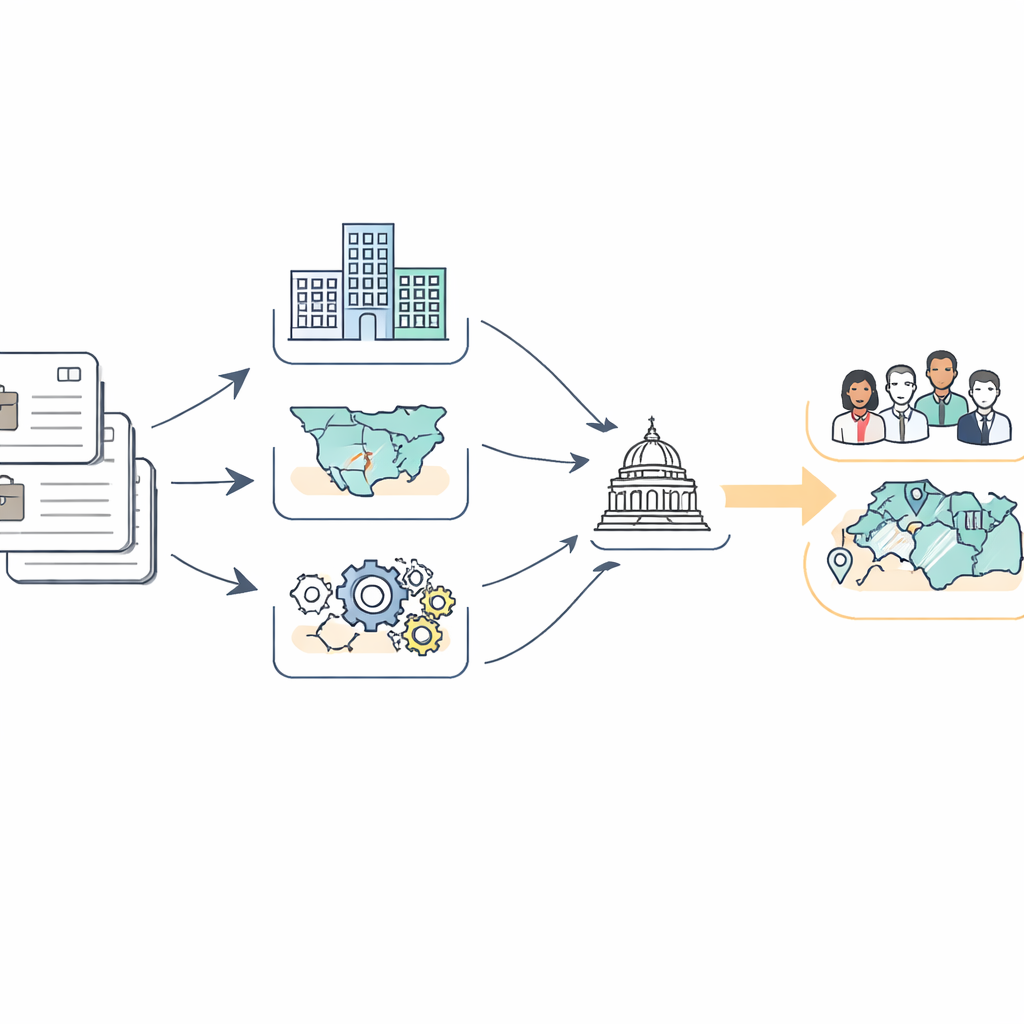
Recognizing that generative AI is changing many kinds of work, INSIGHT+ includes a specialized table that scores more than 400 federal job series on how strongly AI is likely to complement, augment, or substitute for key skills and tasks over the next five years. Using retrieval-augmented language models and expert-designed prompts, the authors estimate whether AI is more likely to assist workers, change how they do their jobs, or potentially replace parts of their work. Because these scores are tied to the same job series codes used in the hiring data, researchers and workforce planners can explore questions such as which agencies are hiring heavily into occupations most exposed to AI-driven change, or where retraining may be most urgent.
Ensuring the numbers can be trusted
The creators of INSIGHT+ conducted extensive checks to validate their data. They tested hundreds of thousands of job postings by matching their identifiers back to the official hiring website and comparing key details like dates, pay grades, and locations. These attributes matched more than 97 percent of the time. They also compared trends in selections from their dataset against official counts of new federal hires from the government’s personnel office. While exact numbers did not line up perfectly, as expected for different reporting systems, the trends were strongly correlated, suggesting that INSIGHT+ reliably captures real shifts in hiring activity.
What this resource means going forward
INSIGHT+ does not prescribe how the federal workforce should change, but it gives policymakers, researchers, educators, journalists, and the public a powerful set of tools to see what is happening. By tying together jobs, agencies, places, politics, and emerging technologies, the database makes it possible to ask nuanced questions about who the government hires, where, for what kinds of work, and how those patterns respond to economic and political shocks. In plain terms, INSIGHT+ offers a clearer view of how tax-funded jobs are created and distributed, and how prepared the federal workforce is for challenges such as automation and regional inequality.
Citation: Resh, W.G., Lee, K.E., Ming, Y. et al. Integrated Network Solutions in Government Hiring Trends (INSIGHT+). Sci Data 13, 488 (2026). https://doi.org/10.1038/s41597-026-06825-z
Keywords: federal workforce, government hiring, public sector jobs, labor market data, artificial intelligence and work