Clear Sky Science · en
Genomic epidemiology of the 2025 mpox epidemic in Sierra Leone
Why this outbreak matters to everyone
In early 2025, Sierra Leone suddenly became the center of a wave of mpox infections that rippled across Africa and sent cases as far as Europe and the United States. Mpox, once considered a rare infection linked mainly to contact with wild animals, is now spreading between people in ways that can quickly overwhelm health systems. This study shows how scientists used virus genomes, essentially the pathogen’s genetic fingerprints, together with case data to retrace how the outbreak started, where it spread, and why early warning systems missed so many infections.
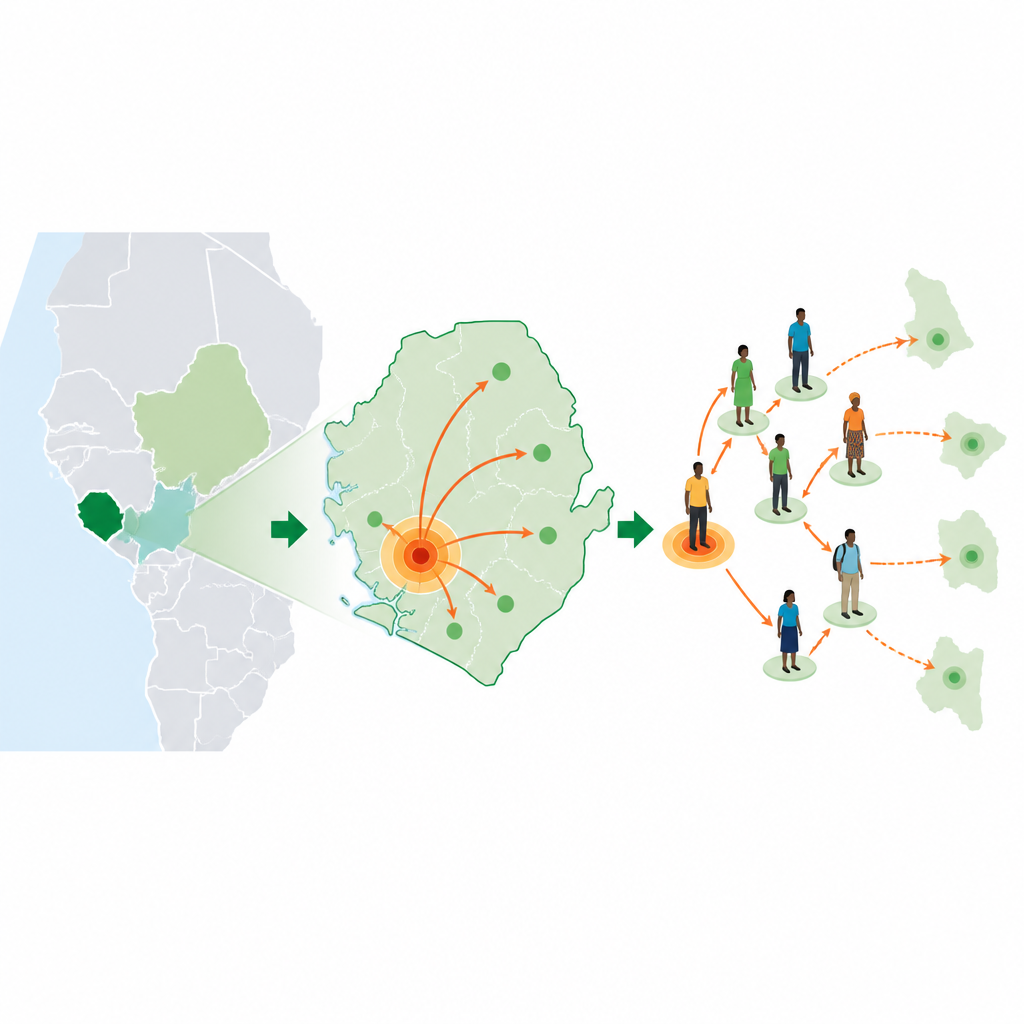
How a quiet spark became a national fire
The researchers sequenced 338 mpox virus samples collected from patients in 14 districts of Sierra Leone between January and August 2025. By comparing these genomes with thousands of others from West Africa and beyond, they found that nearly all belonged to a single new branch, which they call lineage G.1. This branch ultimately traces back to viruses that had been circulating in Nigeria since 2014 and that fueled earlier international outbreaks. Genetic clues suggest that G.1 began spreading around late September 2024, several months before Sierra Leone confirmed its first case, meaning the epidemic had a long “hidden” phase while people were already infecting one another.
How the virus raced through a crowded capital
One of the clearest findings is that the densely populated capital region, Western Area Urban, acted as the main engine of the epidemic. The team used the timing and similarity of virus genomes to reconstruct how infections moved from district to district. Their models indicate that Western Area Urban seeded most of the rest of the country, sending repeated waves of infection to places like Port Loko, Kenema and Bo. Once established in these districts, local chains of transmission could persist for months, especially early in the epidemic when testing and isolation were still ramping up. The pattern reflects how a single introduction into a highly connected city can ignite a far-reaching outbreak.
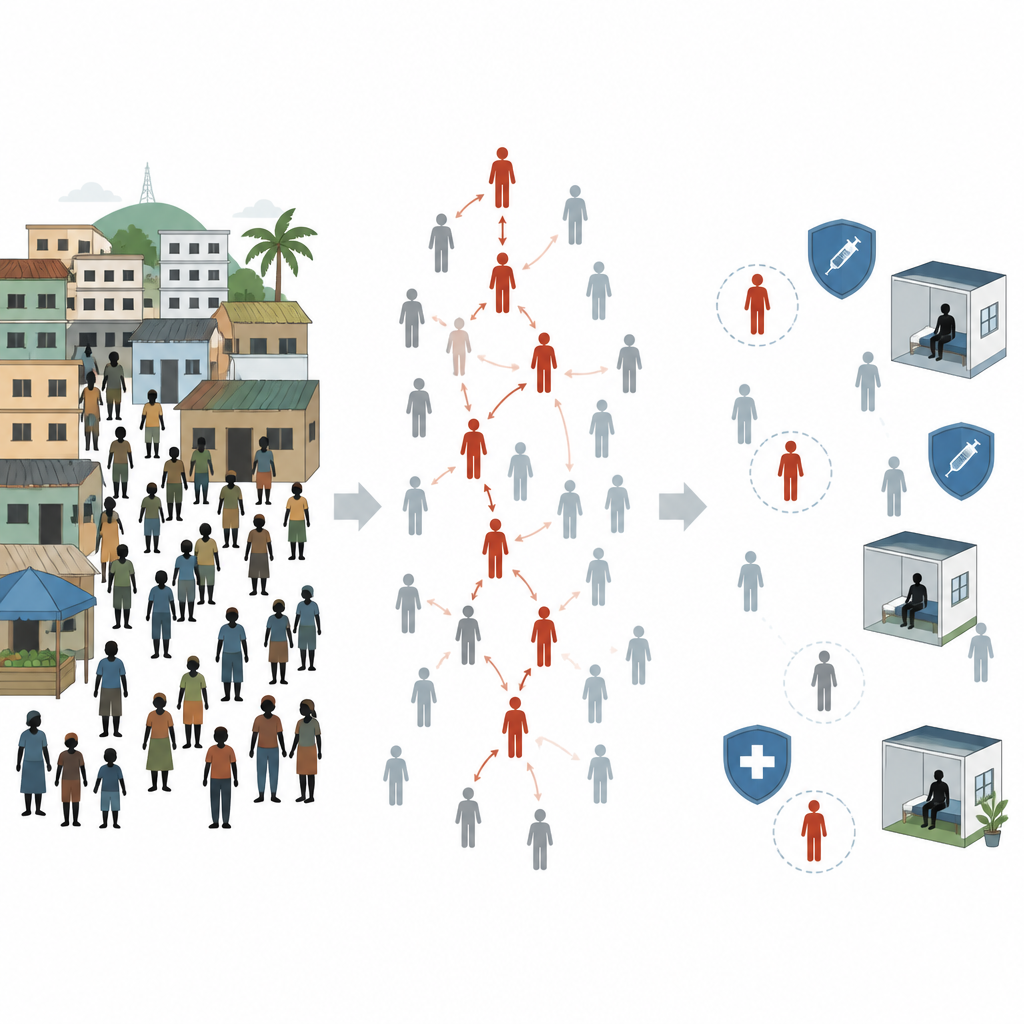
What the virus’s mutations reveal about spread
The study also looked closely at the types of genetic changes found in the virus. Many of the mutations in G.1 match a pattern created by a human defense protein called APOBEC3, which leaves a distinctive mark on viral DNA. A heavy build-up of these changes is a sign that the virus has been passing repeatedly from person to person, rather than jumping only now and then from animals. In contrast, a small cluster of older mpox viruses detected in Guinea and Liberia, including one case in Sierra Leone, showed far fewer of these changes, pointing to occasional animal-to-human spillover instead of sustained human spread. Together, these signals confirm that the 2025 crisis was driven by ongoing transmission between people.
Hidden infections and the role of control efforts
Using a combination of statistical models and the sequencing data, the researchers estimated that only about one in every three infections had a genome sequenced, and that official case counts likely missed roughly half of all mpox cases in the country. They calculated that the number of infections doubled roughly every three weeks early on, which matched the steep rise in reported cases. Later in 2025, as vaccination campaigns expanded, case isolation became stricter and contact tracing improved, the number and length of local transmission chains shrank sharply. The epidemic then declined instead of settling into slow, persistent circulation, as has happened in some neighboring countries where animal reservoirs continue to reintroduce the virus.
What this means for future outbreaks
For non-specialists, the central message is that tracking outbreaks through virus genomes can reveal when a crisis started, how big it really was and which places quietly drive its spread. In Sierra Leone’s mpox epidemic, a new human-to-human lineage smoldered unnoticed for months in a crowded capital before exploding nationwide and sending infections abroad. By the time the world was paying attention, thousands of people had already been infected. The authors argue that strengthening local laboratory capacity, expanding fast and fair access to testing and vaccines, and linking genetic data with on-the-ground surveillance are essential steps if countries are to spot such sparks early enough to prevent the next nationwide flare.
Citation: Campbell, A.K.O., Sandi, J.D., Omah, I.F. et al. Genomic epidemiology of the 2025 mpox epidemic in Sierra Leone. Nat Med 32, 1917–1926 (2026). https://doi.org/10.1038/s41591-026-04385-8
Keywords: mpox, Sierra Leone outbreak, genomic surveillance, virus transmission, public health response