Clear Sky Science · en
Antibiotic use and gut microbiome composition links from individual-level prescription data of 14,979 individuals
Why past antibiotics still matter today
Most of us think of antibiotics as short-term fixes: you take a few pills, the infection clears, and life goes on. This study asks a deeper question with big implications for long-term health: how long do those drugs keep shaping the teeming community of microbes in our gut, and could those quiet aftershocks matter for risks like diabetes, heart disease or bowel conditions years down the line?
A large window into everyday medicine
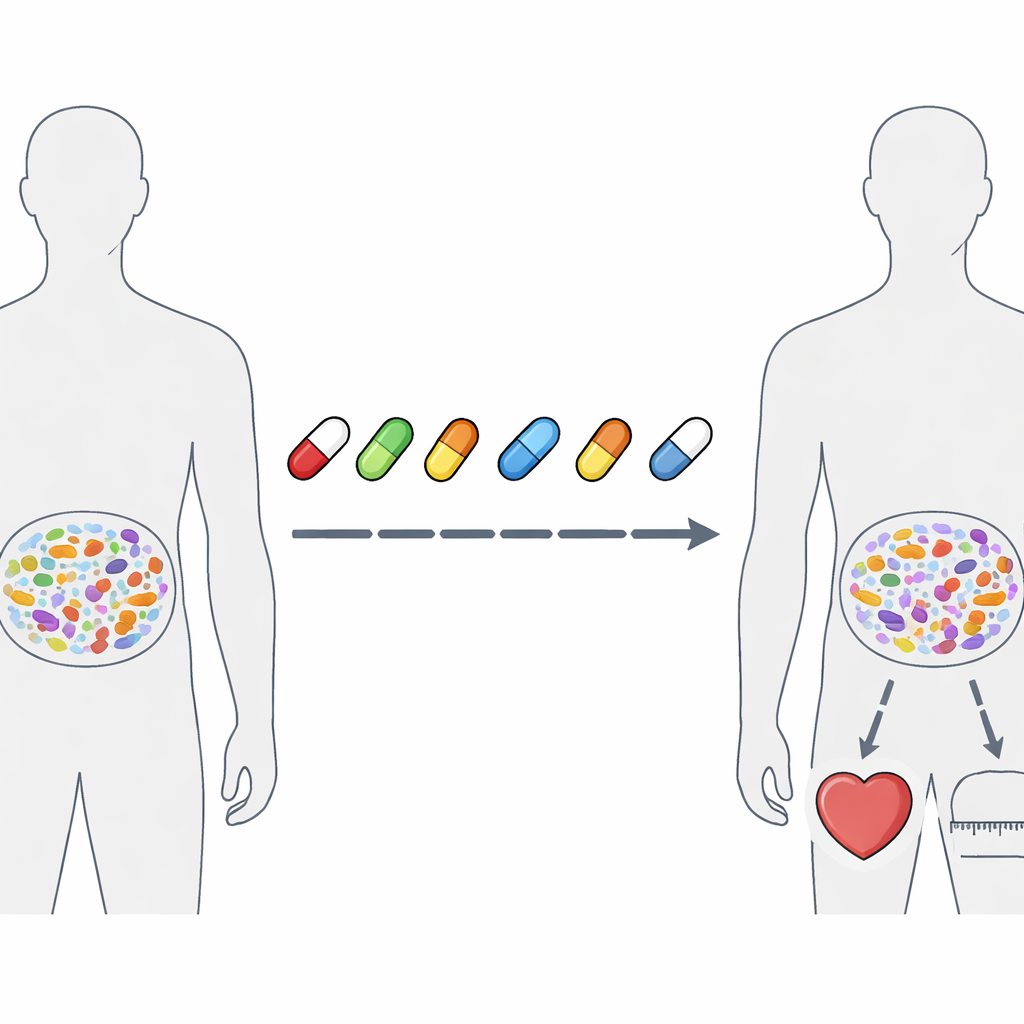
The researchers drew on an unusual combination of data from nearly 15,000 adults in Sweden. On one side, they had detailed records of every prescription antibiotic picked up at pharmacies over an eight-year span. On the other, they had high-resolution genetic profiles of the bacteria living in each person’s stool at the time of the study, capturing more than a thousand different species. Because Sweden tracks all outpatient prescriptions nationally, the team could reconstruct each participant’s antibiotic history and link it directly to the current makeup of their gut microbes.
Antibiotics leave a long footprint
The first finding was that antibiotics are not just a short, sharp shock to our gut ecosystem. People who had taken more courses of antibiotics had fewer kinds of bacterial species in their intestines, a sign of reduced diversity, which has been tied in other work to obesity, diabetes and bowel disease. The strongest impact showed up for antibiotics taken in the year just before sampling. But even drugs taken 1–4 years earlier, and remarkably 4–8 years earlier, were still linked to a less diverse gut community. Using models that tracked the timing of use month by month, the team saw that much of the recovery happens within two years after a course, yet the gut seems to only slowly climb back toward its original richness after that—and often does not fully get there.
Not all antibiotics act alike
When the scientists broke prescriptions into 11 standard drug classes, important differences emerged. Three types—clindamycin, fluoroquinolones and flucloxacillin—stood out as the main drivers of long-lasting change. Each additional course of clindamycin within a year of sampling was linked to dozens fewer detectable species, and these three drugs together accounted for the majority of significant shifts in the abundance of individual species, sometimes affecting 10–15% of all species studied even when given 4–8 years earlier. By contrast, commonly used penicillin V, some extended-spectrum penicillins and the urinary drug nitrofurantoin were tied to far fewer changes. These patterns mirror how widely each drug acts in the body and how it is processed and excreted, suggesting that some antibiotics deliver a particularly strong hit to gut residents.
Links to weight, blood fats and bowel disease
To explore why such shifts might matter for health, the researchers focused on bacterial species that were consistently associated with the three high-impact antibiotic classes. Several microbes that tended to flourish after these drugs have been linked in previous large studies to higher body weight, blood fats and risk of type 2 diabetes. In the largest Swedish cohort, those same species were also associated with higher body mass index, larger waistlines, more triglycerides and higher levels of an inflammation marker in the blood. Other species that tended to dwindle after antibiotics were associated with leaner bodies and lower inflammation. The team also examined species previously tied to colorectal cancer and inflammatory bowel disease, finding that antibiotic use, especially clindamycin, often reduced species that are normally depleted in these gut disorders—supporting earlier reports that heavy antibiotic use may raise the risk of such diseases.
What this means for everyday antibiotic choices
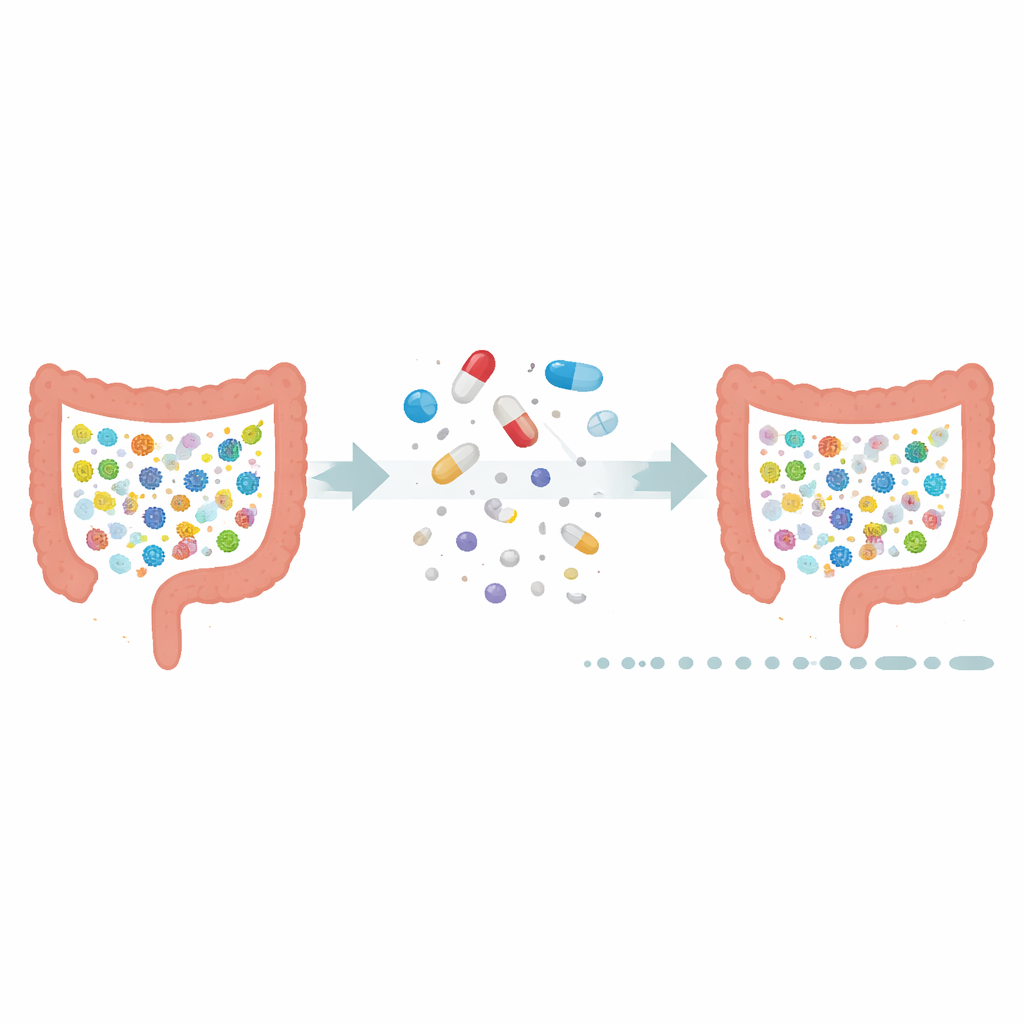
For the average person, the message is not to avoid antibiotics when they are genuinely needed—they remain life-saving drugs. Instead, this large-scale study underscores that each course can leave a long-lived imprint on the gut’s microbial landscape, sometimes persisting for more than four years, and that some antibiotic types are far harsher on helpful gut residents than others. These findings reinforce efforts in medicine to prescribe antibiotics more cautiously and to favor options that spare the gut ecosystem when appropriate. In short, the pills you take for an infection today may still be echoing in your gut years from now, subtly nudging your microbial partners—and possibly your future health—in new directions.
Citation: Baldanzi, G., Larsson, A., Sayols-Baixeras, S. et al. Antibiotic use and gut microbiome composition links from individual-level prescription data of 14,979 individuals. Nat Med 32, 1351–1361 (2026). https://doi.org/10.1038/s41591-026-04284-y
Keywords: antibiotics, gut microbiome, microbial diversity, long-term effects, cardiometabolic health