Clear Sky Science · en
Wind-triggered Antarctic sea-ice decline preconditioned by thinning Winter Water
Why shrinking Antarctic sea ice matters
Antarctic sea ice once seemed oddly resilient in a warming world, even reaching record highs in the early 2010s. That picture flipped dramatically when the ice plunged to record lows in 2016 and has stayed low ever since. This study asks what set the stage for that sudden change and shows that the answer lies not only in the winds and air above the ice, but also in slow, hidden changes in the waters beneath it.
A hidden shield beneath the ice
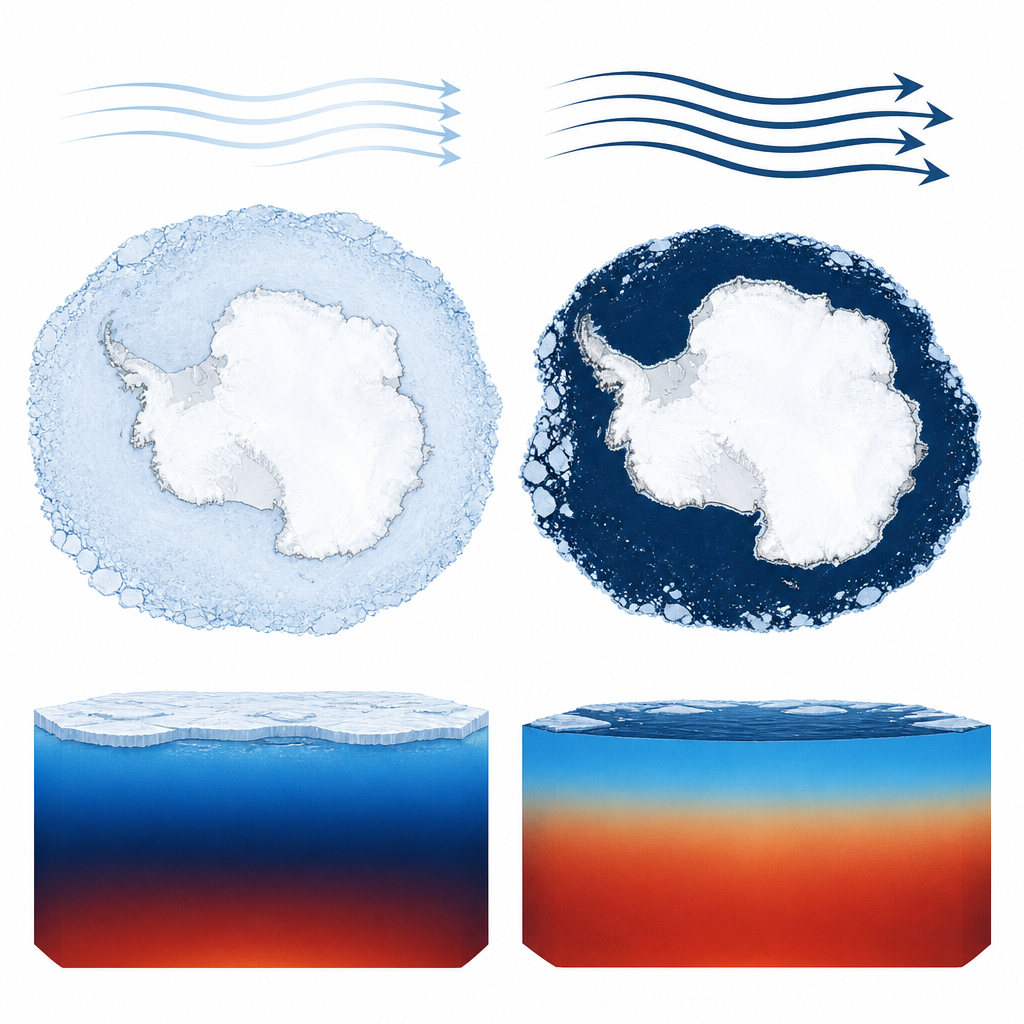
Under the icy surface of the Southern Ocean, layers of water of different temperatures and saltiness stack up like a layered cake. One of these layers, called Winter Water in technical terms, is a cold band that usually sits between the surface and deeper, warmer water. For years it acted like a shield, helping keep the warmth below from reaching sea ice at the surface. The authors used about 110,000 ocean profiles collected by floats, ships and even tagged marine mammals between 2005 and 2022 to track how this shield changed over time.
Slow changes before a sudden shift
From 2005 to 2015, while satellite records showed Antarctic sea ice area growing, the ocean beneath was quietly rearranging itself. The cold shielding layer thinned by about one fifth as its lower boundary crept upward. At the same time, the deeper water just below became slightly warmer and saltier and moved closer to the surface. This increased the contrast in temperature between the shield and the warm water underneath, encouraging more gradual mixing across the boundary. The result was an ocean primed so that a strong push from above could suddenly connect deep heat to the surface.
The year the winds took over
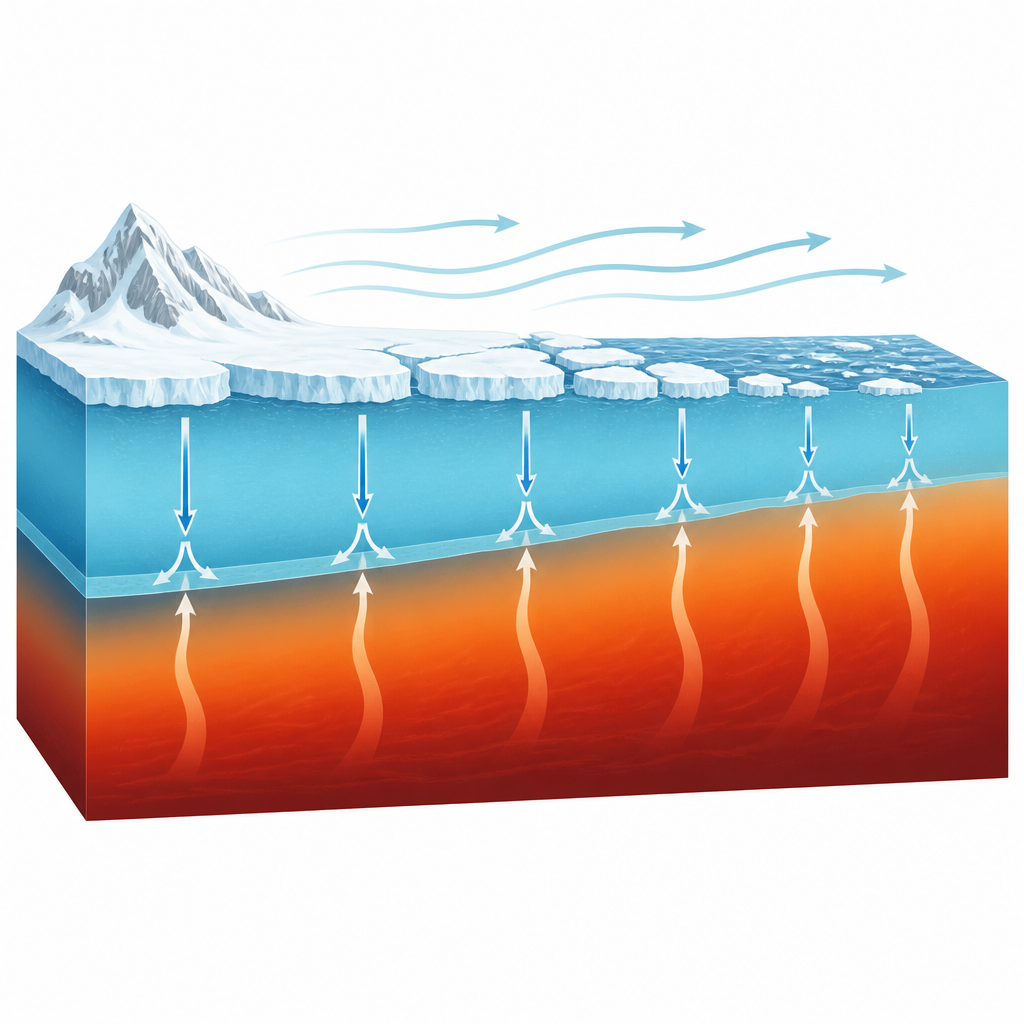
That push arrived in 2015, when unusually strong winds swept across the seasonally ice-covered Southern Ocean. These winds stirred the upper ocean much more vigorously than usual, overpowering the stabilizing effect of lighter surface waters. The enhanced mixing punched through the already thinned shielding layer, drawing warm, salty water up into the surface layer where sea ice forms and melts. Estimates of the upward heat flow suggest it was high enough to melt several extra centimeters of ice over wide areas and to slow the normal wintertime growth of new ice.
A new state of ice and ocean
Once this burst of mixing broke down the layered structure, the upper 300 meters of the ocean grew warmer and its salt patterns changed in a way that kept the water less stably layered. The protective barrier beneath the surface did not fully rebuild. Instead, the upper ocean remained more directly connected to the warmer interior, allowing continued leakage of heat upward. In regions where the warm water layer had moved closest to the surface before 2015, sea ice cover became persistently lower after 2015, hinting that the relationship between ocean and ice had fundamentally changed.
What this means for the future
The study concludes that the recent collapse of Antarctic sea ice was not simply a story of one windy year. Rather, long-term thinning of the subsurface cold layer preconditioned the ocean for rapid ice loss, and the strong winds of 2015 acted as the trigger that exposed this hidden vulnerability. If such ocean preconditioning continues, future bursts of strong winds could keep Antarctic sea ice in a low and more variable state, with wide-ranging consequences for climate, ocean circulation and polar ecosystems.
Citation: Spira, T., du Plessis, M., Haumann, F.A. et al. Wind-triggered Antarctic sea-ice decline preconditioned by thinning Winter Water. Nat. Clim. Chang. 16, 583–590 (2026). https://doi.org/10.1038/s41558-026-02601-4
Keywords: Antarctic sea ice, Southern Ocean, ocean warming, wind-driven mixing, climate change