Clear Sky Science · en
A method for screening anthocyanin-protective yeast based on mulberry anthocyanins and its application
Why the color of your berry wine matters
Deep purple fruit wines owe their striking color—and many of their health benefits—to natural pigments called anthocyanins. Unfortunately, these pigments often break down during fermentation, leaving wines paler and less rich in protective plant compounds. This study explores an unexpected ally in the fight to keep that vivid color and antioxidant power: carefully chosen yeast strains that can help preserve anthocyanins instead of destroying them.
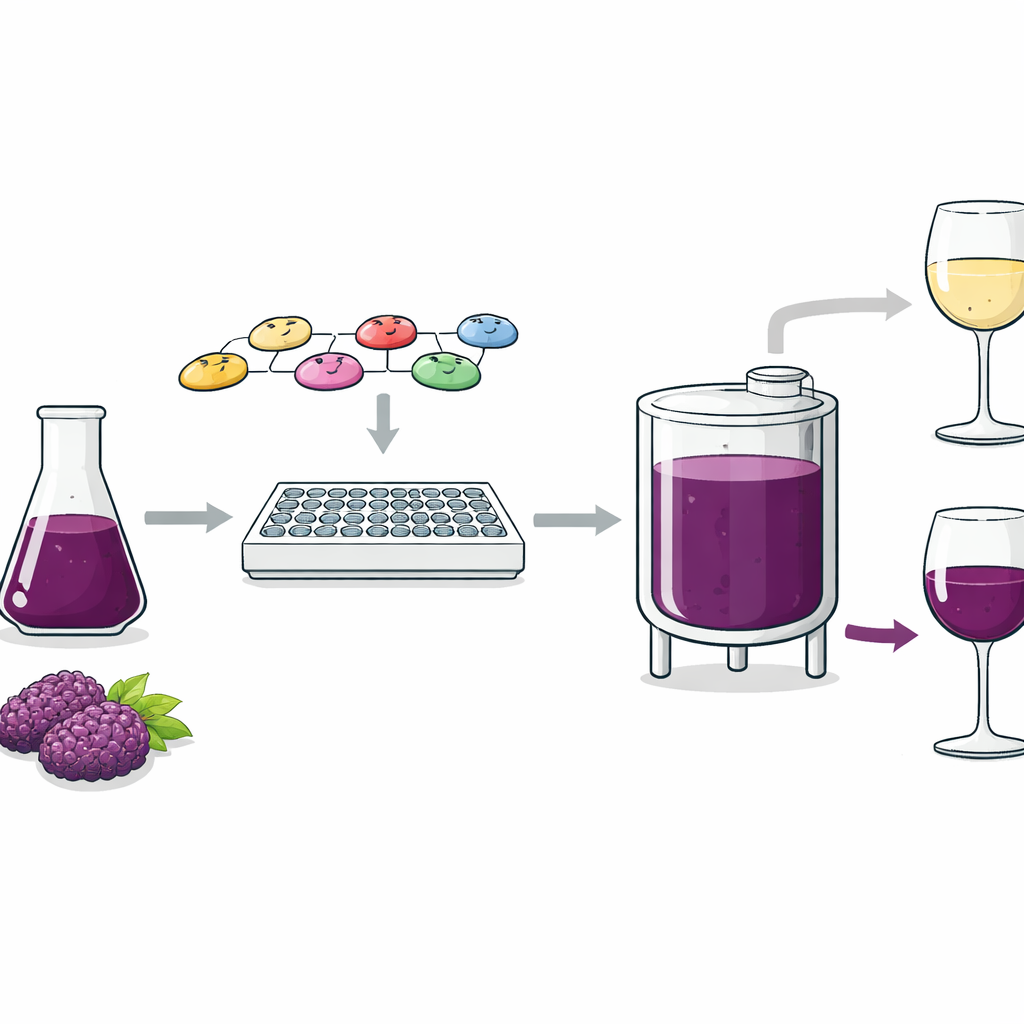
From wild fruits to helpful microbes
The researchers began by collecting yeasts from the surfaces of fruits such as mulberries, grapes, peaches, plums, and mangoes in southern China. These wild yeasts were first checked to be sure they could tolerate the sugary, acidic, and alcoholic conditions typical of fruit wine fermentation. The team then designed a high-throughput test using tiny wells in a microplate filled with mulberry juice. Each well hosted a different yeast strain, and after several days of fermentation the scientists used light absorbance at a red wavelength (520 nm) as a quick way to estimate how much mulberry color pigment remained.
A quick test that predicts real-world results
This "microplate fermentation–spectral" method allowed the team to categorize yeasts into high, medium, or low color-protective groups based on how well they retained the deep hue of mulberry juice. To see whether the miniaturized test reflected what happens in practice, they repeated fermentations in larger 500 mL vessels. The relationship between color retention in the small plates and in the larger fermentations was very strong, meaning the rapid screening method reliably predicts which yeasts will protect anthocyanins during real wine production. This offers a practical tool for producers to sift through hundreds of candidate strains without setting up full-scale fermentations for each one.
Meet the color-friendly yeasts
Five standout strains emerged from this search, all belonging to the species Hanseniaspora opuntiae, a non-traditional wine yeast that has only recently come under serious study. When these strains were used to ferment mulberry wine on their own, they behaved quite differently from a standard commercial brewing yeast, Saccharomyces cerevisiae. The commercial yeast fermented more vigorously, produced more alcohol, and led to a much greater loss of anthocyanins. In contrast, the selected H. opuntiae strains fermented more gently, left more residual sugar (yielding sweeter, lower-alcohol wines), and preserved substantially more of the original mulberry pigments.
Richer color and stronger plant power
In mulberry wines produced with the protective yeasts, total anthocyanin levels and key individual pigments remained far higher. One strain in particular, called DYG5, retained about half of the total anthocyanins, more than doubling the retention seen with the commercial yeast. It was especially effective at preserving cyanidin-3-glucoside, a major mulberry pigment, increasing its retention more than tenfold compared with the standard strain. These pigment-rich wines had deeper red-purple color values and smaller visible color changes, and they also contained more total phenols and flavonoids—families of compounds closely linked to antioxidant activity.
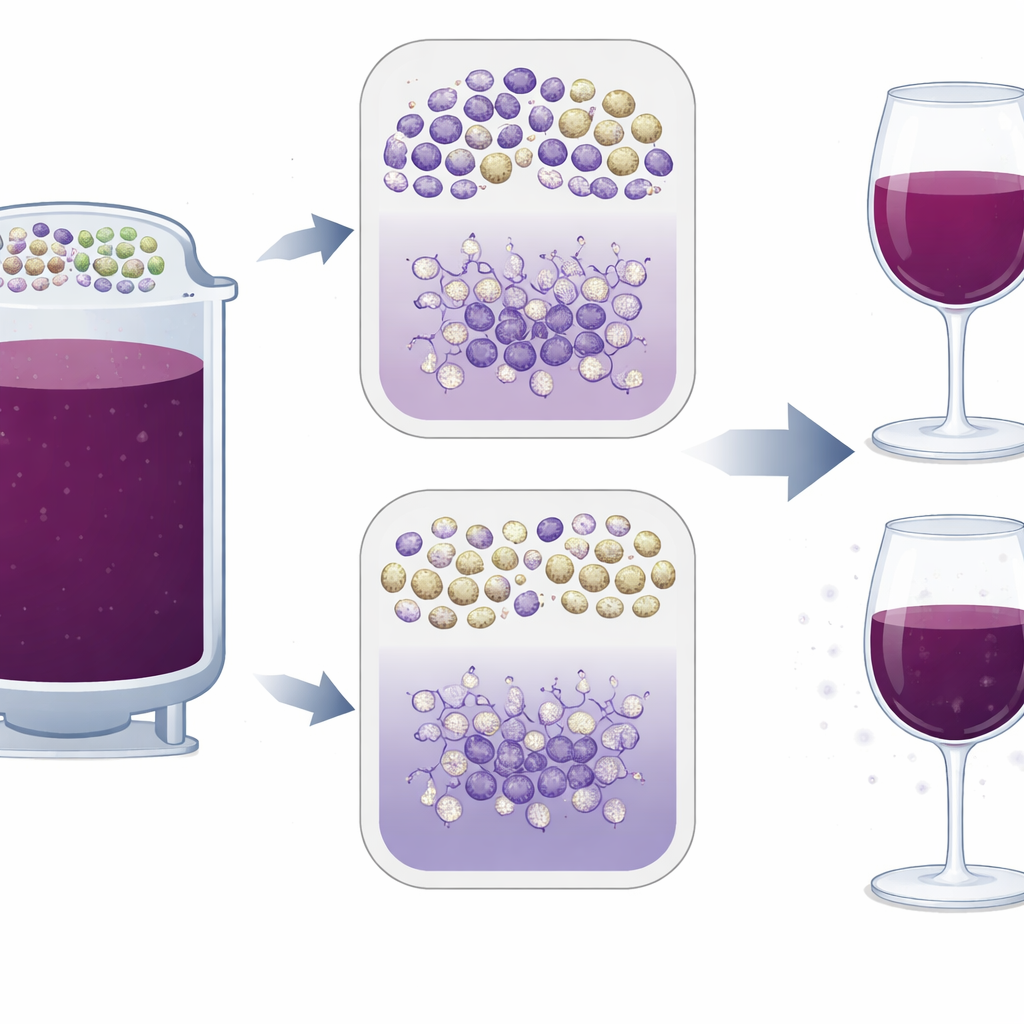
Health-focused wines with a lighter buzz
The benefits were not only visual. Wines made with the anthocyanin-protective yeasts showed stronger performance in several laboratory tests of antioxidant capacity, again with DYG5 leading the pack. Statistical analyses revealed that higher pigment and color intensity went hand in hand with lower alcohol and higher residual sugar, suggesting these yeasts are well suited for crafting low-alcohol, antioxidant-rich fruit wines tailored to health-conscious consumers who value flavor and function over a strong alcoholic punch.
What this means for future fruit wines
By creating and validating a fast, reliable way to spot yeast strains that preserve anthocyanins, this work opens a new route to naturally colorful, nutrient-dense fruit wines. Instead of relying mainly on process tweaks or additives, winemakers can now select yeasts that are intrinsically gentler on delicate pigments. The study’s promising Hanseniaspora opuntiae strains, especially DYG5, show that it is possible to maintain vibrant color and antioxidant power while producing lower-alcohol mulberry wine, pointing toward a new generation of more appealing and potentially more health-promoting fruit wines.
Citation: Yin, X., Shen, L., Huang, L. et al. A method for screening anthocyanin-protective yeast based on mulberry anthocyanins and its application. npj Sci Food 10, 115 (2026). https://doi.org/10.1038/s41538-026-00766-y
Keywords: mulberry wine, anthocyanins, yeast fermentation, Hanseniaspora opuntiae, antioxidant-rich beverages