Clear Sky Science · en
Unraveling Tempeh through omics: a scoping review of fermentation pathways and functional health benefits
A Traditional Food with Modern Science Appeal
Tempeh, the familiar soybean cake from Indonesian markets, is turning into a star of modern nutrition science. Far beyond being a cheap source of protein, it is now seen as a living laboratory that shows how microbes can transform ordinary beans into food that may support heart health, gut function, and better nutrition. This review pulls together cutting-edge “omics” research—big-data tools that read genes, proteins, and metabolites—to explain how the molds and bacteria in tempeh work, what beneficial compounds they create, and how this knowledge could guide the design of future functional foods.
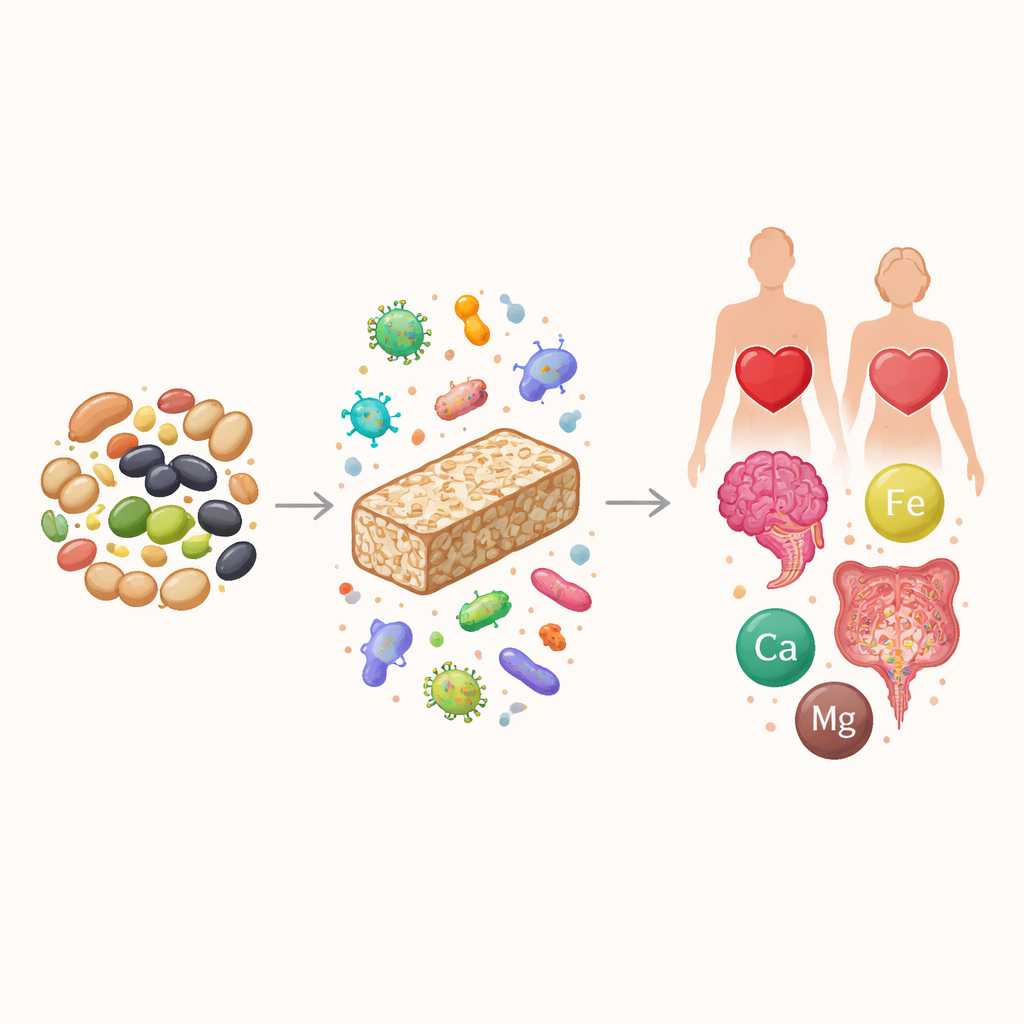
From Simple Beans to a Fermented Powerhouse
Tempeh starts as soaked and cooked soybeans, sometimes mixed with other legumes such as mung beans, cowpeas, jack beans, or winged beans. A starter containing Rhizopus mold is added, and during solid-state fermentation the beans knit into a firm, sliceable cake with a nutty flavor. Unlike many other soy ferments that use long, multi-stage processes or a few specialized microbes, tempeh hosts a rich community: filamentous Rhizopus molds, lactic acid bacteria, Bacillus species, and yeasts. Omics studies show that this community is both stable and flexible—Rhizopus almost always dominates, while the mix of bacteria changes with the type of bean, location, and processing methods. This combination makes tempeh an attractive model for studying how microbes reshape foods and, ultimately, influence human health.
Microbes as Tiny Factories Inside the Cake
The review highlights that the health potential of tempeh comes from the enzymes and metabolites generated during fermentation, not from beans alone. Rhizopus molds secrete proteases, amylases, lipases, and phytases that break large proteins, carbohydrates, fats, and mineral-binding phytate into more accessible forms. Lactic acid bacteria and Bacillus species add their own enzymes, including glutamate decarboxylase and β-glucosidase, and yeasts contribute carbohydrases and esterases. Together, these microbes release short protein fragments (peptides), increase free amino acids, convert soy isoflavones into more absorbable forms, reduce antinutritional phytate, and generate compounds such as γ‑aminobutyric acid (GABA) and folate. Multi-omics approaches link specific microbes and genes to these transformations, mapping which organisms drive which beneficial changes.
Pathways from Fermented Food to Human Health
By comparing many studies, the authors outline several major “mechanistic pathways” that connect tempeh fermentation to possible health effects. Protease activity from Rhizopus and bacteria reliably produces peptides that, in test systems and animal models, can block angiotensin-converting enzyme (ACE) involved in blood pressure control and can neutralize reactive oxygen molecules. β‑Glucosidase activity converts isoflavone glycosides into aglycones like genistein and daidzein that are better absorbed and can influence antioxidant and hormone-related signaling in the body. Phytases lower phytate levels, freeing iron, zinc, and calcium for absorption. GABA and folate produced by lactic acid bacteria hint at roles in blood pressure regulation and one‑carbon metabolism. Although not made directly during fermentation, the fiber and resistant proteins in tempeh feed gut microbes after eating, encouraging production of short-chain fatty acids that support gut barrier function and immune balance.
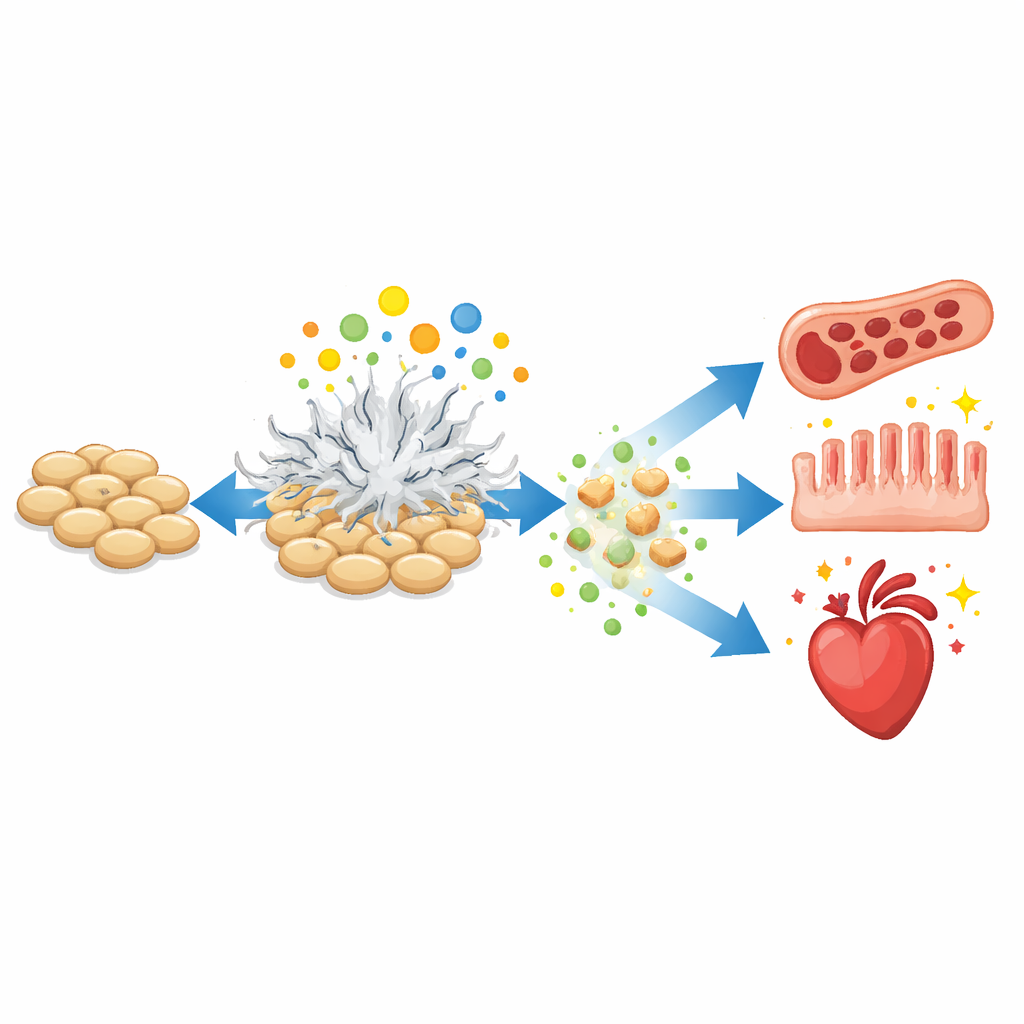
What We Know, What We Don’t Yet Know
Not all proposed benefits are equally well supported. The pathways involving bioactive peptides and isoflavone aglycones have the strongest and most consistent evidence, with repeated lab and animal data and some human work on soy isoflavones in general, though not always on tempeh specifically. Phytate breakdown and improved mineral access are well demonstrated in vitro and in animals, but human absorption studies are still missing. GABA and folate formation are clearly seen in fermentation tanks, yet the amounts that actually matter in daily diets remain uncertain. Earlier claims that tempeh is a rich source of vitamin B12 are now questioned: omics analyses reveal mainly “look‑alike” corrinoid molecules that may not function as true B12 in humans. Flavor compounds from yeasts, while important for enjoyment and acceptance, appear to add little direct health impact compared with peptides and isoflavones.
From Village Staple to Future Functional Food
In conclusion, this review portrays tempeh as both cultural heritage and a promising blueprint for future functional foods. By using omics tools to connect microbes, enzymes, and metabolites with nutritional outcomes, researchers can now see how adjusting starter strains, fermentation time, temperature, or choice of legume might deliberately enhance certain health-promoting compounds. To move from promising lab data to practical dietary advice, the authors stress the need for standard fermentation protocols and well-designed human studies. If these steps are taken, tempeh could evolve from a regional staple into a globally recognized functional food that helps support heart health, better mineral nutrition, gut balance, and potentially even brain and stress-related well-being.
Citation: Yarlina, V.P., Tandra, J.L., Indiarto, R. et al. Unraveling Tempeh through omics: a scoping review of fermentation pathways and functional health benefits. npj Sci Food 10, 122 (2026). https://doi.org/10.1038/s41538-026-00754-2
Keywords: tempeh fermentation, functional foods, gut microbiome, bioactive peptides, soy isoflavones