Clear Sky Science · en
Faecalibacterium prausnitzii, depleted in the Parkinson’s disease microbiome, improves motor deficits in α-synuclein overexpressing mice
Why Gut Bacteria Matter for Parkinson’s
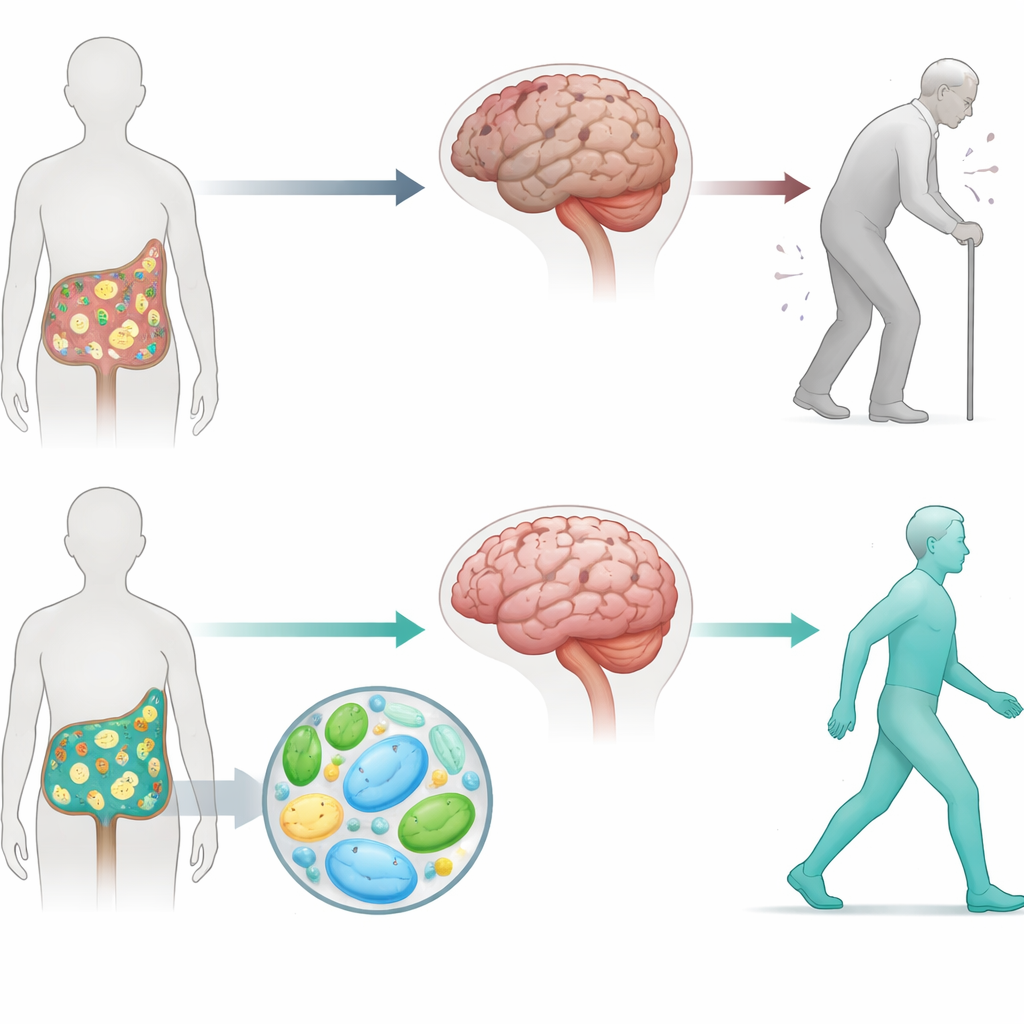
Parkinson’s disease is usually thought of as a brain disorder that causes tremors, stiffness, and trouble moving. Yet many people with Parkinson’s also struggle with long‑standing constipation and other gut problems. This study asks a simple but powerful question: if certain helpful gut bacteria are missing in Parkinson’s, could putting them back ease symptoms? Using a mouse model of the disease, the researchers home in on one particular bacterium and test whether it can improve movement, gut function, and even changes in the brain linked to Parkinson’s.
Missing Helpers in the Gut
Over the past decade, many studies have shown that people with Parkinson’s have a different mix of gut microbes than people without the disease. In particular, bacteria known for calming inflammation and producing beneficial short‑chain fatty acids tend to be depleted. One of the most consistently reduced species is Faecalibacterium prausnitzii, which is normally abundant in healthy intestines and well known for its soothing effects on the immune system. The authors reasoned that restoring such missing “good neighbors” might help rebalance the gut environment and, in turn, influence the course of Parkinson’s‑like disease.
Testing a Microbe Cocktail in Parkinson’s‑Like Mice
To explore this idea, the team used Thy1‑ASO mice, which overproduce the human protein alpha‑synuclein and develop movement problems, gut slowing, and small clumps of this protein in the brain—features that resemble human Parkinson’s. First, the researchers created an eight‑member mix of human gut bacteria that are typically reduced in patients, and delivered it to the mice by mouth for several weeks. Compared with untreated animals, mice receiving this microbial cocktail showed better performance on movement tests that measure fine motor control and hind‑limb rigidity. They also passed stool more easily and more quickly, indicating relief of constipation‑like symptoms. In brain tissue, one disease‑linked form of alpha‑synuclein was lowered in a key movement‑related region, suggesting that the treatment influenced underlying pathology, not just behavior.
One Star Bacterium Stands Out
The scientists then asked whether a single bacterial species could carry most of these benefits. They chose Faecalibacterium prausnitzii, given its strong anti‑inflammatory reputation and its repeated disappearance from the guts of people with Parkinson’s in many independent studies. When mice received only this bacterium, their improvements were even more striking. They performed better on a range of coordination tasks, from crossing a narrow beam to removing a small adhesive from the nose. Their gut function improved as well, with faster passage of a test bead through the colon and more normal‑looking stool. In the brain’s movement center, the substantia nigra, the amount of aggregated alpha‑synuclein was reduced, tying the gut treatment to changes in a hallmark brain feature of Parkinson’s.
How a Gut Microbe Sends Calming Signals
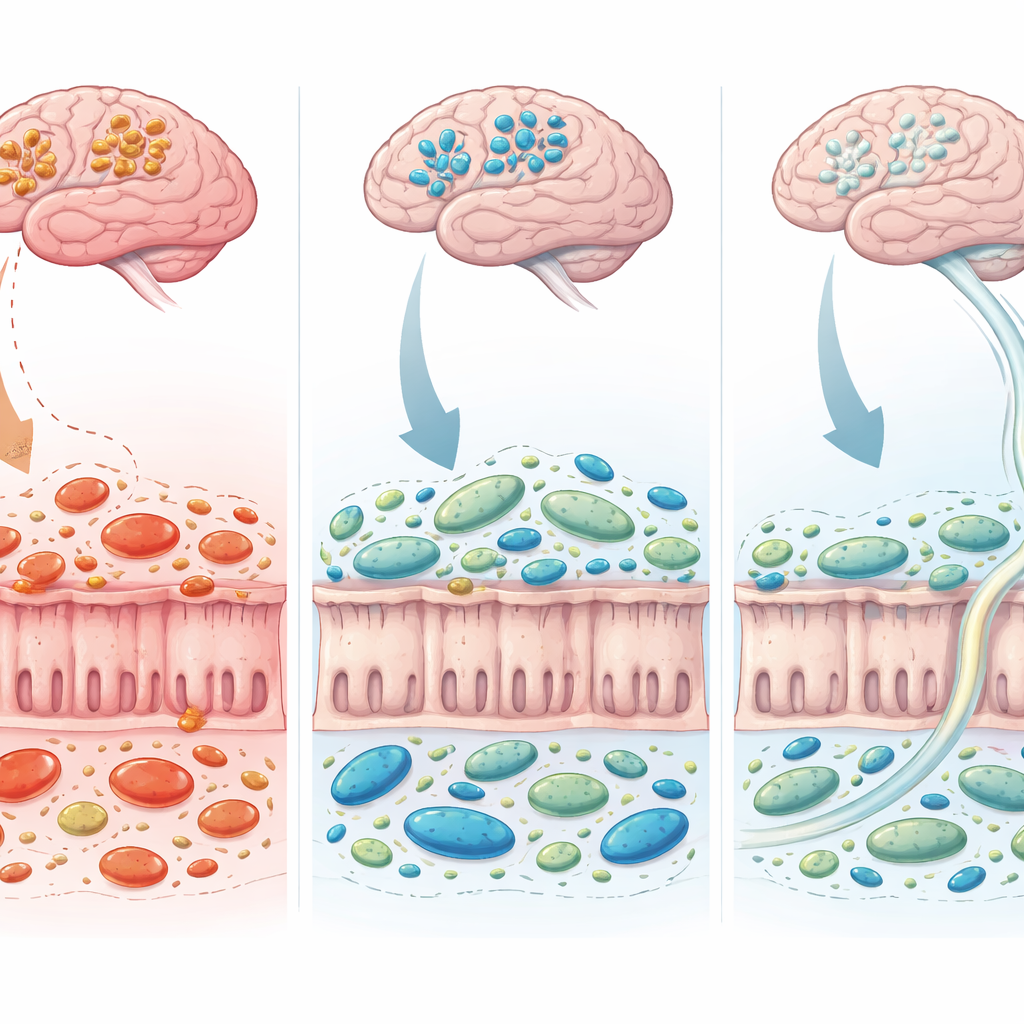
Looking under the hood, the team found that F. prausnitzii subtly reshaped the mouse gut microbiome so that it more closely resembled that of healthy animals, but this shift was modest. Statistical analyses suggested that the microbe’s benefits were driven mainly by its direct effects rather than by wholesale remodeling of the broader microbial community. In gut‑related lymph nodes, the number of regulatory T cells—immune cells that help tamp down inflammation—was increased, and levels of the anti‑inflammatory signal IL‑10 rose in the colon. Gene‑activity measurements from the large intestine showed that pathways involved in tissue repair, barrier strengthening, and immune balance were boosted, while several genes previously linked to Parkinson’s‑related inflammation moved toward a healthier pattern.
What This Could Mean for Future Treatments
Taken together, the results show that reintroducing a single missing gut bacterium, Faecalibacterium prausnitzii, can ease movement problems, improve constipation‑like symptoms, and lessen disease‑like protein buildup in the brains of Parkinson’s‑model mice. While these findings are early and limited to animals, they support the idea that the gut microbiome is not just a bystander but an adjustable factor in Parkinson’s‑related biology. In the long run, carefully designed “next‑generation probiotics” based on bacteria that are specifically depleted in patients—rather than off‑the‑shelf yogurt strains—could become part of more targeted strategies to manage both motor and non‑motor symptoms of Parkinson’s disease.
Citation: Moiseyenko, A., Antonello, G., Schonhoff, A.M. et al. Faecalibacterium prausnitzii, depleted in the Parkinson’s disease microbiome, improves motor deficits in α-synuclein overexpressing mice. npj Parkinsons Dis. 12, 94 (2026). https://doi.org/10.1038/s41531-026-01287-x
Keywords: Parkinson’s disease, gut microbiome, probiotics, Faecalibacterium prausnitzii, alpha-synuclein