Clear Sky Science · en
POU1F1 induces cancer stem cell-like traits in breast cancer cells by IL-6/JAK2/STAT3 activation and enrichment of ALDH
Why this research matters
Many breast cancer patients respond well to initial treatment but still face the risk that the disease will return or spread years later. Scientists increasingly suspect that a small group of especially stubborn tumor cells, sometimes called cancer stem like cells, help cancers survive drugs and radiation and seed new tumors. This study explores how a single protein inside breast cancer cells can switch on those hardy cells and points to a way doctors might one day shut that switch off.
The hidden troublemakers inside tumors
Not all cancer cells are equal. A minority behave a bit like stem cells, able to renew themselves and start new tumors after most other cells are wiped out. In breast cancer, these cells often carry a certain combination of surface tags and an enzyme called ALDH that help scientists spot them. They grow well as tiny floating spheres in the lab, resist chemotherapy and radiotherapy, and are very good at igniting tumors in animals. Because of these traits, they are prime suspects behind relapse and metastasis.
A master switch called POU1F1
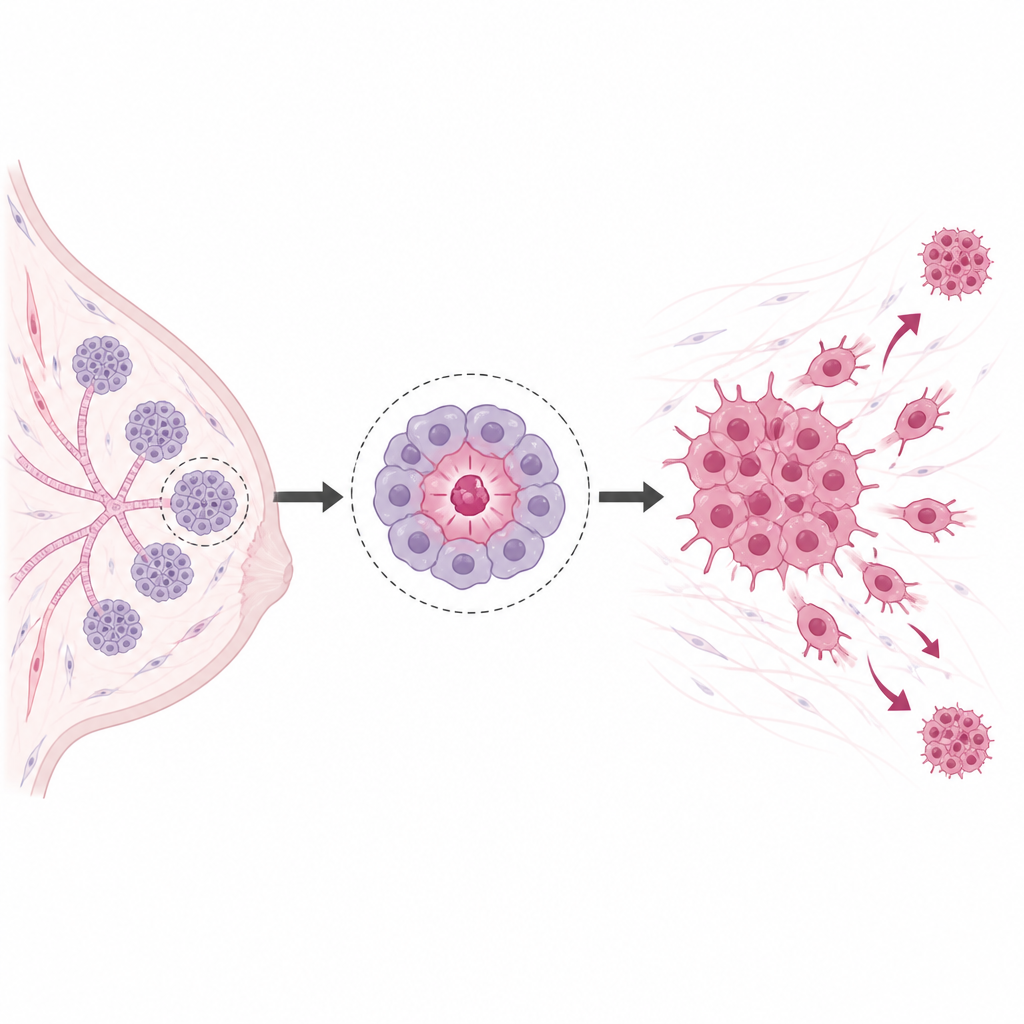
The researchers focused on a gene named POU1F1, long known for its role in the pituitary gland but also found at higher levels in breast tumors than in normal breast tissue. When they forced breast cancer cells of the common luminal A type to produce extra POU1F1, the cells changed their identity. They lost markers linked to more mature cells and gained markers tied to stem like behavior, including a sharp rise in ALDH activity. The cells formed more colonies, produced denser three dimensional spheres, and shifted their energy use toward sugar burning, a pattern often seen in aggressive cancers. When POU1F1 levels were lowered in another breast cancer cell line that naturally makes a lot of it, these stem like features fell off.
The most dangerous subpopulation
Within the POU1F1 boosted cells, the team then isolated a smaller group with especially high ALDH. This subpopulation moved and invaded more readily in lab tests and was more likely to spread to organs such as the lung, brain, and liver in mice. When very small numbers of cells were injected into the mammary tissue of immune deficient mice, those with high POU1F1 and high ALDH formed tumors far more often than the other groups. These tumors showed more cell division, higher levels of a growth marker called Ki67, and stronger staining of the CD44 marker linked to cancer stem like behavior. Overall, mice carrying these cells lived for a shorter time even when they received hormone treatment and radiation designed to mimic patient care.
A signaling chain that fuels resistance
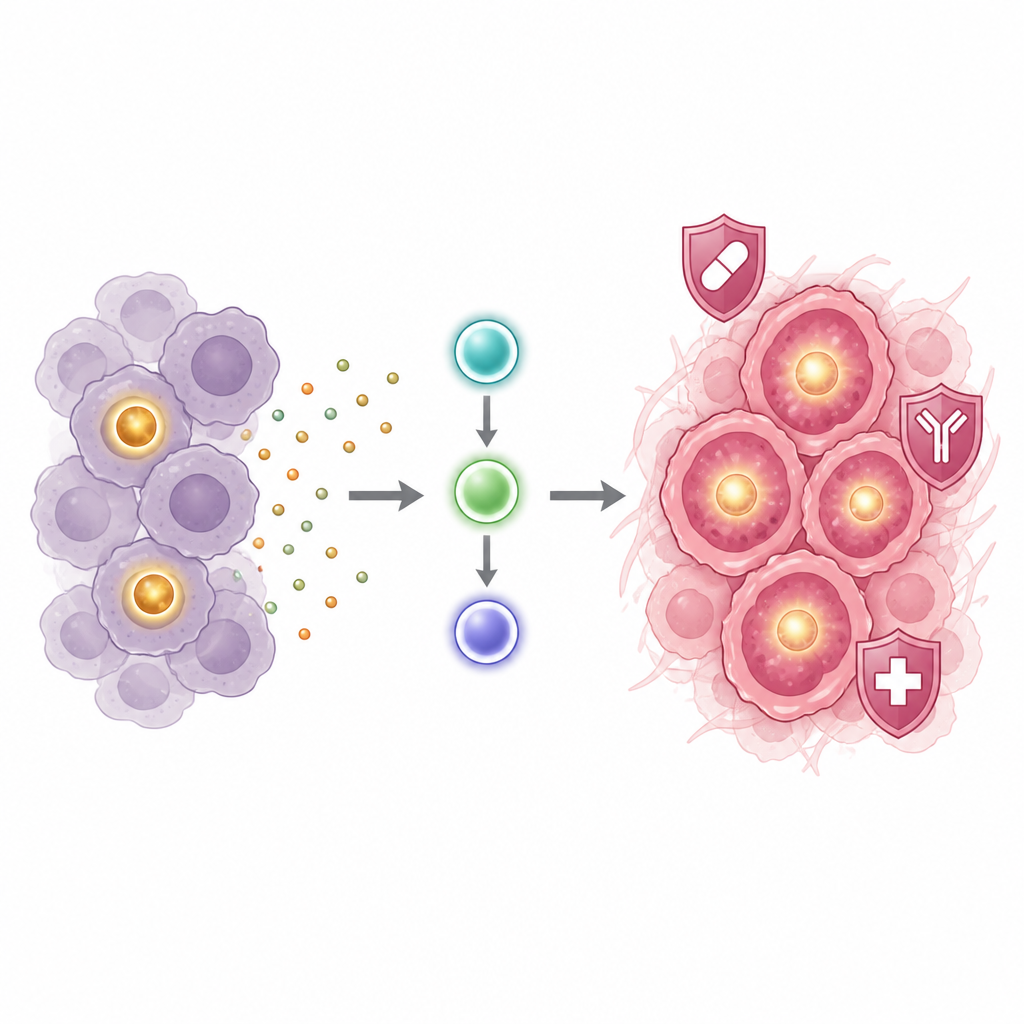
To understand how POU1F1 drives this dangerous state, the researchers looked at which genes and pathways turned on when POU1F1 levels rose. They found strong activation of an inflammatory chain involving the signal IL 6 and the relay proteins JAK2 and STAT3. Cells with extra POU1F1 secreted more IL 6 and related signals, and showed higher activity of JAK2, STAT3, and other growth pathways. Blocking this chain with drugs that inhibit Janus kinases, or with an antibody that blocks the IL 6 receptor, reduced ALDH levels and cut both colony and mammosphere formation. In simple terms, POU1F1 seems to flip on an IL 6 driven circuit that in turn builds and maintains the treatment resistant, stem like pool of breast cancer cells.
What this could mean for patients
By linking POU1F1 to a well known inflammatory signaling route and to the rise of ALDH rich, stem like breast cancer cells, this work helps explain why tumors with high POU1F1 and ALDH are tied to poorer patient outcomes. The results suggest that, in tumors where this protein is abundant, medicines that block the IL 6 JAK2 STAT3 pathway might weaken the most resilient cancer cells and lower the chance of relapse. While more research and clinical testing are needed, the study maps out a clear chain of events from a single gene to treatment resistance and points to drug targets that already exist.
Citation: Avila, L., Seoane, S., Rodriguez-Gonzalez, S. et al. POU1F1 induces cancer stem cell-like traits in breast cancer cells by IL-6/JAK2/STAT3 activation and enrichment of ALDH. npj Breast Cancer 12, 70 (2026). https://doi.org/10.1038/s41523-026-00929-w
Keywords: breast cancer, cancer stem cells, POU1F1, IL-6 JAK2 STAT3, ALDH1A1