Clear Sky Science · en
Phase II trial of anlotinib-chemotherapy combination in pretreated HER2-negative metastatic breast cancer: therapeutic efficacy and proteomic biomarker profiling
Why this study matters to patients and families
For many women with advanced breast cancer, treatment options shrink after the first rounds of therapy stop working. Doctors often turn to standard chemotherapy, which can slow the disease only for a few months. This study explores whether adding an oral targeted drug called anlotinib to chemotherapy can give people with a common type of advanced breast cancer more time before their disease worsens, without causing unbearable side effects. It also looks for blood-based signs that might help predict who benefits most.
A common yet hard-to-treat form of breast cancer
Most breast cancers are classified as HER2-negative, meaning they do not carry extra copies of the HER2 growth signal on their cells. These tumors include hormone receptor–positive cancers and triple-negative breast cancers. In recent years, drugs like hormone pills, CDK4/6 inhibitors, and immunotherapy have improved outcomes in the first round of treatment. But once the cancer spreads and escapes these therapies, people in many parts of the world, including China, still rely mainly on traditional chemotherapy. That approach usually controls the disease for only three to four months, leaving a major gap in care for patients whose cancer has already been treated once or more.
A new combination approach in a phase II trial
The researchers ran a phase II clinical trial in 33 women with HER2-negative metastatic breast cancer whose disease had worsened after at least one prior treatment for metastatic spread. All had good overall health status. Patients received anlotinib—an oral drug that blocks several signals tumors use to grow new blood vessels—together with one of several standard chemotherapy drugs chosen by their doctor. After four to eight cycles, those whose cancer was at least stable moved to a maintenance phase: women with hormone-sensitive tumors continued anlotinib plus hormone therapy, while those with triple-negative disease took anlotinib alone. Treatment continued until the cancer progressed or side effects became unacceptable. 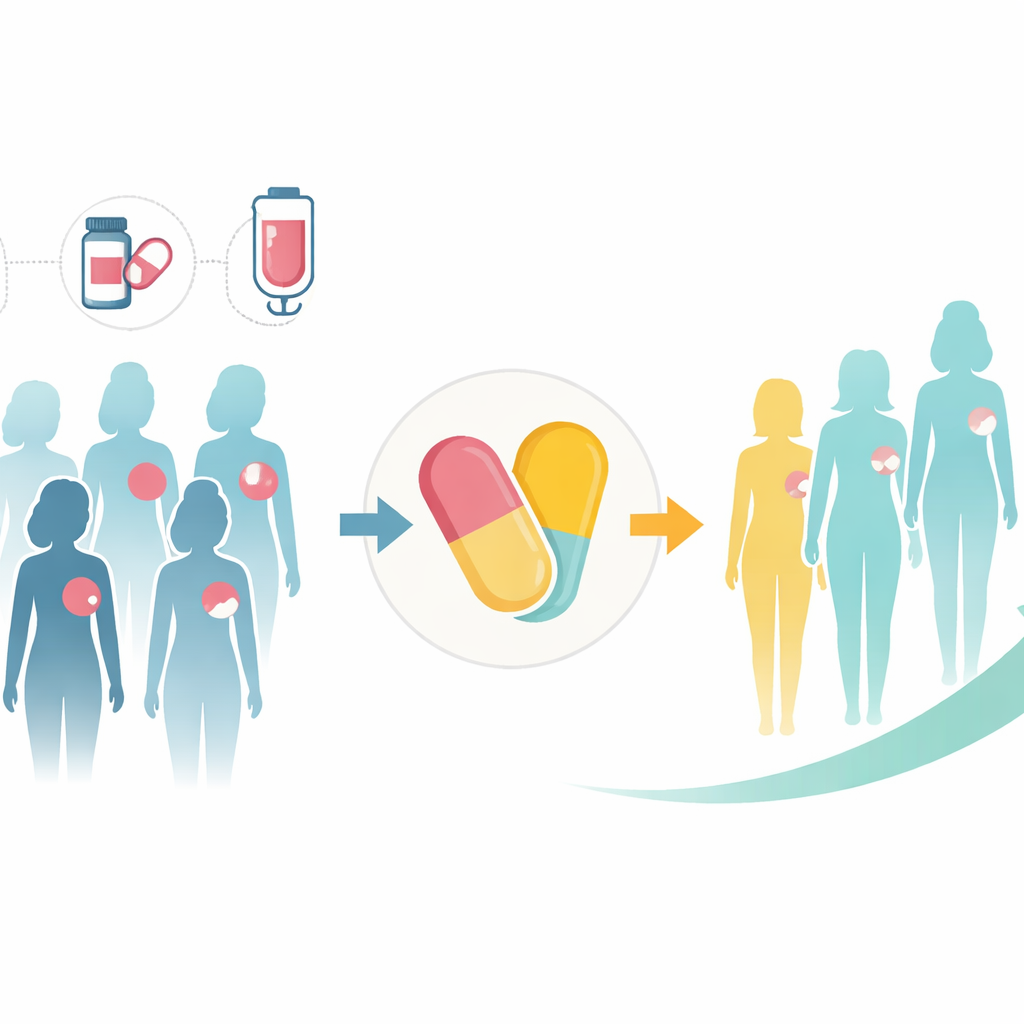
How well the treatment worked
After a median follow-up of just over two years, the time before the cancer grew again—the progression-free survival—was a median of 8.3 months, more than double historical expectations for chemotherapy alone in similar patients. Overall survival reached a median of 22.2 months. About one in three patients had their tumors shrink noticeably on scans, and more than nine in ten at least kept the disease from growing for a period of time. The combination showed activity in both hormone receptor–positive cancers and triple-negative cancers, with the small triple-negative group achieving a particularly long median period before progression. However, the authors caution that this subgroup was small, so these encouraging results need confirmation in larger trials.
Clues from blood proteins about who benefits
To explore why some patients did better than others, the team measured 92 immune- and cancer-related proteins in blood samples taken before treatment. They compared women whose disease progressed quickly with those who enjoyed longer control. Several proteins stood out: higher starting levels of CSF‑1, VEGF, and the immune messengers IL‑6, IL‑10, and IL‑12 were associated with shorter benefit from the combination. These molecules are linked to the growth of blood vessels that feed tumors and to a tumor-friendly, immune-suppressive environment. The findings suggest that a more inflamed and vessel-rich tumor setting at baseline might make cancers less responsive to anlotinib plus chemotherapy, although the study cannot prove cause and effect and did not track how these levels changed over time. 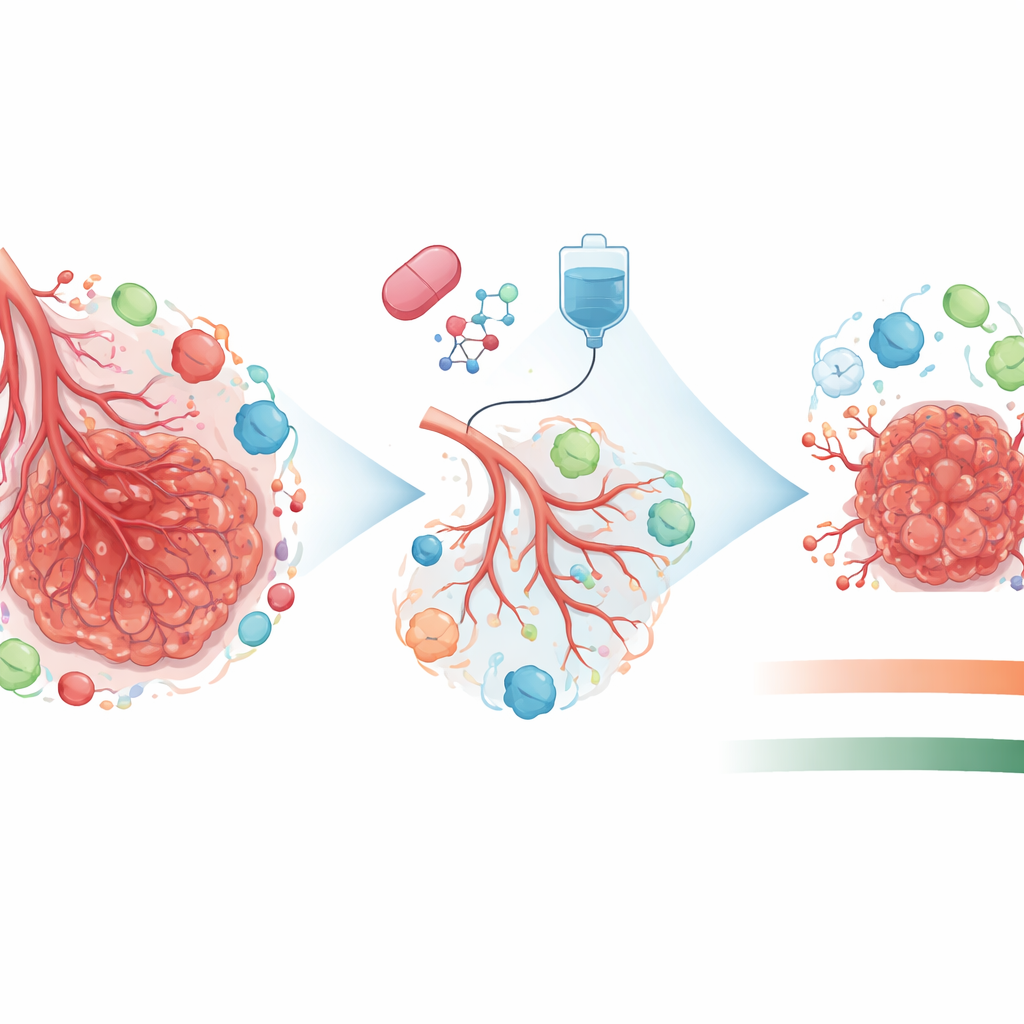
Safety and limits of the study
The side effects seen with the combination were generally manageable and in line with what doctors expect from chemotherapy and blood-vessel–targeting drugs. The most frequent problems were increases in blood fats and sugars, anemia, low white blood cell counts, and mild liver test changes. More serious events such as severe neutropenia and high blood fats occurred in about one in five patients, and some women needed dose reductions of anlotinib. Importantly, no deaths were attributed to the treatment, and no one had to stop all therapy permanently because of side effects. Still, the trial was small, had no comparison group receiving chemotherapy alone, and included only a handful of triple-negative cases, so the exact added value of anlotinib remains uncertain.
What this could mean for future care
For patients with HER2-negative metastatic breast cancer who have already received standard treatments, this early study suggests that adding an oral anti–blood-vessel drug to chemotherapy may offer longer disease control with acceptable safety, especially in settings where newer, costly targeted drugs are not widely available. The blood protein findings hint that simple blood tests might one day help doctors estimate who is more or less likely to benefit from this regimen. The authors are now launching a larger, multicenter trial with more detailed blood monitoring to confirm whether this strategy truly improves survival and to refine biomarker signals that could guide personalized care.
Citation: Xu, T., Gu, Q., Li, S. et al. Phase II trial of anlotinib-chemotherapy combination in pretreated HER2-negative metastatic breast cancer: therapeutic efficacy and proteomic biomarker profiling. npj Breast Cancer 12, 47 (2026). https://doi.org/10.1038/s41523-026-00914-3
Keywords: metastatic breast cancer, HER2-negative, anlotinib, chemotherapy combination, biomarkers