Clear Sky Science · en
NEK8 kinase-mediated lactate increase impairs antitumor immunity decreasing radiotherapy sensitivity in colorectal cancer
Why this research matters
Radiotherapy is a key treatment for colorectal cancer, yet many tumors eventually resist it and spread elsewhere in the body. This study reveals how a hidden metabolic switch inside cancer cells raises levels of a common molecule, lactate, to blunt the body’s immune attack. Understanding this switch points to a new way to help radiation work better and extend its benefits beyond the original tumor site.
A tug-of-war between radiation and the immune system
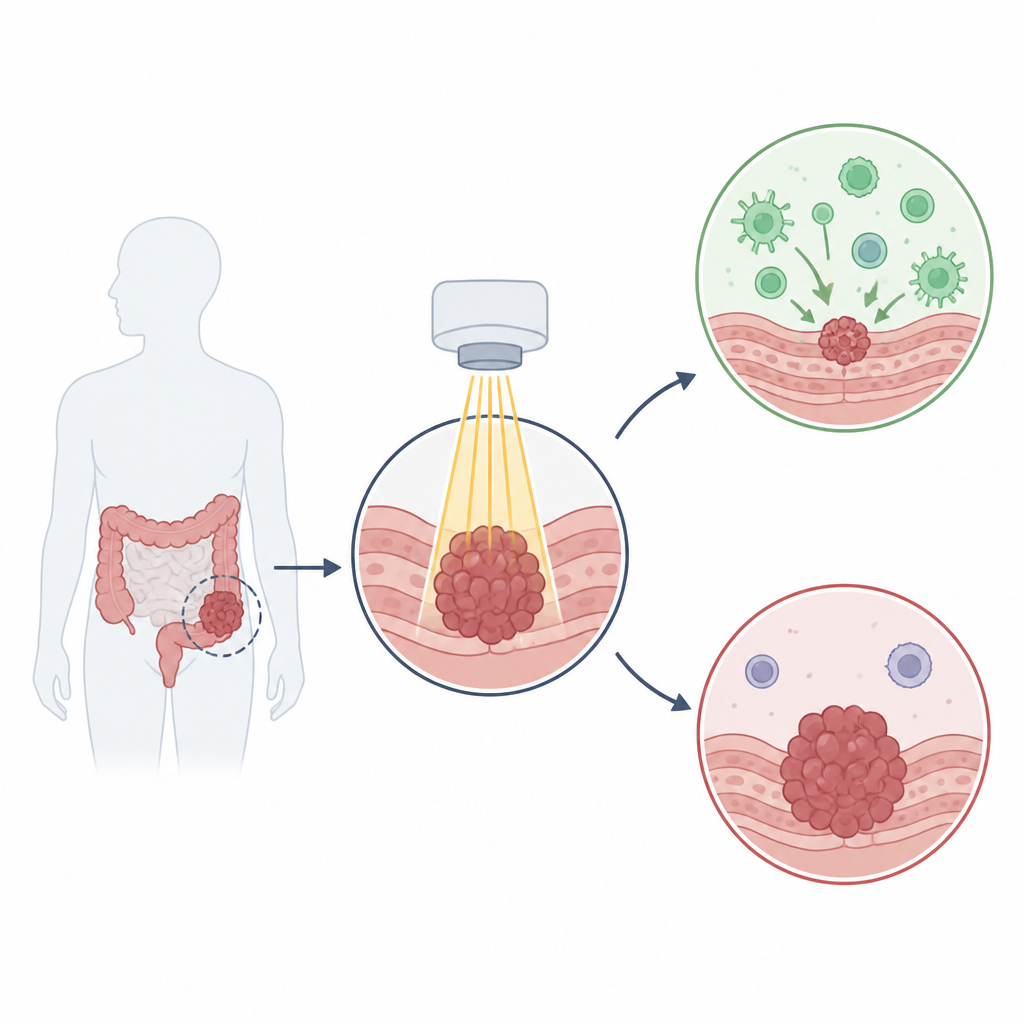
Radiation does more than damage tumor DNA. When cancer cells are hit, they release signals that can rally immune cells, especially killer CD8 T cells, to recognize and destroy tumors. In some patients, this immune activation even shrinks tumors that were never directly irradiated, an effect called abscopal response. However, in colorectal cancer this long-distance benefit is rare, and many tumors either resist radiation from the start or become resistant over time. The authors suspected that the mix of immune cells and metabolites inside tumors plays a decisive role in tipping the balance toward cure or relapse.
Finding a key culprit enzyme in resistant tumors
Using mouse models of colorectal cancer, the team repeatedly exposed tumors to radiation until they became resistant, then compared them with radiation-sensitive tumors at single-cell resolution. Resistant tumors contained far fewer CD8 T cells and more suppressive immune cells. Gene analyses pointed to one cancer cell protein that stood out: a kinase called NEK8, which was strongly increased in resistant cells and in human colorectal cancers with poor immune activity. When researchers reduced NEK8 levels in several tumor models, the cancers became easier to control with radiation, and animals lived longer. Notably, blocking NEK8 did not just shrink treated tumors; it also slowed the growth of distant, untreated tumors, signaling stronger abscopal responses.
How lactate helps tumors hide from immune attack
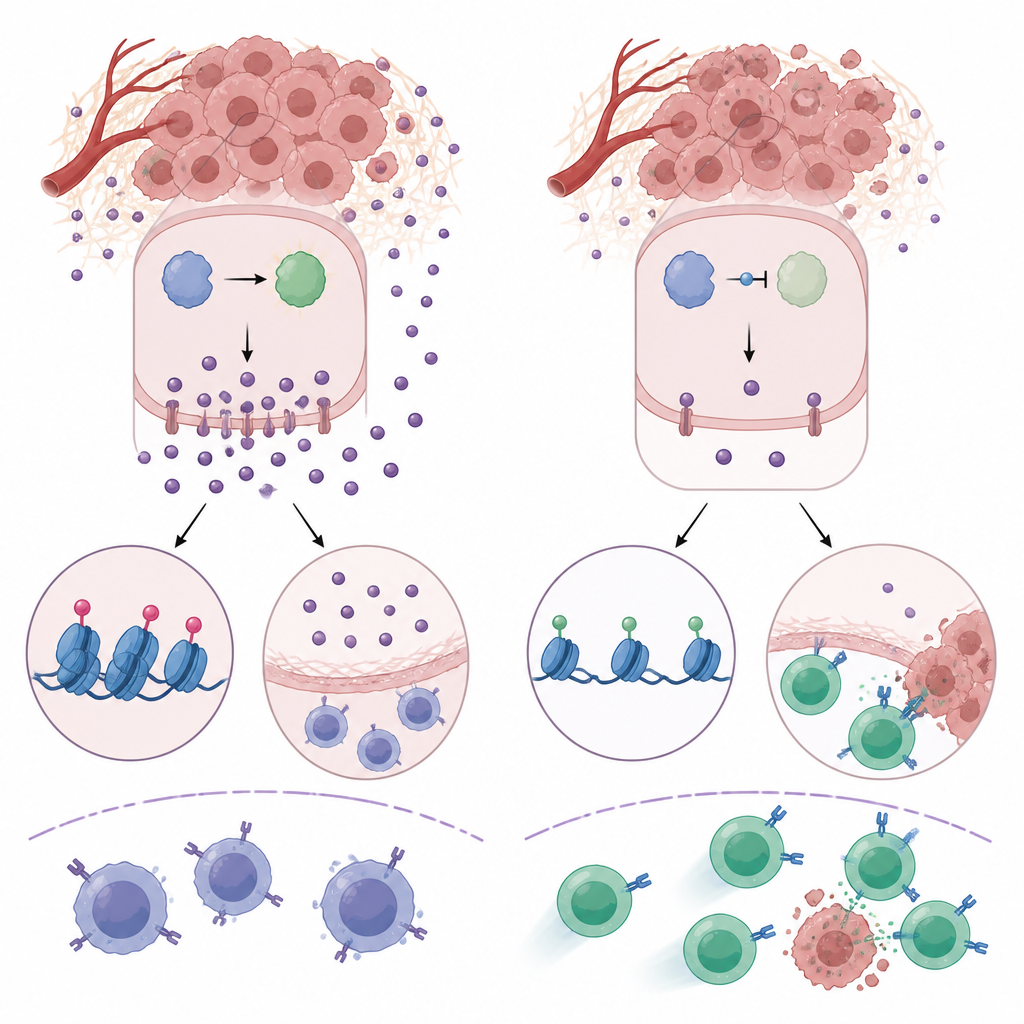
Diving deeper, the scientists found that NEK8 directly partners with another enzyme, LDHA, which converts pyruvate to lactate during sugar breakdown. NEK8 chemically modifies LDHA, boosting its activity and driving a surge in lactate both inside and around tumor cells, especially after radiation. This extra lactate has two major effects. Inside cells, it attaches to histone proteins in the form of a mark called H3K18 lactylation, which switches off genes needed for antigen presentation by MHC-I molecules. With fewer MHC-I molecules, tumor cells show less of their internal contents to CD8 T cells and become harder to “see.” Outside cells, high lactate directly weakens CD8 T cell function and favors suppressive immune cells, further draining the anti-tumor response.
Restoring immune visibility and long-distance control
Experiments in mice showed that lowering NEK8 or blocking lactate production restored MHC-I expression and pulled more CD8 T cells into both irradiated and distant tumors. These T cells produced more perforin and granzyme, molecules that puncture and kill cancer cells. When researchers artificially added lactate back, the benefits of NEK8 loss largely disappeared, underscoring lactate’s central role. The team then used computer-guided screening to identify a small molecule, CX6258, that inhibits NEK8 activity. In multiple colorectal and melanoma models, CX6258 combined with radiation slowed tumor growth more than either treatment alone and strengthened abscopal effects, while also boosting the impact of immune checkpoint therapy in some settings.
What this means for future treatment
For people with colorectal cancer, these findings suggest that a subset of radioresistant tumors may be using NEK8-driven lactate production to cloak themselves from immune attack. By blocking NEK8, it may be possible to lower lactate, reopen antigen display pathways, and let CD8 T cells recognize and control tumors more effectively, both at the radiation site and throughout the body. While CX6258 and related compounds still need careful testing in humans, this work outlines a clear, testable strategy: pair radiotherapy with targeted inhibition of NEK8 and lactate production to convert a local treatment into a more systemic, immune-driven defense against cancer.
Citation: Li, M., Ni, Y., Wu, J. et al. NEK8 kinase-mediated lactate increase impairs antitumor immunity decreasing radiotherapy sensitivity in colorectal cancer. Nat Commun 17, 4565 (2026). https://doi.org/10.1038/s41467-026-70657-z
Keywords: colorectal cancer, radiotherapy resistance, tumor metabolism, lactate, tumor immunity